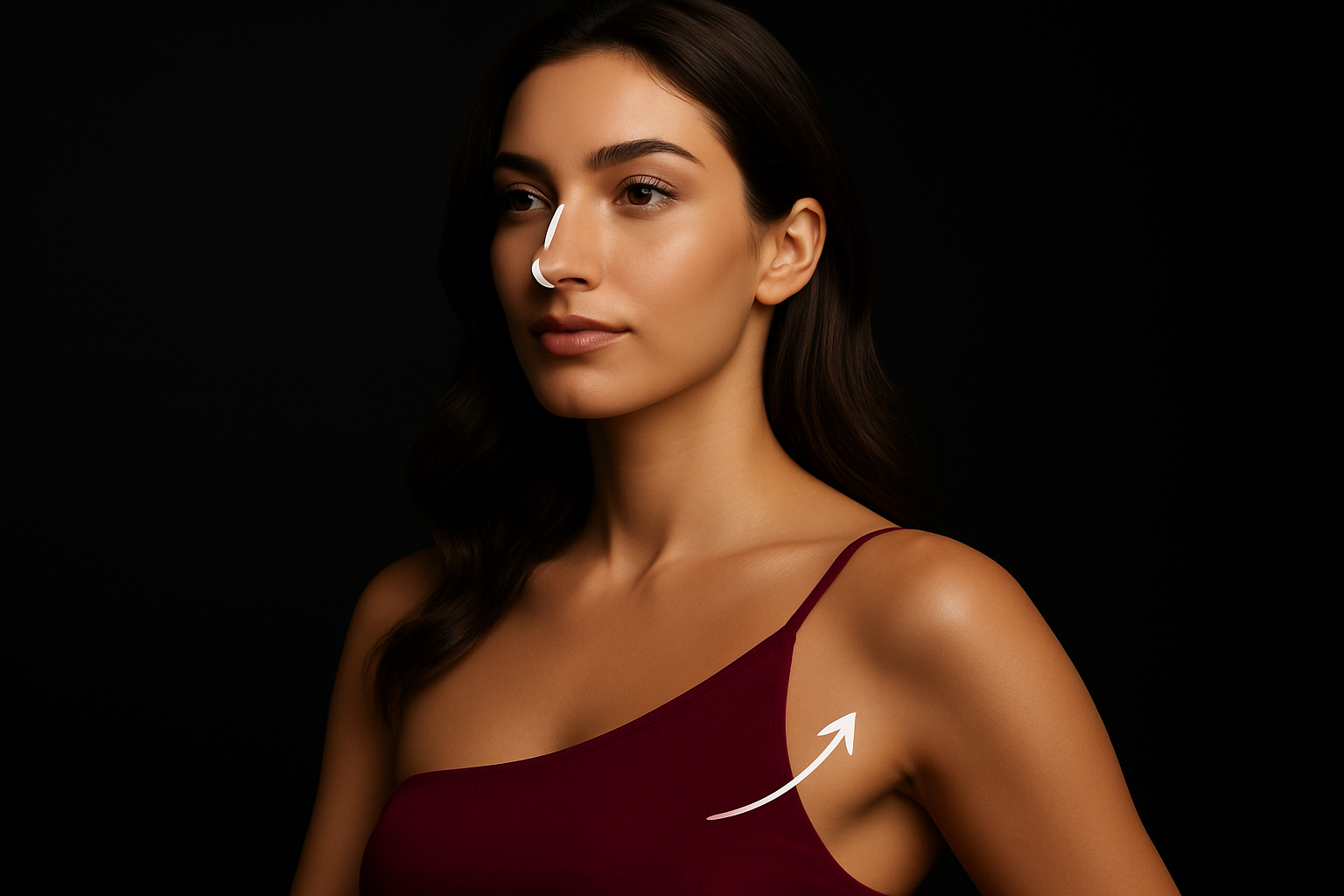

A harmoniously proportioned nose is fundamental to facial balance and aesthetic equilibrium. For individuals presenting with a dorsal hump, an overly projection tip, wide nasal bones, or enlarged nostrils, nose reduction surgery offers a permanent anatomical solution. Medically categorized under reductive rhinoplasty, this surgical intervention precisely resculpts the bony and cartilaginous framework of the nose to achieve natural symmetry and refined contours while preserving or optimizing airway patency.
Table of Contents:
- Procedure & Treatment Overview
- Ideal Candidates & Medical Assessment
- Modern Surgical Techniques & Technologies
- Step-by-Step Procedure Process
- Recovery Timeline, Aftercare & Expected Results
- Global Cost & Destination Comparison
- 5-Day VIP Patient Journey in Istanbul
- Frequently Asked Questions (FAQ)
- Summary & Next Steps
Turkey has established itself as an international center of excellence for aesthetic plastic surgery, drawing thousands of global patients annually. By combining board-certified plastic surgeons, JCI-accredited medical facilities, and advanced surgical innovations such as Piezo ultrasonic rhinosculpture, patients receive top-tier surgical care alongside tailored VIP concierge services. At Health & Beauty Turkey, we prioritize clinical precision, patient safety, and personalized surgical planning to deliver exceptional functional and aesthetic outcomes.
Quick Medical Facts Summary
| Procedure Duration | 1.5 to 3 hours |
|---|---|
| Hospital Stay | 1 night overnight stay |
| Anesthesia Type | General anesthesia |
| Recovery Timeline | Initial splint removal at day 7; social recovery in 10-14 days; final healing at 12 months |
| Clinical Success Rate | 95% – 98% (in specialized surgical centers) |
Procedure & Treatment Overview
Nose reduction surgery is a specialized subset of rhinoplasty engineered specifically to reduce the overall structural volume of the nasal complex. Unlike additive rhinoplasty—which relies on extensive grafting to build up projection—reductive rhinoplasty meticulously shaves, resects, or repositions targeted skeletal elements of the nose.
The procedure targets three main anatomical zones: the upper third (nasal bones), the middle third (upper lateral cartilages and nasal septum), and the lower third (lower lateral cartilages forming the nasal tip and alar base). Surgeons adjust these structures to establish optimal facial proportions based on classical aesthetic ratios, such as the nasolabial angle and the nasofrontal angle.
Depending on the patient’s individual anatomical profile, surgical reduction may address specific isolated concerns or comprehensive structural modification. For instance, patients seeking correction for an isolated bulbous tip may benefit from targeted cartilage reshaping, as detailed in our guide on bulbous nose rhinoplasty in Turkey, whereas those requiring lateral narrowing may undergo structural osteotomies or alar base resection, described in our complete resource for wide nose rhinoplasty in Turkey.
Ideal Candidates & Medical Assessment
Candidate selection is critical to achieving safe, predictable, and aesthetic outcomes in reductive rhinoplasty. Prospective patients must undergo a rigorous clinical evaluation to assess skin quality, structural integrity, and physiological readiness.
- Anatomical Proportion: Individuals with a nose that is disproportionately large, prominent, or wide relative to their cheekbones, chin, and forehead.
- Skeletal Deviations: Patients presenting with a pronounced bony or cartilaginous dorsal hump that disrupts the profile line.
- Nasal Tip Bulbosity or Over-Projection: Candidates exhibiting an overly prominent, thick, or drooping tip requiring refined structural repositioning.
- Alar Width: Individuals experiencing wide or excessively flared nostrils who may require specialized base trimming, such as nostril reduction in Turkey.
- Realistic Expectations: Patients seeking physical enhancement rather than absolute perfection, possessing a clear understanding of surgical limits.
- Medical Stability: Healthy non-smokers (or those willing to cease smoking pre- and post-operatively) without unmanaged systemic conditions or bleeding disorders.
Modern Surgical Techniques & Technologies
Modern plastic surgery has evolved beyond traditional, aggressive tissue excision. Today’s nose reduction surgery emphasizes structural conservation, precise bone sculpting, and skin redraping.
1. Open vs. Closed Rhinoplasty Approach
In an open approach, a tiny, inverted-V incision is made across the columella, allowing complete elevation of the skin envelope. This offers direct visual access to the osseocartilaginous framework, ideal for complex structural reduction and precise tip refinement. In contrast, closed rhinoplasty places all incisions internally within the nostrils, avoiding any external scar and offering a quicker recovery for subtle reductions.
2. Piezo Ultrasonic Rhinosculpture
Piezo technology represents a major advancement in bone sculpting. Utilizing high-frequency ultrasonic vibrations, the Piezo instrument selectively cuts and shaves nasal bones without traumatizing adjacent soft tissues, blood vessels, or mucosal linings. This results in significantly less post-operative edema, minimal ecchymosis (bruising), and unmatched surgical precision during osteotomies.
3. Preservation & Reductive Cartilage Reshaping
Rather than aggressive cartilage resection—which can compromise airway function—modern surgeons utilize preserve-and-reshape techniques. Cephalic trimming, suture sculpting, and structural grafting maintain long-term internal nasal valve support while achieving a sleek, reduced aesthetic profile.
4. Surgical vs. Non-Surgical Alternatives
While minor shape irregularities can sometimes be masked temporarily using non-surgical rhinoplasty in Turkey, actual anatomical reduction of nasal volume can only be accomplished through formal surgical intervention.
Step-by-Step Procedure Process
The surgical workflow for a nose reduction operation follows a standardized, highly controlled surgical pathway:
- Anesthesia Administration: The patient is placed under general anesthesia administered by a specialist anesthesiologist to ensure complete comfort and hemodynamic stability.
- Incision Placement: Depending on the agreed surgical plan (open or closed), precise micro-incisions are executed to expose the underlying nasal framework.
- Dorsal Hump Reduction: The surgeon carefully shaves down excess bony and cartilaginous dorsal height to create a smooth, aesthetically pleasing bridge line.
- Osteotomy & Narrowing: Controlled lateral osteotomies (using Piezo technology) are performed to bring the nasal bones inward, closing the roof open-book deformity created by hump removal and narrowing a wide bridge.
- Tip Reshaping & De-projection: Tip cartilages are trimmed, repositioned, and secured with structural sutures to decrease tip projection and refine bulbosity.
- Septal Alignment & Functional Optimization: If structural airway obstruction or septal deviation exists, a septoplasty is performed simultaneously.
- Closure & Splinting: Incisions are closed using ultra-fine absorbable and non-absorbable sutures. Internal nasal splints (silicone Doyle splints) and an external thermo-plastic splint are applied to stabilize the newly shaped structures.
Recovery Timeline, Aftercare & Expected Results
Adhering strictly to post-operative instructions ensures optimal skin redraping and structural stability throughout the recovery phase.
Post-Operative Healing Milestones
- Days 1–3: Peak edema and mild bruising around the eyes. Patients must rest with their head elevated at 45 degrees and apply cold compresses to the peri-orbital area.
- Day 7: Removal of external thermoplastic splint, internal silicone tubes, and external columellar sutures. Initial structural outcome becomes visible, though soft tissue swelling remains.
- Weeks 2–3: Major bruising resolves completely. Most patients comfortably return to social activities and desk jobs.
- Month 1: Approximately 70% of edema subsides. Light cardio exercises may be resumed upon surgeon approval.
- Months 3–6: Refinement of the nasal tip progresses as subcutaneous edema clears. Heavy contact sports may be cautiously resumed.
- Month 12: Final anatomical stabilization and skin redraping are complete, revealing the permanent, refined surgical result.
Global Cost & Destination Comparison
Turkey offers an extraordinary balance of high-grade surgical expertise, international hospital accreditations, and cost efficiency. The total expenditure for rhinoplasty in Western countries often excludes hospital facility fees, anesthesiologist rates, and post-operative medications. In Turkey, comprehensive all-inclusive packages simplify the clinical journey for international patients.
| Destination | Average Cost (USD) | JCI Accreditation & Quality | Travel & Booking Convenience | All-Inclusive VIP Care |
|---|---|---|---|---|
| Turkey (Health & Beauty Turkey) | $2,500 – $4,200 | World-Class / Highly Standardized | Seamless / High Accessibility | Included (Hotel, Transfers, Care) |
| United Kingdom | $8,000 – $13,000 | High Quality / NHS & Private | Moderate Wait Times | Rarely Included |
| USA | $10,000 – $18,000 | High Quality / Variable Standards | Complex Logistics | Not Included |
| Germany | $7,500 – $12,000 | Strict Standardized Quality | Moderate Accessibility | Not Included |
| Thailand | $3,500 – $6,000 | Good Medical Infrastructure | Long Travel Times | Optionally Available |
| India | $2,200 – $3,800 | Variable Quality Across Centers | Moderate Logistics | Rarely Included |
5-Day VIP Patient Journey in Istanbul
At Health & Beauty Turkey, we have streamlined the international medical traveler’s experience into a structured, stress-free 5-day surgical protocol.
Day 1: VIP Arrival & Luxury Transfer
Upon your arrival at Istanbul Airport (IST or SAW), your dedicated private chauffeur welcomes you and transfers you to your 5-star hotel. You receive your comprehensive itinerary and clinical schedule from your patient coordinator.
Day 2: In-Person Consultation & Surgery
You meet your plastic surgeon for a detailed anatomical evaluation, pre-operative blood tests, and 3D imaging review. Following clinical clearance, you undergo your nose reduction surgery under general anesthesia. You spend the night in a private hospital suite under direct medical observation.
Day 3: Hospital Discharge & Rest
Your surgeon conducts morning rounds to inspect your recovery. After receiving your post-operative medication pack and detailed instructions, you are transferred to your luxury hotel to rest and recover comfortably.
Day 4: Rest & Optional City Leisure
A quiet day dedicated to recovery and gentle hotel relaxation. Patient care coordinators remain in constant contact to monitor your swelling, pain management, and comfort levels.
Day 5: Splint Removal, Final Evaluation & Departure
You return to the clinic for splint and suture removal. Your surgeon reviews the initial surgical result, performs a final check of airway clearance, and provides custom aftercare instructions along with your fit-to-fly clearance certificate. Your private transfer then escorts you to the airport for your return journey home.
Frequently Asked Questions (FAQ)
Is nose reduction surgery painful during or after the procedure?
The procedure itself is performed under general anesthesia, ensuring you feel no pain whatsoever. Post-operative discomfort is generally mild to moderate and easily managed with prescribed analgesics. Most patients report feeling pressure or nasal congestion rather than acute pain.
Will there be visible scars after my nose reduction surgery?
When performed using the closed technique, all incisions are entirely internal with zero visible external scarring. In an open rhinoplasty technique, a tiny inverted-V incision is made across the columella. When closed by an expert plastic surgeon, this scar fades into a virtually imperceptible thin line within a few months.
How long must I wait before resuming heavy exercise?
Strenuous physical activity, heavy weightlifting, and vigorous exercise should be avoided for at least 4 to 6 weeks following surgery. Elevated blood pressure can exacerbate post-operative swelling or trigger secondary bleeding. Contact sports should be avoided for 8 to 12 weeks to protect the newly healing nasal bones.
Can structural nose reduction improve my breathing?
Yes. If your external nasal enlargement or deviation is accompanied by internal structural issues such as a deviated septum or hypertrophic turbinates, septoplasty and turbinate reduction can be performed simultaneously to enhance nasal airflow while reducing external volume.
Summary & Next Steps
Nose reduction surgery is a transformative cosmetic and functional procedure that aligns facial aesthetics, improves profile harmony, and boosts self-confidence. Turkey stands at the global forefront of aesthetic surgery, delivering state-of-the-art ultrasonic techniques, rigorous clinical standards, and all-inclusive patient care at competitive price points.
If you are considering nose reduction surgery, our medical team at Health & Beauty Turkey is prepared to guide you through every phase of your transformation. Contact our medical consultants today to request your personalized digital consultation, 3D simulation assessment, and customized surgical itinerary.
Medical Disclaimer: The information provided in this article is intended strictly for educational and informational purposes and does not constitute formal medical advice, diagnosis, or treatment plans. Individual surgical outcomes vary based on anatomical differences, skin thickness, and healing capabilities. Always consult a qualified, board-certified plastic surgeon for individualized clinical assessment.
Related Articles: bulbous nose rhinoplasty in Turkey | wide nose rhinoplasty in Turkey | nostril reduction in Turkey | non-surgical rhinoplasty in Turkey
References & Trusted Sources: National Institutes of Health (NIH) – Clinical Research | World Health Organization (WHO) – Health Guidelines | National Center for Biotechnology Information (NCBI / PubMed)