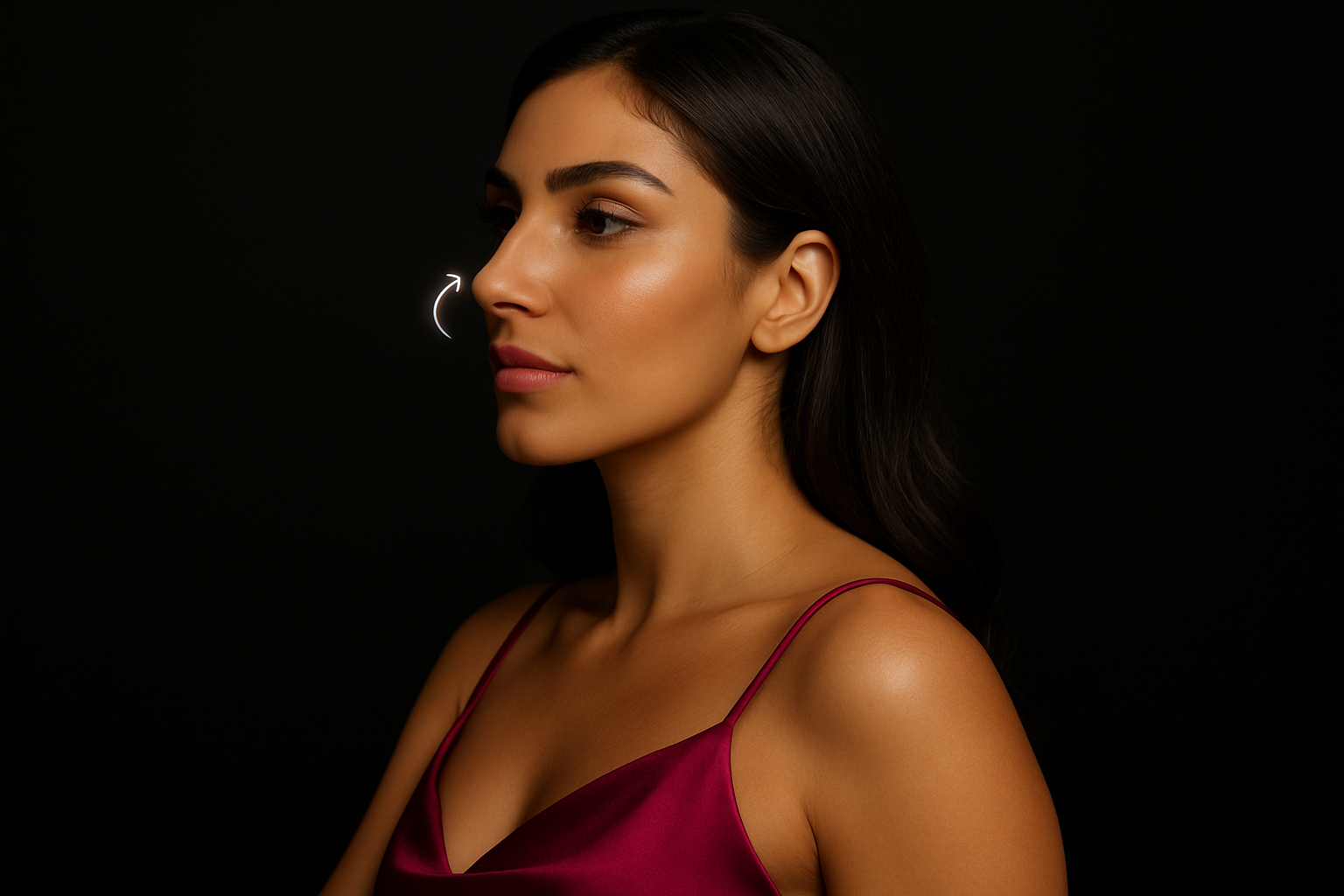
A rounded, poorly defined, or enlarged nasal tip—clinically referred to as a bulbous tip—can distract from facial symmetry and alter overall harmony. Patients seeking structural refinement often discover that standard cosmetic approaches fall short because correcting a bulbous tip requires specialized surgical sculpting. A bulbous nose rhinoplasty is a highly nuanced procedure designed to reshape the lower lateral cartilages, remove surplus soft tissue, and re-establish crisp, elegant nasal architecture without compromising airway support.
Table of Contents:
- Quick Medical Facts Summary
- Procedure & Treatment Overview
- Ideal Candidates & Medical Assessment
- Modern Surgical Techniques & Technologies
- Step-by-Step Procedure Process
- Recovery Timeline, Aftercare & Expected Results
- Global Cost & Destination Comparison
- 5-Day VIP Patient Journey in Istanbul
- Frequently Asked Questions (FAQ)
- Summary & Next Steps
Turkey has emerged as a premier destination for specialized facial plastic surgery, combining world-class surgical expertise with advanced aesthetic innovation. At Health Beauty Turkey, our board-certified surgeons utilize state-of-the-art structural techniques to contour thick skin, refine wide cartilages, and deliver natural, permanent results tailored to your unique anatomical profile.
Quick Medical Facts Summary
- Procedure Duration: 2.5 to 3.5 hours
- Anesthesia Type: General anesthesia
- Hospital Stay: 1 Night
- Primary Recovery Period: 7 to 10 days (splint removal on day 6 or 7)
- Final Aesthetic Result: 12 to 18 months (thick skin tips require complete resolution of deep edema)
- Surgical Success Rate: Exceeds 97% with structural preservation techniques
Procedure & Treatment Overview
A bulbous nose is primarily characterized by an oversized, spherical, or overly flexible nasal tip. This structural presentation usually stems from three main anatomical factors: excessively wide or convex lower lateral (alar) cartilages, excessive fibrofatty soft tissue between the cartilages, or thick, sebaceous nasal skin.
Standard reduction methods can lead to structural collapse if not executed with extreme precision. Modern rhinoplasty in Turkey focuses on structural preservation and reshaping rather than aggressive cartilage destruction. By utilizing precise interdomal and transdomal suturing techniques, subtle cephalic trim, and custom structural grafts (such as columellar struts or alar rim grafts), surgeons sculpt a defined tip point while ensuring long-term structural integrity and optimal nasal breathing.
Ideal Candidates & Medical Assessment
Determining candidacy for bulbous nose reshaping involves a detailed anatomical evaluation. Not every broad tip requires the same approach, and identifying the underlying structural issue is crucial for a successful surgical outcome.
- Cartilage-Dominant Bulbous Tip: Ideal candidates have strong, wide, or curved lower lateral cartilages that can be easily repositioned and re-angled through internal suture techniques.
- Soft-Tissue & Thick-Skin Candidates: Patients with heavy fibrofatty tissue or thick dermal layers require careful degreasing/defatting of the subdermal layer combined with structural cartilage support to prevent residual swelling from obscuring the newly carved framework.
- Functional Candidates: Individuals suffering from both aesthetic asymmetry and internal nasal blockages (such as a deviated septum or hypertrophic turbinates) can undergo simultaneous septorhinoplasty to improve airway function.
- General Health Requirements: Non-smokers with stable physical health, realistic expectations, and complete facial growth (typically 18 years of age or older).
Modern Surgical Techniques & Technologies
Correcting a bulbous tip requires an individualized approach based on individual anatomical variations. Surgeons select from various types of rhinoplasty and specialized tools to optimize surgical outcomes:
1. Structural Suturing & Cartilage Reshaping
Instead of removing large amounts of structural support, surgeons use non-absorbable sutures to draw the diverging alar domes closer together. Transdomal sutures flatten the convex curves of the lower lateral cartilages, while interdomal sutures bring the two tip points into optimal alignment.
2. Cephalic Trim with Grafting Support
When the upper edge of the lower lateral cartilage is excessively broad, a conservative cephalic trim is performed. To prevent lateral wall collapse and dynamic nasal valve failure during inhalation, structural grafts—such as lateral crural strut grafts or alar contour grafts—are integrated.
3. Soft Tissue Defatting
For patients with thick, dense tissue overlying the tip, the surgeon meticulously thins the subdermal fibrofatty pad. This delicate step reveals the underlying cartilaginous framework, converting a boxy or bulbous tip into a refined point of light reflection.
4. Ultrasonic Piezo Surgery
When bulbous tip refinement is combined with bridge restructuring or broad nasal base narrowing, Piezo technology is utilized. Ultrasonic vibrations sculpt nasal bones without damaging delicate soft tissue, vascular beds, or mucosal linings, significantly reducing postoperative bruising and swelling.
Step-by-Step Procedure Process
- Preoperative Planning & 3D Imaging: Comprehensive facial analysis is conducted to design a tip projection, rotation, and width that complements your forehead, cheekbones, and chin.
- Anesthetic Administration: The procedure is performed under board-certified general anesthesia to guarantee patient comfort and complete airway protection.
- Incision & Structural Exposure: In an open approach, a tiny inverted-V incision is made across the columella, continuing internally. This provides complete visualization of the asymmetric or enlarged cartilages.
- Tip Reshaping & Grafting: The cartilage is excised conservatively, sutured precisely, and reinforced with autologous septal grafts to ensure permanent support.
- Skin Re-adaptation & Closure: The skin envelope is adapted over the newly refined framework. Micro-sutures seal the columellar incision, and a protective external splint is applied.
Recovery Timeline, Aftercare & Expected Results
Recovery after tip-focused procedures requires patient adherence to postoperative care instructions, particularly because tip edema takes longer to settle than bridge swelling.
- Days 1–3: Peak edema and mild localized discomfort. Cold compresses around the eyes and keeping the head elevated at a 45-degree angle help minimize fluid accumulation.
- Days 6–7: The external splint and columellar sutures are removed in clinic. You will get an initial view of your refined nasal bridge and tip, though significant residual swelling remains.
- Weeks 2–4: Most social swelling and minor bruising resolve. You may safely resume non-contact work and light daily activities.
- Months 2–6: Subdermal tissues continue to contract over the cartilaginous frame. Definition along the supratip break and nasal domes becomes increasingly noticeable.
- Months 12–18: Final resolution of deep edema is achieved. The tip reaches its final contour, structural integrity, and refined definition.
Global Cost & Destination Comparison
Patients worldwide frequently weigh international medical options when planning corrective nasal surgery. Turkey provides an ideal balance of world-class facial plastic surgery expertise, JCI-accredited medical facilities, and comprehensive all-inclusive care models at a fraction of Western costs.
| Destination | Average Cost (USD) | JCI Accreditation & Quality | Travel & VIP Care Included | Specialist Rhinoplasty Focus |
|---|---|---|---|---|
| Turkey (Health Beauty Turkey) | $2,800 – $4,500 | World-Class / Highly Accredited | Yes (VIP Transfers, 5-Star Hotel, Care Package) | Exceptional (High volume of complex structural cases) |
| United Kingdom | $8,500 – $13,000 | High Standard | No (Procedure only) | Moderate to High |
| United States | $10,000 – $18,000 | High Standard | No (Procedure only) | High |
| Germany | $7,500 – $11,500 | High Standard | No (Procedure only) | Moderate |
| Thailand | $3,500 – $6,000 | Variable | Rarely Included | Moderate |
5-Day VIP Patient Journey in Istanbul
At Health Beauty Turkey, we streamline your international treatment plan into an organized, stress-free medical itinerary:
- Day 1: VIP Arrival & Luxury Hotel Check-in: You are met at the airport by your private driver and escorted directly to your 5-star hotel to rest and settle in.
- Day 2: In-Person Consultation & Surgery: Meet your head facial plastic surgeon for deep anatomical examination, final structural design, blood diagnostics, and the procedure. Night 1 post-op is spent in our modern hospital under expert nursing supervision.
- Day 3: Hospital Discharge & VIP Hotel Transfer: After a surgeon check-up, you transition comfortably back to your hotel with prescribed pain management, anti-edema regimens, and round-the-clock support.
- Day 4: Rest & Guided Recovery: A quiet day of recovery in Istanbul. Our dedicated patient care specialists remain in continuous contact to monitor your progress.
- Day 5: Final Evaluation, Splint Removal & Flight Home: Return to the clinic for splint removal, skin cleaning, final outcome review, and personalized long-term aftercare instructions prior to your departure flight.
Frequently Asked Questions (FAQ)
Can a bulbous nose be fixed without cartilage removal?
Yes. Modern structural rhinoplasty prioritizes suture reshaping (transdomal and interdomal technique) and cartilage reorientation rather than aggressive tissue excision. Preserving cartiliage maintains structural strength, preventing collapse over time.
How does thick skin affect bulbous tip rhinoplasty results?
Thick skin can obscure fine cartilage alterations. Surgeons address this by carefully thinning the subdermal tissue layer and constructing a firm, defined cartilaginous framework that pushes against the skin envelope to establish clear tip definition. Full recovery for thick-skinned tips often requires up to 18 months.
Is bulbous nose rhinoplasty different from wide nose rhinoplasty?
While often performed together, they address different structural zones. A bulbous nose focus is centered primarily on the lower lateral cartilages and tip shape, whereas a wide nose rhinoplasty focuses on the upper nasal bones and mid-vault structure.
Will my nasal breathing be affected by tip reduction?
When performed by an expert facial plastic surgeon, breathing is preserved or improved. By using structural grafts to reinforce the internal and external nasal valves, surgeons ensure the airway remains open and functional throughout the healing process.
Summary & Next Steps
Addressing a rounded or oversized nasal tip requires a customized surgical plan that respects both aesthetics and structural function. With tailored surgical techniques ranging from cartilage suturing to precise tissue defatting, nose reduction surgery in Turkey offers an effective, permanent solution for refined facial harmony.
If you are considering transforming your facial balance and refining your nasal contour, reach out to the specialist team at Health Beauty Turkey today. Our medical consultants and surgical team are available to review your photos, discuss structural options, and provide a comprehensive evaluation tailored to your visual goals.
Medical Disclaimer: The information provided in this guide is intended solely for educational and informational purposes and does not constitute formal medical advice. Individual surgical outcomes vary based on anatomical differences, skin thickness, and healing dynamics. Consult a certified plastic surgeon for a tailored clinical diagnosis.
Related Articles: rhinoplasty in Turkey | types of rhinoplasty | wide nose rhinoplasty | nose reduction surgery
References & Trusted Sources: National Institutes of Health (NIH) – Clinical Research | World Health Organization (WHO) – Health Guidelines | National Center for Biotechnology Information (NCBI / PubMed)