Abdominoplasty, commonly referred to as a tummy tuck, is one of the most transformative body contouring procedures available in modern plastic surgery. Designed to excise redundant skin tissue, remove localized adiposity, and repair lax or separated rectus abdominis muscles (diastasis recti), this surgery restores a firm, athletic, and harmonious midsection contour. For patients suffering from skin ptosis secondary to massive weight loss, post-gestational physical alterations, or natural involutional tissue changes, undergoing a tummy tuck turkey offers an internationally accredited surgical standard combined with state-of-the-art technological facilities and bespoke patient care.
Table of Contents:
- Quick Medical Facts Summary
- Procedure & Treatment Overview
- Ideal Candidates & Medical Assessment
- Modern Surgical Techniques & Technologies
- Step-by-Step Procedure Process
- Recovery Timeline, Aftercare & Expected Results
- Global Cost & Destination Comparison
- 5-Day VIP Patient Journey in Istanbul
- Frequently Asked Questions (FAQ)
- Summary & Next Steps
At Health Beauty Turkey, our board-certified plastic surgeons utilize refined surgical pathways and ergonomic incision strategies to minimize scar visibility while maximizing structural reinforcement. This anatomical guide details every clinical aspect of abdominoplasty, outlining patient qualification criteria, surgical modalities, postoperative recovery milestones, and comparative international medical economics.
Quick Medical Facts Summary
| Procedure Name | Abdominoplasty (Tummy Tuck) |
|---|---|
| Surgery Duration | 2.5 to 4.5 Hours (depending on complex tissue resection) |
| Anesthesia Type | General Anesthesia with endotracheal intubation |
| Hospital Stay | 1 to 2 Nights (in an accredited hospital) |
| Initial Recovery | 10 to 14 Days (return to light sedentary tasks) |
| Full Physical Activity | 6 to 8 Weeks (for strenuous exercise and heavy lifting) |
| Clinical Success Rate | Exceeds 97% patient satisfaction globally |
Procedure & Treatment Overview
Abdominoplasty is fundamentally a structural reconstructive procedure rather than a primary weight-reduction technique. While non-invasive treatments or targeted suction can reduce localized subcutaneous fat, they cannot address deep muscular laxity or severe skin redundancy. When abdominal rectus muscles separate along the linea alba—a condition prevalent following multiple pregnancies or extreme weight fluctuations—the abdominal wall bulges forward regardless of body fat percentage or core strength exercises.
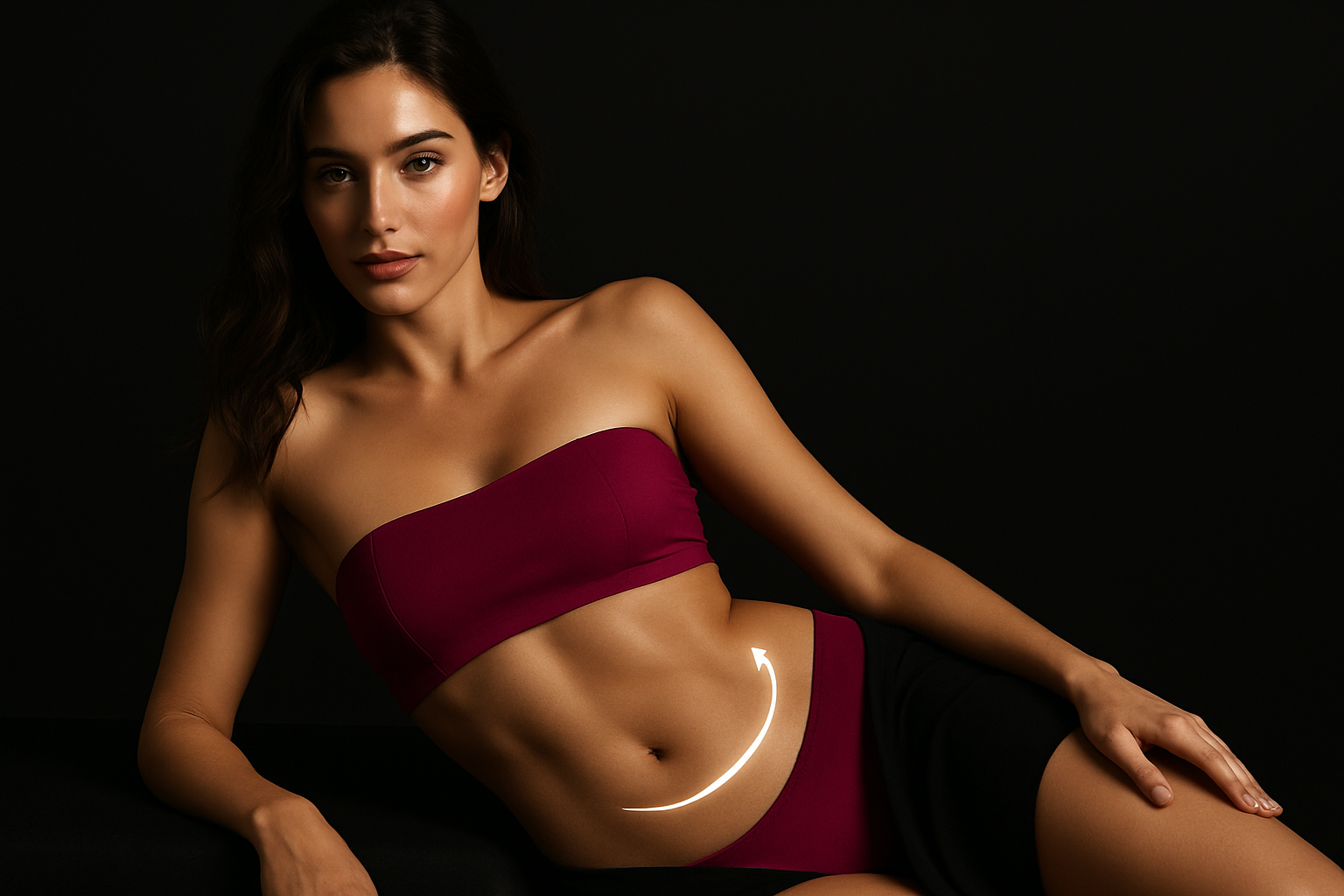
During a comprehensive tummy tuck turkey, the surgeon creates a low transverse pelvic incision positioned within the natural bikini line. The superficial fascia and skin flap are elevated superiorly toward the costal margins, exposing the underlying rectus abdominis muscle sheath. Plication sutures are meticulously placed to tighten the abdominal wall internally, effectively narrowing the waistline and recreating a flat structural foundation. Excess cutaneous tissue is subsequently resected, and the umbilicus is repositioned through a precise transposed incision to maintain physiological aesthetics.
For patients requiring combined tissue removal and localized adiposity extraction across the flanks, plastic surgeons often integrate high-definition liposuction. Selecting the optimal surgical approach depends on structural tissue elasticity, visceral versus subcutaneous fat distribution, and patient expectations. Patients interested in understanding structural variations can review our detailed analysis of 3 types of tummy tuck surgeries in Turkey.
Ideal Candidates & Medical Assessment
Candidate selection is paramount to achieving optimal aesthetic outcomes and preventing perioperative complications. A thorough clinical assessment evaluates skin turgor, subcutaneous thickness, abdominal wall muscular integrity, and overall physiological health.
Indications for Abdominoplasty
- Severe Cutaneous Laxity: Loose, overstretched abdominal skin unresponsive to exercise or diet.
- Diastasis Recti: Separation of the left and right rectus abdominis muscles causing abdominal bulging.
- Postpartum Structural Changes: Women seeking restoration after childbearing who have completed their families. A specialized postpartum tummy tuck in Turkey effectively reverses rectus laxity and skin stretch marks.
- Post-Bariatric Sequelae: Significant redundant skin folds following gastric sleeve, gastric bypass, or massive natural weight loss.
Contraindications & Disqualifying Criteria
- Unstable Body Mass Index (BMI): Candidates with a BMI exceeding 30 to 32 should achieve weight stability for at least six months prior to surgery.
- Active Smoking: Nicotine causes peripheral vasoconstriction, dramatically increasing the risk of skin flap necrosis, delayed wound healing, and wound dehiscence. Patients must cease nicotine consumption 4 to 6 weeks before and after surgery.
- Uncontrolled Systemic Disease: Severe cardiovascular conditions, unmanaged diabetes mellitus, or active coagulopathies.
- Future Pregnancy Plans: Future gestation will re-stretch the internal plication sutures and cutaneous tissue, compromising long-term aesthetic outcomes.
Modern Surgical Techniques & Technologies
Modern plastic surgery has evolved beyond simple skin excision. Surgical innovations aim to minimize systemic trauma, decrease seroma formation, refine incision healing, and optimize anatomical contouring.
1. Full (Standard) Abdominoplasty
The standard choice for patients with upper and lower abdominal skin excess. Involves a hip-to-hip incision, complete elevation of the abdominal tissue flap up to the xiphoid process, full rectus muscle plication, transposition of the umbilicus, and significant skin excision.
2. Mini-Abdominoplasty
Indicated for individuals with localized skin laxity and minor tissue excess strictly below the umbilicus. A shorter incision is made, no umbilical transposition is required, and muscle plication is limited to the lower abdomen. Learn more about candidacy for this localized procedure by visiting our guide on mini tummy tuck in Turkey.
3. Extended Abdominoplasty
Designed for post-bariatric patients with significant tissue overhang extending past the anterior iliac crests into the lateral flanks and lower back. The extended incision allows comprehensive circumferential tightening of the entire midsection girdle.
4. Lipo-Abdominoplasty (Saldanha Technique)
Combines extensive suction-assisted liposuction with abdominoplasty. By preserving key blood vessels (perforator arteries) while extracting flap subcutaneous fat, surgeons enhance waistline definition while ensuring safe skin flap blood supply.
5. Advanced Surgical Equipment
- VASER Ultrasonic Liposuction: Employs targeted acoustic energy to liquefy adipose tissue selectably, preserving nerves and vascular networks to minimize post-op bruising.
- Progressive Tension Sutures (PTS): Internal quilting sutures that attach the abdominal flap to the underlying deep fascia, eliminating dead space and substantially lowering the risk of postoperative seroma without requiring prolonged external drainage tubes.
- Tissue Adhesives & Micro-Suturing: High-grade surgical glues and intradermal monofilament sutures reduce incisional tension, leading to refined, inconspicuous long-term scars.
Step-by-Step Procedure Process
Undergoing a tummy tuck turkey involves a synchronized clinical protocol designed for maximum safety, precision, and patient comfort.
Phase 1: Preoperative Clinical Evaluation
Upon arrival at our partner hospital, patients undergo comprehensive preoperative testing, including complete blood counts (CBC), coagulation profiles, metabolic panels, ECG, and chest radiographs. A detailed physical consultation with the senior plastic surgeon includes body mapping, incision marking, and abdominal wall ultrasonography if ventral or umbilical hernias are suspected. An anesthesiology evaluation ensures clearance for general anesthesia.
Phase 2: Intraoperative Execution
- Anesthetic Administration: General anesthesia is administered, complemented by long-acting local nerve blocks (such as TAP blocks) for superior postoperative analgesia.
- Incision & Flap Elevation: The surgeon performs a low-transverse horizontal incision hidden within the underwear line. The skin and subcutaneous tissue are elevated off the rectus abdominis fascia up to the costal margin.
- Muscular Plication: Heavy, non-absorbable sutures are placed vertically along the midline, drawing the separated rectus abdominis muscles together to reconstruct core stability and narrow the waistline.
- Umbilical Transposition: The umbilicus is isolated from surrounding tissue, preserved on its vascular stalk, and brought out through a precise cut in the repositioned abdominal skin flap.
- Liposuction & Contouring: Liposuction is performed across the flanks to sculpt the waist and eliminate love handles.
- Resection & Closure: Excess tissue is excised under calibrated tension. Surgical drains may be placed if indicated, and the incision is closed in multiple anatomical layers using absorbable barbed sutures and topical skin adhesives.
Phase 3: Immediate Postoperative Care
The patient is transferred to the Post-Anesthesia Care Unit (PACU) for monitoring before being moved to a private hospital room. Early ambulation is initiated within 6 to 8 hours post-surgery—walking in a slightly bent position (jackknife posture)—to promote peripheral venous blood flow and lower the risk of deep vein thrombosis (DVT).
Recovery Timeline, Aftercare & Expected Results
Adherence to post-operative instructions is critical for achieving clean healing and optimal aesthetic contouring following a tummy tuck turkey.
Day 1 to Day 3: Hospital Stay & Initial Healing
Patients remain hospitalized under continuous nursing supervision. Pain management is maintained through patient-controlled analgesia (PCA) or IV analgesics. Patients wear a medical-grade compression garment (faja) around-the-clock to minimize swelling and support abdominal tissues.
Week 1 to Week 2: Subacute Recovery & Mobility
Swelling and local bruising peak within the first 72 hours and gradually subside. Patients must maintain a flexed posture while standing and sleeping to prevent incisional tension. Drains, if utilized, are typically removed between Days 3 and 7 when fluid output falls below physiological thresholds. Light walking is encouraged, but household chores and prolonged standing should be avoided.
Week 3 to Week 6: Tissue Consolidation
Most patients return to light sedentary work by Day 10 to 14. Abdominal tightness gradually decreases, allowing a return to an upright posture. The compression garment is worn continuously for 4 to 6 weeks as instructed. Strenuous physical exertion, weight lifting, and core exercises remain strictly prohibited.
Month 3 to Month 12: Final Maturation
Postoperative edema resolves substantially by Month 3, revealing the final contoured silhouette. The surgical scar undergoes continuous remodeling, shifting from red/pink to a faint, flat line over 12 to 18 months. Scar management protocols, including silicone gel sheeting and laser therapies, may be introduced from Week 4 onwards.
Global Cost & Destination Comparison
Turkey has established itself as an elite global hub for plastic surgery, offering exceptional clinical quality, JCI-accredited medical facilities, and comprehensive plastic surgery care packages at cost-effective rates compared to Western nations.
| Destination | Average Cost (USD) | JCI Accreditation & Quality | Travel Convenience | All-Inclusive Care Packages |
|---|---|---|---|---|
| Turkey (Health Beauty Turkey) | $3,200 – $4,800 | World-class / High JCI density | Excellent (Major Global Hub) | Comprehensive (Hotel, VIP Transfer, Care) |
| United Kingdom | $8,500 – $14,000 | High (NHS / Private standard) | Local for UK residents | Rarely Included (Procedure only) |
| United States | $9,500 – $18,000 | High (AAAASF / JCI) | Local for US residents | Not Included (Excludes anesthesia/hospital fees) |
| Germany | $7,500 – $12,500 | High (TÜV / DIN ISO) | Excellent EU connectivity | Rarely Included |
| Thailand | $4,500 – $7,000 | Moderate to High | Long-haul flight for West | Variable Availability |
| India | $3,000 – $5,000 | Variable Accreditation | Long-haul travel | Basic Transfer Packages |
The cost advantage of selecting a tummy tuck turkey stems from favorable currency exchange rates, reduced institutional operational overhead, and competitive medical tourism infrastructure, maintaining uncompromising clinical standards and surgical safety.
5-Day VIP Patient Journey in Istanbul
Health Beauty Turkey provides an integrated operational framework for international patients, ensuring stress-free logistical and clinical care from arrival to departure.
Day 1: VIP Arrival & Luxury Accommodation
Upon landing at Istanbul Airport (IST or SAW), a private VIP chauffeur meets the patient and facilitates transfer to a 5-star partner hotel. An assigned multilingual patient coordinator provides all operational documentation and schedules for the week.
Day 2: Clinical Consultation, Pre-Op Diagnostics & Surgery
The patient is escorted to our accredited hospital facility. Comprehensive blood tests, electrocardiograms, and physical examinations are completed. The senior plastic surgeon conducts a final consultation, performs anatomical mapping, and reviews patient goals. The patient then undergoes abdominoplasty under general anesthesia and spends the night in a private hospital suite.
Day 3: Inpatient Monitoring & Mobilization
The surgical team reviews the patient’s physiological progress, assesses wound drainage, and assists with post-operative ambulation. Pain management protocols are optimized, and compression garments are evaluated.
Day 4: Hospital Discharge & Hotel Recuperation
Following clinical evaluation and drain management (or removal), the patient is discharged to their 5-star hotel. A medical team member conducts hotel visits for dressing changes and checks vital signs, ensuring complete rest and recovery.
Day 5: Final Medical Evaluation, Removal of Dressings & Departure
The patient returns to the clinic for a comprehensive post-operative checkup. The surgeon inspects the incision sites, provides specialized scar care guidelines, fit-to-fly documentation, and a detailed recovery plan. The VIP transfer service then escorts the patient to the airport for their flight home.
Frequently Asked Questions (FAQ)
Can a tummy tuck be combined with liposuction or other procedures?
Yes. Combining abdominoplasty with targeted liposuction of the flanks, back, or thighs (commonly known as lipo-abdominoplasty) is very common and produces superior 360-degree body contouring. Additionally, abdominoplasty is frequently performed alongside breast augmentation or mastopexy as part of a comprehensive Mommy Makeover procedure. Your surgeon will confirm whether combining procedures is safe based on your health assessment and target surgical duration. For insights on choosing between standalone or combined options, read our comparison on tummy tuck vs. liposuction in Turkey.
Where will my abdominoplasty scar be located, and will it be permanent?
The surgical scar is strategically placed low on the abdomen, extending horizontally between the hip bones, carefully positioned to remain entirely hidden beneath standard underwear or bikini bottoms. While all surgical incisions leave a permanent mark, modern multi-layer suturing techniques, combined with post-operative topical scar gels, silicone sheets, and proper sun protection, allow the scar to fade significantly into a thin, faint line over 12 to 18 months.
How long must I wait to exercise after a tummy tuck?
Light walking is encouraged from the first post-operative day to prevent DVT. However, strenuous cardiovascular activity, aerobic workouts, and heavy lifting (over 5 kg) must be avoided for at least 4 to 6 weeks. Core-targeted exercises, such as sit-ups, abdominal crunches, or heavy deadlifts, should be avoided for 8 to 12 weeks to allow complete healing of the internal rectus abdominis plication sutures.
What happens if I become pregnant after undergoing abdominoplasty?
While a post-abdominoplasty pregnancy is clinically safe for both mother and child, gestation will stretch the tightened abdominal muscles and skin flap, which may compromise the aesthetic results of the procedure. For long-term outcome stability, plastic surgeons strongly recommend completing your family prior to undergoing full tummy tuck surgery.
Summary & Next Steps
Abdominoplasty in Turkey offers an effective, long-lasting solution for eliminating excess abdominal skin, correcting diastasis recti, and regaining a defined waistline. By combining board-certified surgical expertise, state-of-the-art medical technology, and all-inclusive VIP logistics, Health Beauty Turkey ensures an outstanding clinical journey for every international patient.
If you are ready to address redundant abdominal tissue and restore your body shape, contact our clinical team today. We offer preliminary virtual consultations, personalized surgical planning, and transparent quotes tailored to your aesthetic goals.
Medical Disclaimer: The information provided in this article is intended solely for educational and informational purposes and does not constitute formal medical advice, diagnosis, or treatment. Individual surgical outcomes vary based on anatomical considerations, underlying health status, and adherence to postoperative care protocols. Always consult with a qualified, board-certified plastic surgeon prior to undergoing any surgical procedure.
Related Articles: tummy tuck turkey | 3 types of tummy tuck surgeries in Turkey | postpartum tummy tuck in Turkey | mini tummy tuck in Turkey | tummy tuck turkey | tummy tuck turkey | tummy tuck vs. liposuction in Turkey
References & Trusted Sources: National Institutes of Health (NIH) – Clinical Research | World Health Organization (WHO) – Health Guidelines | National Center for Biotechnology Information (NCBI / PubMed)