
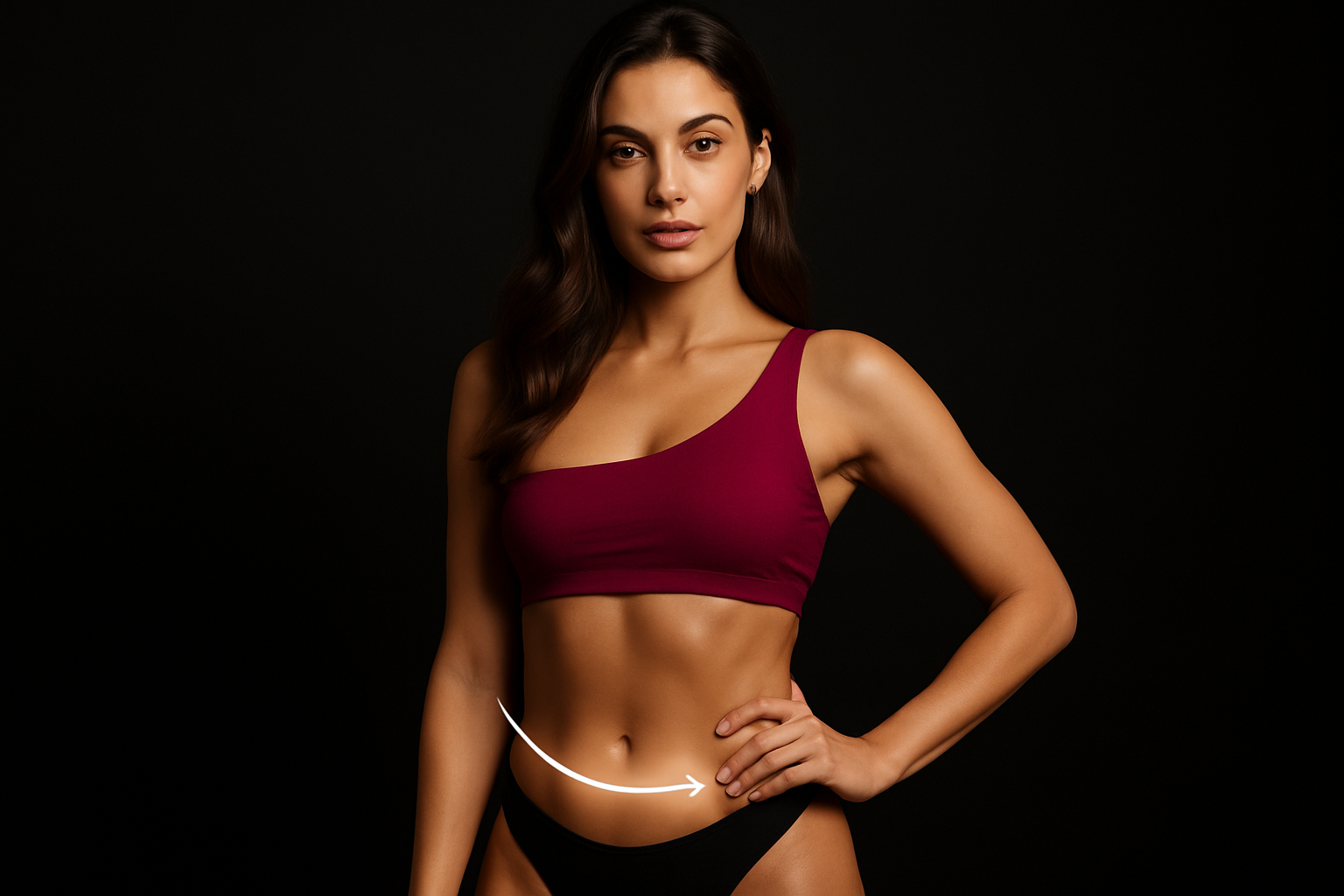
Achieving a contoured, firm abdominal profile is a primary aesthetic goal for patients seeking to restore their midsection after significant weight loss, pregnancy, or age-related tissue changes. While diet and exercise can reduce visceral and subcutaneous fat, they cannot repair separated abdominal muscles or tighten excess, stretched skin. For many international patients evaluating surgical solutions, deciding between a abdominoplasty and liposuction is the first critical step.
Table of Contents:
- Quick Medical Facts Summary
- Procedure & Treatment Overview
- Ideal Candidates & Medical Assessment
- Modern Surgical Techniques & Technologies
- Step-by-Step Procedure Process
- Recovery Timeline, Aftercare & Expected Results
- Global Cost & Destination Comparison
- 5-Day VIP Patient Journey in Istanbul
- Frequently Asked Questions (FAQ)
- Summary & Next Steps
Understanding the clinical differences between these procedures ensures realistic expectations and superior aesthetic outcomes. Turkey has emerged as a premier global hub for high-end body contouring, combining board-certified surgical expertise, advanced hospital infrastructure, and personalized clinical care. This comprehensive guide details the fundamental differences between Tummy Tuck Turkey: Advanced Abdominoplasty techniques and advanced liposuction to help you determine the optimal surgical strategy for your anatomy.
Quick Medical Facts Summary
| Medical Metric | Tummy Tuck (Abdominoplasty) | Liposuction (VASER / Traditional) |
|---|---|---|
| Procedure Duration | 2.5 to 4 Hours | 1 to 3 Hours |
| Anesthesia Type | General Anesthesia | General or Sedation |
| Hospital Stay | 1 to 2 Nights | Same Day or 1 Night |
| Initial Recovery | 10 to 14 Days | 3 to 7 Days |
| Compression Garment | 6 Weeks Minimum | 4 to 6 Weeks |
| Clinical Focus | Excess Skin, Fat & Muscle Repair | Localized Subcutaneous Fat Only |
| Success Rate | 98%+ Patient Satisfaction | 95%+ Patient Satisfaction |
Procedure & Treatment Overview
Choosing between an abdominoplasty and liposuction depends entirely on your specific anatomical indicators: skin elasticity, subcutaneous fat volume, and abdominal wall integrity.
Liposuction: Fat Removal Without Skin Resection
Liposuction is a targeted contouring procedure designed to aspirate stubborn subcutaneous fat deposits resistant to diet and physical activity. Using micro-cannulas inserted through microscopic incisions, surgeons break down and suction out adipocytes (fat cells). Liposuction is an excellent solution for localized contouring, but it does not address loose skin, stretch marks, or weakened abdominal muscles. If performed on patients with poor skin elasticity, liposuction alone can leave behind sagging or creped tissue.
Tummy Tuck (Abdominoplasty): Complete Abdominal Reconstruction
A tummy tuck is a structural re-shaping procedure. It directly addresses redundant skin, subcutaneous fat, and laxity of the abdominal wall. During abdominoplasty, the surgeon makes a horizontal incision across the lower abdomen, plicates (stitches) the weakened or separated rectus abdominis muscles (diastasis recti), removes excess apron-like skin, and repositions the navel for a natural appearance. For candidates with extensive skin laxity, exploring types of tummy tuck surgeries is essential to tailor the approach to their anatomical degree of sagging.
The Combination: Lipoabdominoplasty
In modern plastic surgery, these procedures are frequently combined into a single surgery known as lipoabdominoplasty. By integrating ultrasound-assisted VASER liposuction with muscle plication and skin excision, surgeons achieve superior hourglass waistlines, seamless contour transitions, and refined definition across the entire torso.
Ideal Candidates & Medical Assessment
A rigorous pre-operative assessment determines whether a patient requires liposuction, a full abdominoplasty, or a hybrid technique. Key anatomical factors evaluated by our surgical team include:
- Skin Elasticity: Patients with firm, elastic skin and isolated fat deposits are ideal candidates for liposuction alone. Patients with stretch marks, overhangs, or loose skin require excision via a tummy tuck.
- Diastasis Recti (Muscle Separation): Pregnancies and dramatic weight shifts often stretch the linea alba, causing the rectus abdominis muscles to separate. Liposuction cannot repair this underlying internal wall; a tummy tuck is required to tighten the internal abdominal corset.
- Subcutaneous vs. Visceral Fat: Surgical procedures only target subcutaneous fat (fat situated between the skin and muscle wall). Visceral fat (deep intra-abdominal fat surrounding internal organs) cannot be surgically removed and must be managed through lifestyle modifications prior to surgery.
- Weight Stability & Overall Health: Ideal candidates should be close to their target body mass index (BMI under 30-32) and maintaining a stable weight for at least 3 to 6 months. Non-smokers with controlled medical parameters yield the highest surgical success rates.
For patients with mild lower-abdominal laxity and minimal muscular separation, a mini tummy tuck candidate profile may provide a less invasive surgical alternative.
Modern Surgical Techniques & Technologies
Turkey’s leading surgical facilities utilize state-of-the-art technological innovations to enhance surgical precision, minimize bleeding, and expedite postoperative recovery:
- VASER Ultrasound Liposuction: Employs ultrasonic energy to selectively liquefy fat cells prior to suctioning. This spares surrounding nerves, blood vessels, and connective tissue, drastically reducing postoperative bruising and swelling compared to traditional mechanical lipo.
- HD (High-Definition) Liposculpture: Advanced technique emphasizing the natural anatomy of the abdominal musculature (linea alba and semilunaris) to sculpt defined abdominal lines.
- Internal Muscle Plication: Double-row suture technique used during abdominoplasty to reinforce the abdominal core, flatten the abdomen, and narrow the waistline permanently.
- Drainless Abdominoplasty Techniques: Advanced progressive tension suturing (PTS) strategies that reduce fluid accumulation spaces, often eliminating the requirement for uncomfortable surgical drains.
For individuals seeking body shaping without surgical intervention, evaluating non-surgical tummy tuck alternatives can help outline the limits of non-invasive technology compared to definitive operative correction.
Step-by-Step Procedure Process
Understanding the surgical workflow provides clarity and peace of mind throughout your treatment journey:
1. Pre-Operative Consultation & Surgical Marking
On the morning of surgery, your surgeon performs precise anatomical markings on your abdomen while you are standing. These lines guide incision placement, vector angles for skin tightening, and localized zones for VASER fat sculpting.
2. Anesthesia Administration
The procedure is conducted under full general anesthesia administered by experienced anesthesiologists. Continuous monitoring of vitals ensures safety throughout the surgery.
3. Surgical Execution
For a full abdominoplasty with liposuction:
- VASER energy is applied to targeted fat deposits across the flanks and upper abdomen.
- A horizontal incision is placed discreetly along the bikini line.
- The skin and fat flap are elevated to the rib cage, exposing the underlying rectus abdominis muscles.
- Internal muscle plication is performed along the midline to repair muscle diastasis.
- The patient is placed in a semi-flexed position; excess redundant skin is excised, and the umbilical stalk is carefully brought out through a newly created opening (umbilicoplasty).
4. Incision Closure & Garment Application
Incisions are meticulously closed using multi-layered surgical sutures to minimize scarring. A custom medical compression garment is fitted immediately to control edema and support newly contoured tissues.
Recovery Timeline, Aftercare & Expected Results
Proper adherence to postoperative care directly influences final cosmetic results and scarring quality. Reviewing the recovery period after abdominoplasty ensures complete preparedness for your post-surgical period.
- Days 1 to 3: Initial acute recovery phase spent primarily resting in our private hospital suite and designated VIP hotel. Walking while slightly stooped is encouraged to reduce strain on lower abdominal incisions.
- Week 1 to 2: Swelling and tightness peak and gradually diminish. Light domestic walking is recommended to improve circulation. Most patients stop prescription pain medications by Day 7.
- Week 3 to 4: Patients can return to desk work and routine daily activities. Postoperative lymphatic drainage massages begin to facilitate fluid clearance.
- Week 6 Onward: The compression garment can be removed per surgeon advice. Light cardio workouts can resume, while heavy core training is delayed until 8–12 weeks.
- Final Results: While initial contour improvement is visible immediately, full tissue softening and mature scar fading occur over 6 to 12 months.
Global Cost & Destination Comparison
Turkey consistently ranks highest in patient satisfaction due to its unique combination of internationally accredited surgical talent, state-of-the-art medical technology, and transparent all-inclusive pricing model.
| Country | Average Tummy Tuck Cost | Average Liposuction Cost | JCI Accreditation | All-Inclusive VIP Care |
|---|---|---|---|---|
| Turkey (Health Beauty Turkey) | $3,200 – $4,800 | $2,000 – $3,200 | Yes (High Density) | Included Standard |
| United Kingdom | $8,500 – $14,000 | $5,000 – $8,500 | Variable | Rarely Included |
| United States | $9,500 – $18,000 | $6,000 – $11,000 | Variable | Rarely Included |
| Germany | $8,000 – $13,500 | $4,500 – $7,500 | High | Optional Extra |
| Thailand | $4,500 – $7,000 | $3,000 – $5,000 | Yes | Limited Packages |
5-Day VIP Patient Journey in Istanbul
At Health & Beauty Turkey, every international patient receives a fully coordinated, stress-free clinical itinerary:
- Day 1: VIP Arrival & Private Transfer
Upon arrival at Istanbul Airport (IST or SAW), your private driver transfers you directly to your luxury 5-star hotel. An assigned medical coordinator provides orientation and reviews your pre-surgical schedule. - Day 2: Clinical Consultation, Diagnostics & Surgery
You meet your plastic surgeon for detailed physical examinations, digital body imaging, and blood diagnostics. Following clearance by the anesthesiologist, your surgery is executed in an accredited hospital suite. You spend the night under 24/7 nursing care. - Day 3: In-Hospital Monitoring & Hotel Transfer
Your surgeon evaluates your healing progress, changes dressings, and approves discharge to your VIP hotel. Personalized nursing support remains accessible. - Day 4: Rest, Recovery & Lymphatic Support
A dedicated day for rest and healing. Optional light sightseeing or relaxation in your suite with coordinated room service and medical check-ins. - Day 5: Final Medical Evaluation & Return Home
You attend your final post-operative follow-up consultation. The surgical team inspects incisions, provides post-care supplies, issues fit-to-fly documentation, and arranges your private VIP transfer to the airport.
Frequently Asked Questions (FAQ)
Can I get pregnant after a tummy tuck?
Yes. A tummy tuck does not impair your reproductive capability or future healthy pregnancies. However, future pregnancies will re-stretch the abdominal skin and underlying rectus muscles, potentially altering your aesthetic surgical results. We advise patients to complete their family planning prior to undergoing abdominoplasty.
Will a tummy tuck or liposuction leave noticeable scars?
Liposuction involves tiny incisions (less than 0.5 cm) that typically fade into near-invisible marks. A tummy tuck leaves a permanent horizontal scar across the lower abdomen; however, modern surgeons strategically position this incision low along the pubic line so it remains entirely hidden within standard underwear and swimwear. Scar management therapies are provided to ensure optimal healing.
How much weight can I lose with liposuction or a tummy tuck?
Neither tummy tuck nor liposuction should be viewed as primary weight-loss solutions. These are anatomical sculpting procedures designed to alter body contour and proportions. While physical tissue and fat removed generally weigh between 2 to 6 kilograms, the most dramatic transformation occurs in body measurements, waist shape, and clothing fit.
Is combining liposuction with a tummy tuck safe?
Yes, lipoabdominoplasty is a standard, highly effective technique worldwide. When performed by a qualified, board-certified plastic surgeon in an accredited hospital facility, combining these procedures allows for comprehensive torso sculpting while maintaining an excellent safety profile.
Summary & Next Steps
Choosing whether to undergo a tummy tuck, liposuction, or a combined lipoabdominoplasty is a deeply personal medical decision. Restoring your core strength, removing stubborn fat deposits, and tightening loose abdominal skin require individualized surgical precision. Through advanced technology, elite medical standards, and comprehensive VIP patient coordination, achieving your aesthetic body goals in Istanbul is seamless, safe, and effective.
Contact our medical consultancy team today to schedule your comprehensive virtual clinical evaluation. Our board-certified plastic surgeons will analyze your personal photo assessments, discuss your goals, and formulate a customized treatment plan tailored to your body.
Medical Disclaimer: The information provided in this article is intended for educational purposes only and should not replace professional medical advice, diagnosis, or treatment. Always consult with a qualified, board-certified plastic surgeon to determine the best treatment options for your specific anatomical conditions and health profile.
Related Articles: Tummy Tuck Turkey: Advanced Abdominoplasty | types of tummy tuck surgeries | mini tummy tuck candidate | non-surgical tummy tuck alternatives | recovery period after abdominoplasty
References & Trusted Sources: National Institutes of Health (NIH) – Clinical Research | World Health Organization (WHO) – Health Guidelines | National Center for Biotechnology Information (NCBI / PubMed)