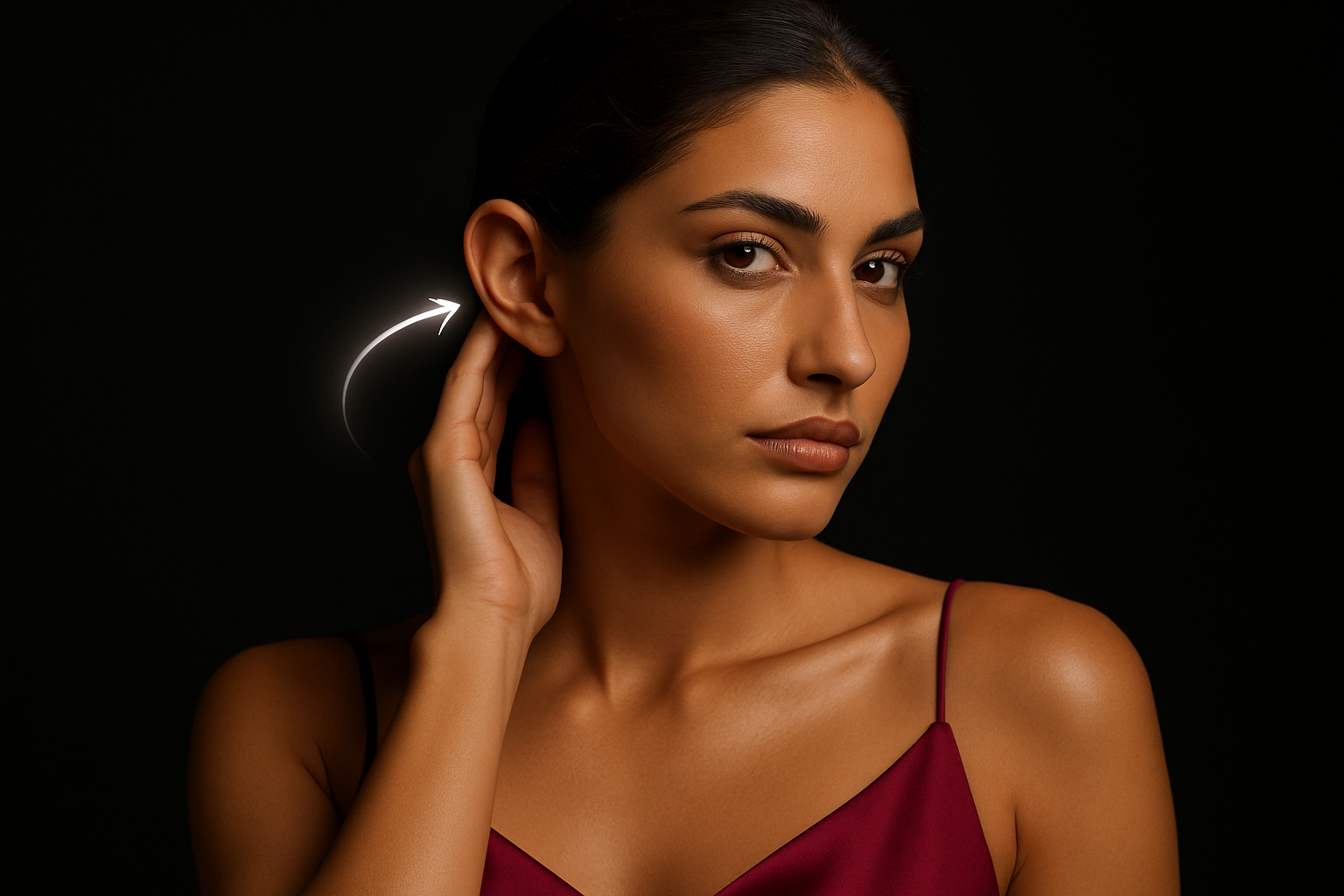
Prominent or asymmetrical ears—clinically categorized under antihelical fold dysplasia or conchal hypertrophy—can significantly impact facial harmony and individual self-confidence. For both pediatric patients (aged five and above) and adults, cosmetic ear surgery, clinically termed otoplasty, offers a permanent anatomical refinement. Choosing ear correction turkey provides patients with access to world-class board-certified plastic surgeons, state-of-the-art medical infrastructure, and comprehensive surgical care tailored to achieve natural, balanced facial proportions.
Table of Contents:
- Procedure & Treatment Overview
- Ideal Candidates & Medical Assessment
- Modern Surgical Techniques & Technologies
- Step-by-Step Procedure Process
- Recovery Timeline, Aftercare & Expected Results
- Global Cost & Destination Comparison
- 5-Day VIP Patient Journey in Istanbul
- Frequently Asked Questions (FAQ)
- Summary & Next Steps
At Health Beauty Turkey, every surgical protocol is designed around anatomical precision, patient safety, and aesthetic excellence. Whether addressing structural cartilage defects, congenital ear prominence, or post-traumatic asymmetry, our specialized surgical team utilizes advanced, minimally invasive techniques to minimize visible scarring and maximize patient comfort.
Quick Medical Facts Summary
- Procedure Duration: 1 to 2 hours (bilateral procedure)
- Hospital Stay: Outpatient (Same-day discharge) or 1-night observation if combined with other procedures
- Anesthesia Type: Local anesthesia with intravenous sedation (Adults) / General anesthesia (Pediatric patients)
- Recovery Timeline: 7 to 10 days for initial wound healing; full tissue maturation in 3 to 6 months
- Clinical Success Rate: Exceeds 98% for long-term anatomical stability
Procedure & Treatment Overview
Cosmetic ear correction, or otoplasty, is a specialized plastic surgery procedure engineered to reshape, reposition, or resize the auricular cartilage. Prominence occurs primarily due to two structural anomalies: an absent or underdeveloped antihelical fold (causing the outer rim of the ear to fold outward) or conchal bowl hypertrophy (an overdevelopment of the deep cavity of the outer ear that projects the entire ear away from the skull).
The fundamental objective of ear surgery in Turkey is to bring the auricle into a harmonious anatomical angle relative to the scalp—typically between 15 to 20 degrees—without compromising natural ear contours or auditory function. By modifying the structural cartilage framework behind the ear, surgeons create a soft, natural curve that seamlessly blends with the patient’s overall facial aesthetic.
Ideal Candidates & Medical Assessment
Determining candidacy for cosmetic ear pinning involves a thorough pre-operative medical assessment. Suitable candidates include:
- Children Aged 5 and Older: By age five, auricular cartilage has reached approximately 85% to 90% of its adult size, making early intervention safe and effective before peer interactions impact self-esteem.
- Adults Seeking Facial Symmetry: Individuals presenting with prominent, disproportionate, or asymmetrical ears who desire permanent correction.
- Patients with Post-Traumatic or Congenital Deformities: Individuals requiring secondary revision or correction of constricted, stall, or shell ear deformities.
- Non-Smokers in Good General Health: Candidates free from active chronic otic infections, uncontrolled hypertension, or impaired wound-healing disorders.
During the initial consultation, surgeons perform precise cephalometric measurements, evaluate cartilage pliability, and discuss realistic aesthetic expectations. If patients are contemplating complementary facial procedures, such as rhinoplasty for men in Turkey or non-surgical facial rejuvenation, comprehensive surgical planning is established during this phase.
Modern Surgical Techniques & Technologies
Surgical techniques for ear correction turkey are customized according to cartilage stiffness, patient age, and the precise anatomical cause of prominence. Modern plastic surgery prioritizes cartilage-sparing approaches over aggressive cartilage resection to prevent unnatural, sharp surgical edges.
1. Mustarde Technique (Antihelical Fold Creation)
This cartilage-sparing technique utilizes permanent mattress sutures (typically non-absorbable polypropylene) placed along the posterior aspect of the antihelix fold. By tightening these sutures, the surgeon creates a natural, rounded antihelical fold, pulling the outer rim of the ear closer to the head.
2. Furnas Technique (Conchal Mastoid Suturing)
When prominence is driven by conchal hypertrophy, the Furnas technique is employed. Permanent sutures are placed between the deep conchal cartilage and the mastoid fascia (the firm tissue covering the bone behind the ear), effectively anchoring the deep bowl of the ear back against the skull.
3. Cartilage Excision & Reshaping
In cases of thick, rigid cartilage or severe conchal enlargement, a precise crescent section of conchal cartilage is excised through a discreet posterior incision. The remaining cartilage edges are smoothed and re-approximated, ensuring a smooth, natural contour.
4. Incisionless (Needle) Otoplasty
For select candidates with flexible cartilage and minor fold deficiencies, specialized needles are used to place subdermal sutures without open skin incisions. This technique offers zero external incisional scarring and accelerated recovery times.
Step-by-Step Procedure Process
Understanding the surgical steps provides patients with complete clarity and peace of mind throughout their treatment journey in Istanbul:
Step 1: Surgical Marking & Anesthesia
The surgeon marks precise surgical lines within the natural posterior auricular crease (behind the ear). Appropriate anesthesia is administered to ensure complete patient comfort.
Step 2: Posterior Incision Access
A small, hidden incision is created in the posterior crease of the ear. This strategic placement ensures that post-surgical scars remain virtually invisible from both front and side profiles.
Step 3: Cartilage Remodeling & Suturing
The surgeon exposes the auricular cartilage framework. Utilizing specialized micro-instruments, the cartilage is sculpted, folded, or reduced using internal structural suturing techniques (Mustarde and Furnas methods).
Step 4: Wound Closure & Compression Dressing
The skin incision is meticulously closed using fine, absorbable sutures. A soft protective compression bandage is placed around the head to stabilize the newly repositioned cartilage and minimize post-operative swelling or hematoma formation.
Recovery Timeline, Aftercare & Expected Results
Adhering to post-operative instructions is vital for securing long-term cartilage positioning and preventing complications.
- Days 1–3: The primary compressive head bandage remains intact. Patients may experience mild discomfort or pressure, easily managed with prescribed analgesics. Elevation of the head during sleep is strictly recommended.
- Day 4–7: The initial surgical bandage is removed at the clinic. The surgeon inspects the incision site and fits the patient with a soft athletic headband. Patients can resume light daily activities.
- Weeks 2–4: Residual bruising and swelling subside significantly. The protective headband must be worn continuously during night sleep for 4 to 6 weeks to prevent accidental folding of the ears.
- Months 3–6: Cartilage settling and tissue healing achieve complete maturation. Final anatomical results are fully visible, revealing natural, symmetrical ear contours anchored stably against the head.
Global Cost & Destination Comparison
Turkey has established itself as the global premier destination for cosmetic plastic surgery by combining affordable pricing models with uncompromised international accreditation and medical expertise.
| Destination / Parameter | Average Cost (USD) | JCI Quality Standards | Travel Convenience | All-Inclusive VIP Care |
|---|---|---|---|---|
| Turkey (Health Beauty Turkey) | $1,800 – $2,800 | World-Class / Highly Accredited | Direct Flights & VIP Transfers | Full VIP Package Included |
| United Kingdom | $4,500 – $7,000 | Variable Standard | Domestic Travel | Not Included (Extra Fees) |
| United States | $5,000 – $8,500 | High Quality / Expensive | Domestic Travel | Not Included (Extra Fees) |
| Germany | $4,000 – $6,500 | High Quality Standard | EU Central Travel | Rarely Included |
| Thailand | $2,500 – $4,000 | Moderate to High | Long Haul Flight | Partial Bundles Only |
| India | $2,000 – $3,500 | Variable Accreditation | Long Haul Flight | Rarely Included |
5-Day VIP Patient Journey in Istanbul
Health Beauty Turkey provides an integrated, hassle-free medical travel experience designed to ensure complete comfort from arrival to departure.
Day 1: VIP Arrival & Luxury Accommodation
Upon landing at Istanbul Airport (IST or SAW), your private VIP driver meets you for transfer to your luxury 5-star partner hotel. Your personal patient coordinator provides your detailed itinerary for the upcoming days.
Day 2: Clinical Consultation, Diagnostics & Surgery
You are transferred to our state-of-the-art surgical hospital. You meet your plastic surgeon for final anatomical measurements and medical clearance (blood work, pre-op screening). The otoplasty procedure is performed under sterile operating room conditions, followed by post-op recovery monitoring.
Day 3: Hotel Relaxation & Dedicated Recovery
Dedicated rest at your luxury hotel. Our medical team remains in continuous contact to monitor comfort levels and ensure effective medication administration.
Day 4: Post-Operative Check-up & Bandage Adjustment
You return to the clinic for a follow-up assessment. The chief surgeon removes the initial heavy surgical bandage, inspects surgical site healing, and fits your protective post-op headband.
Day 5: Final Evaluation & VIP Return Departure
Your surgeon conducts a final clinical review, provides comprehensive home aftercare instructions, and issues your fit-to-fly medical documentation. Your private VIP transport transfers you back to the airport for your flight home.
For patients considering secondary aesthetic enhancements during their visit, Health Beauty Turkey also offers expert consultations for procedures such as a hair transplant in Turkey.
Frequently Asked Questions (FAQ)
Is cosmetic ear correction surgery permanent?
Yes. Otoplasty provides permanent structural reshancement. Because the internal cartiliginous framework is surgically recontoured and anchored with durable structural sutures, the ears maintain their new position permanently once healing is complete.
Will there be visible scars behind my ears?
Surgical incisions are strategically placed within the natural posterior crease behind the ear. Once healed, the thin linear scar is concealed within the structural fold and is virtually unnoticeable to others.
Is otoplasty painful?
The surgery itself is completely painless as it is conducted under local anesthesia with sedation or general anesthesia. During the initial 48 hours post-op, patients may experience mild throbbing or sensation of pressure, which is easily managed with prescribed oral pain medications.
How long do I need to stay in Istanbul for ear correction surgery?
A standard stay of 5 days is recommended. This allows sufficient time for surgical execution, initial healing, bandage removal, and thorough post-operative medical clearance by your surgeon prior to your flight home.
Summary & Next Steps
Cosmetic ear correction turkey offers a reliable, highly successful solution for individuals seeking to eliminate ear prominence and achieve natural facial balance. By choosing Health Beauty Turkey, patients benefit from master plastic surgeons, cutting-edge cartilage-sparing techniques, and an all-inclusive VIP medical experience designed around patient safety and clinical perfection.
If you or your child are considering ear correction surgery, contact our specialized medical team today to receive a personalized digital consultation and tailored surgical assessment.
Medical Disclaimer: The clinical information provided in this article is for educational purposes only and does not replace professional medical advice, diagnosis, or treatment. Individual surgical outcomes may vary based on anatomical characteristics and healing capacity. Always consult with a qualified plastic surgeon regarding your specific medical condition.
Related Articles: ear surgery in Turkey | rhinoplasty for men in Turkey | hair transplant in Turkey
References & Trusted Sources: National Institutes of Health (NIH) – Clinical Research | World Health Organization (WHO) – Health Guidelines | National Center for Biotechnology Information (NCBI / PubMed)