
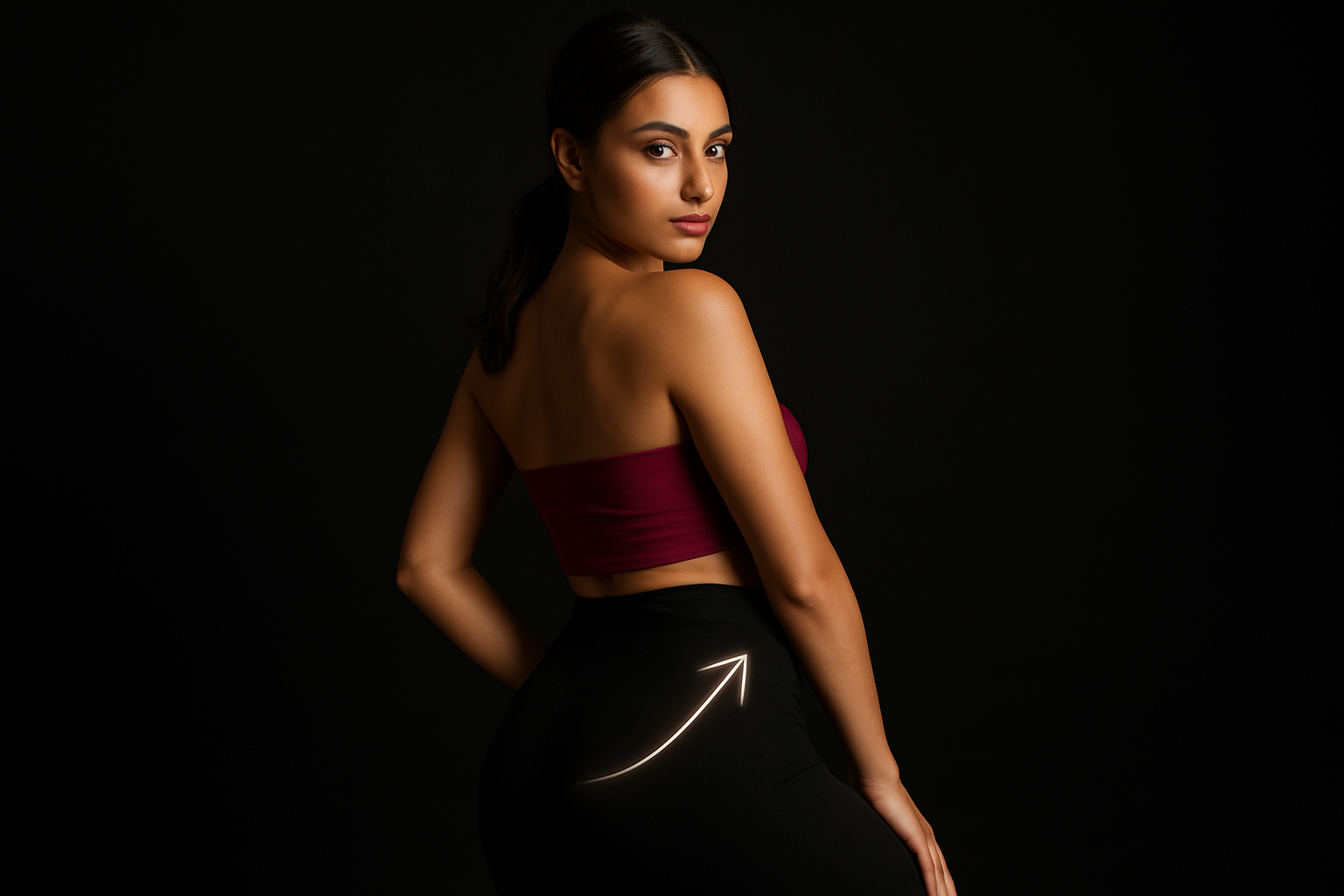
A well-proportioned, contoured lower body is central to modern aesthetic harmony. Over the past decade, gluteal enhancement has evolved into one of the most frequently requested plastic surgery procedures globally. Patients seeking fuller, more youthful, or anatomical balance often face a crucial decision: selecting between silicone gluteal implants and autologous fat transfer (commonly known as the Brazilian Butt Lift or BBL). Each method presents distinct clinical advantages, technical considerations, and ideal candidate profiles.
Table of Contents:
- Quick Medical Facts Summary
- Procedure & Treatment Overview
- Ideal Candidates & Medical Assessment
- Modern Surgical Techniques & Technologies
- Step-by-Step Procedure Process
- Recovery Timeline, Aftercare & Expected Results
- Global Cost & Destination Comparison (Turkey vs UK, USA, Germany, Thailand, India)
- 5-Day VIP Patient Journey in Istanbul
- Frequently Asked Questions (FAQ)
- Summary & Next Steps
Turkey, particularly Istanbul, has emerged as a premier global hub for advanced aesthetic procedures. At Health Beauty Turkey, elite board-certified plastic surgeons combine anatomical precision, state-of-the-art medical technology, and international safety protocols to deliver tailored gluteal transformations. Understanding the key differences between implant-based amplification and natural fat grafting enables patients to make empowered, scientifically sound decisions aligned with their body goals.
Quick Medical Facts Summary
| Procedure Duration | 2.5 to 4 hours (depending on technique) |
|---|---|
| Hospital Stay | 1 to 2 nights of overnight medical observation |
| Anesthesia | General anesthesia |
| Recovery Period | Initial return to light activity in 10-14 days; full recovery in 6-8 weeks |
| Success Rate | 95% – 98% patient satisfaction rate under board-certified care |
Procedure & Treatment Overview
Gluteal enhancement aims to improve the volume, projection, shape, and overall symmetry of the buttocks. The choice between silicone implants and autologous fat transfer depends on existing body fat distribution, desired volume increase, skin elasticity, and structural anatomy.
Autologous Fat Transfer (Brazilian Butt Lift)
Autologous fat transfer utilizes the patient’s own adipose tissue to harvest, purify, and re-inject fat cells into the gluteal subcutaneous space. This approach achieves a soft, completely natural feel while simultaneously contouring donor sites such as the abdomen, flanks, lower back, or thighs via high-definition liposuction. For a deeper look at comparative options, review our guide on comparison of buttock augmentation types in Turkey.
Silicone Gluteal Implants
Silicone gluteal augmentation relies on solid or highly cohesive gel implants specifically designed for the gluteal region. Unlike breast implants, gluteal implants are elastomeric solid silicone devices capable of withstanding heavy mechanical stress and muscle forces. Implants are ideal for lean patients who lack sufficient localized fat deposits for harvesting.
Ideal Candidates & Medical Assessment
Determining whether a patient is best suited for gluteal implants or fat grafting requires a thorough preoperative clinical evaluation.
Candidates for Autologous Fat Transfer
- Patients with adequate donor fat in areas such as the waist, flank, abdomen, or upper thighs.
- Individuals seeking moderate volume augmentation combined with aggressive body sculpting (waist-to-hip ratio improvement).
- Patients desiring a completely natural feeling result with no foreign materials implanted.
- Individuals with good skin elasticity capable of adapting to restored body contours. Learn more about natural fat transfer surgery in Turkey.
Candidates for Silicone Implants
- Lean or athletic patients with a low Body Mass Index (BMI) who lack sufficient harvestable fat reserves.
- Individuals seeking dramatic, structured gluteal projection that cannot be achieved with fat transfer alone.
- Patients requiring significant upper-pole gluteal volume and precise projection.
- Candidates who are comfortable with surgical implants and understand long-term maintenance requirements.
Modern Surgical Techniques & Technologies
Modern gluteal surgery prioritizes patient safety and natural anatomical integration. Advanced techniques developed over the last decade have radically elevated clinical outcomes.
Subfascial and Intramuscular Implant Placement
To ensure implant stability and realistic tactile feel, gluteal implants are placed within or beneath the gluteus maximus muscle (intramuscular or subfascial placement). Placing the implant deep within the muscle prevents implant visibility, edge palpability, and migration while minimizing pressure on cutaneous tissues.
Subcutaneous Ultrasound-Guided Fat Transfer
Safety is the absolute priority during fat grafting. Modern standards strictly mandate that fat must be injected exclusively into the subcutaneous space, avoiding deep muscular layers entirely. Surgeons at Health Beauty Turkey utilize ultrasound guidance and specialized blunt cannula technology to map tissue layers, guaranteeing precise subcutaneous micro-fat placement and preventing vascular complications.
For patients who prefer non-surgical or alternative options, exploring types of cosmetic body fillers for aesthetic enhancement in Turkey offers additional insight into modern volume restoration.
Step-by-Step Procedure Process
Step 1: Preoperative Evaluation & Mapping
The patient undergoes comprehensive blood testing, medical clearance, and detailed preoperative anatomical marking. The surgeon draws vector lines to identify donor fat extraction sites or precise implant pocket boundaries.
Step 2: Anesthesia & Surgical Execution
General anesthesia is administered by an expert medical team. For autologous fat grafting, VASER ultrasound-assisted or power-assisted liposuction harvests live fat cells gentle on cellular walls. The fat is centrifuged, filtered, and prepared. For implants, a small, hidden incision is made in the intergluteal crease to craft the muscular pocket.
Step 3: Sculpting & Grafting / Implant Insertion
In fat transfer cases, purified fat is carefully injected in micro-droplets across multiple layers within the subcutaneous plane to optimize graft survival. In implant surgery, the cohesive silicone device is positioned inside the intramuscular pocket and closed in multiple tissue layers.
Step 4: Surgical Closure & Dressing
Incisional sites are closed using absorbable aesthetic sutures, drains are placed if necessary, and a specialized medical compression garment (faja) is applied to minimize edema and support newly contoured tissues.
Recovery Timeline, Aftercare & Expected Results
Adherence to postoperative protocols is crucial for optimizing both aesthetic outcome and overall recovery speed. Detailed instructions are provided for both procedures.
- Days 1–3: Initial hospital stay with continuous pain management and monitoring. Patients are encouraged to perform light walking to promote lower-limb circulation. Direct pressure on the buttocks must be strictly avoided.
- Week 1–2: Edema and mild bruising peak and begin to resolve. Patients undergoing fat transfer must use a specialized BBL pillow when sitting to avoid direct ischemic pressure on transferred fat cells. Implant patients avoid deep sitting to facilitate muscle healing.
- Week 3–4: Drains (if used) are removed. Light daily activities can be resumed. Patients continue wearing specialized medical compression garments continuously.
- Week 6–8: Patients receive medical clearance for normal sitting, sleeping on their back, and moderate exercise. Final structural resolution occurs gradually over 3 to 6 months.
Detailed guidance on combined procedures can be found in our overview of buttock lift and augmentation surgery in Turkey.
Global Cost & Destination Comparison (Turkey vs UK, USA, Germany, Thailand, India)
Turkey offers world-class medical standards at significantly lower costs due to favorable economic dynamics, operational efficiency, and comprehensive government-supported medical tourism infrastructure.
| Destination | Average Cost (USD) | JCI Quality Standards | Travel Convenience | All-Inclusive VIP Care |
|---|---|---|---|---|
| Turkey (Health Beauty Turkey) | $3,500 – $5,500 | World-Class Accredited Hospitals | Direct flights from major global cities | Included (VIP Transfer, 5-Star Hotel, Care) |
| United Kingdom | $9,500 – $14,000 | Standard NHS / Private Rules | Local travel for UK residents | Not included (Charged separately) |
| United States | $11,000 – $18,000 | High Standard (AAAASF) | Varies by state | Not included (Extremely high out-of-pocket) |
| Germany | $8,500 – $13,000 | EU Quality Regulations | Direct European access | Not included |
| Thailand | $4,500 – $7,000 | International Hospitals | Long-haul flight times | Partially included in select packages |
| India | $3,800 – $5,200 | NABH / JCI Accredited | Long-haul travel requirement | Rarely included |
5-Day VIP Patient Journey in Istanbul
At Health Beauty Turkey, every international patient receives a seamless, stress-free medical journey designed around comfort, medical excellence, and personal privacy.
Day 1: VIP Arrival & Luxury Hotel Check-In
Upon landing in Istanbul, a private VIP driver greets you at the airport and transfers you to your 5-star hotel. An English-speaking medical coordinator confirms your itinerary for the following day.
Day 2: Clinical Consultation, Diagnostics & Surgery
You meet your chief operating surgeon for comprehensive physical assessment, pre-op blood work, and surgical planning. Once cleared, you enter surgery in a state-of-the-art JCI-accredited hospital facility.
Day 3: In-Hospital Monitoring & Post-Op Care
You remain under 24/7 specialized nursing observation. Pain management, anti-inflammatory protocols, and initial mobilization are conducted to ensure comfortable early recovery.
Day 4: Hotel Discharge & Relaxation
After physical clearance by your surgeon, you return to your luxury hotel room. Our nursing team conducts mobile check-ins, changing dressings and providing specialized compression garment guidance.
Day 5: Final Medical Evaluation & Safe Return
You attend your final follow-up consultation with your surgeon. Drain removal, incision inspection, and personalized long-term aftercare instructions are completed. Your private driver transfers you to the airport for your journey home.
Frequently Asked Questions (FAQ)
Which procedure offers more natural results: silicone implants or fat transfer?
Autologous fat transfer offers a 100% natural feeling result because it utilizes your own body fat cells. However, modern cohesive gluteal implants, when placed correctly inside or beneath the muscle layer by an experienced surgeon, also provide a highly natural, firm anatomical contour and appearance.
Is buttock augmentation in Turkey safe?
Yes. When performed by board-certified plastic surgeons in accredited, modern hospitals utilizing standardized ultrasound-guided subcutaneous injection techniques or precise intramuscular implant placement, gluteal augmentation is safe and highly effective. Health Beauty Turkey enforces strict international surgical safety standards.
What happens if I don’t have enough body fat for a BBL?
If you have a low body mass index (BMI) or limited harvestable body fat, silicone gluteal implants are the gold-standard recommendation. Alternatively, hybrid techniques combining small silicone implants with minimal fat grafting can be customized for optimal structural results.
How long do the results of silicone gluteal implants and BBL last?
Silicone gluteal implants are designed to last 10 to 15 years or longer, requiring periodic monitoring. Autologous fat transfer results are permanent once transferred fat cells successfully integrate into local vascular networks (typically 60-70% survival rate after 3 months).
Summary & Next Steps
Choosing between silicone implants and autologous fat transfer for buttocks augmentation depends on your body composition, aesthetic targets, and structural preferences. Both techniques yield exceptional, life-changing outcomes when performed by master aesthetic surgeons in state-of-the-art medical facilities.
Take the first step toward achieving your ideal silhouette. Contact our medical consultation team at Health Beauty Turkey today to receive your complimentary, personalized virtual assessment and custom treatment plan from top Istanbul plastic surgeons.
Medical Disclaimer: The information provided in this article is for educational purposes only and should not be considered formal medical advice. Final surgical eligibility, technique selection, and clinical outcome expectations must be evaluated during an individual consultation with a qualified board-certified plastic surgeon.
Related Articles: comparison of buttock augmentation types in Turkey | natural fat transfer surgery in Turkey | types of cosmetic body fillers for aesthetic enhancement in Turkey | buttock lift and augmentation surgery in Turkey
References & Trusted Sources: National Institutes of Health (NIH) – Clinical Research | World Health Organization (WHO) – Health Guidelines | National Center for Biotechnology Information (NCBI / PubMed)