
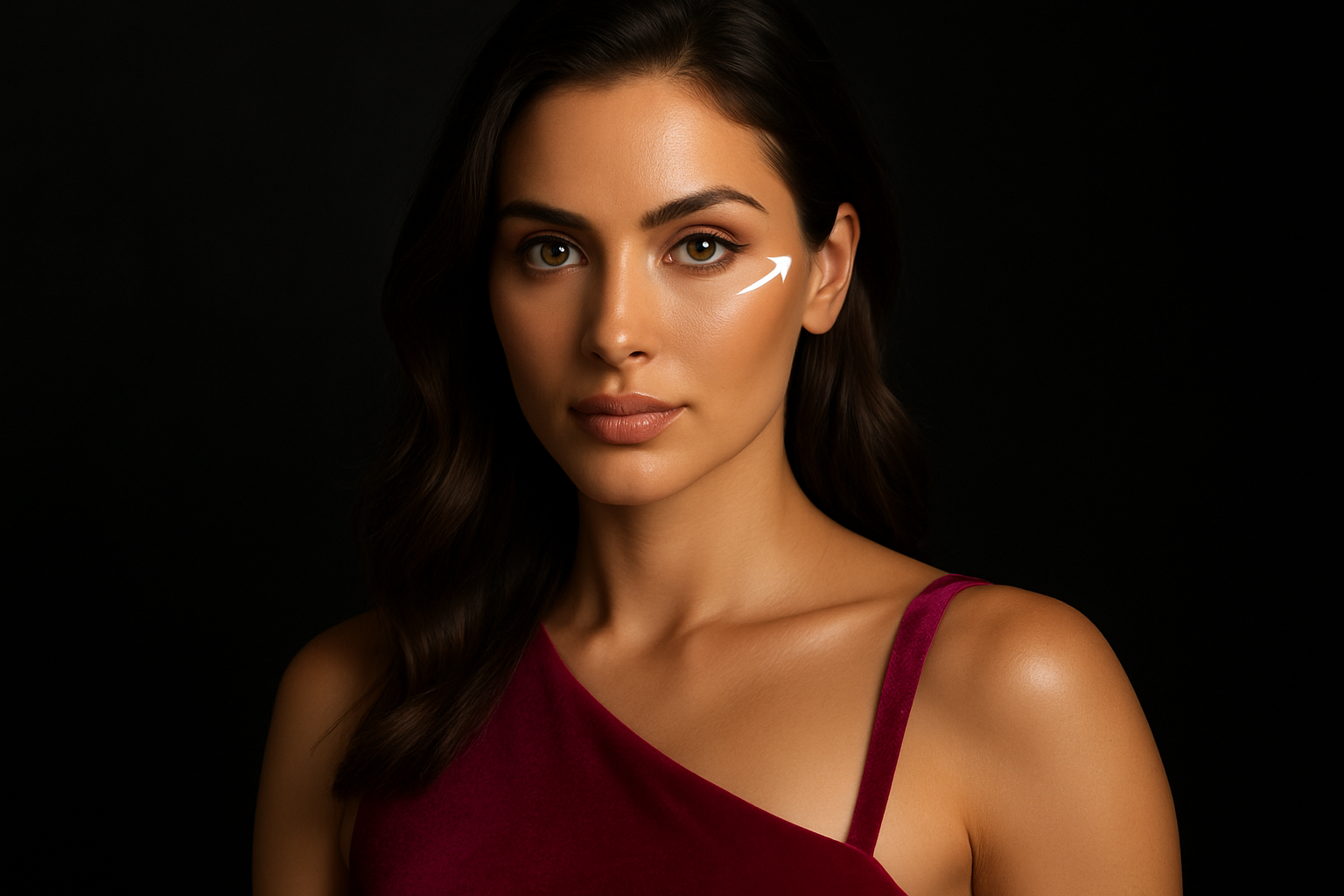
The periocular region is the primary focal point of facial aesthetics and human interaction. As skin elasticity declines and soft tissue structures shift over time, the delicate area surrounding the eyes often shows the earliest signs of aging. Periorbital sagging, upper lid hoodedness, under-eye bags, and tear-trough depressions can create a permanently tired, stern, or aged appearance. Modern eye cosmetic surgery encompasses a spectrum of advanced oculoplastic and facial plastic procedures designed to restore vibrant, youthful, and naturally rested eye contours.
Table of Contents:
- Procedure & Treatment Overview
- Ideal Candidates & Medical Assessment
- Modern Surgical Techniques & Technologies
- Step-by-Step Procedure Process
- Recovery Timeline, Aftercare & Expected Results
- Global Cost & Destination Comparison
- 5-Day VIP Patient Journey in Istanbul
- Frequently Asked Questions (FAQ)
- Summary & Next Steps
Turkey has emerged as a premier global hub for periorbital surgical rejuvenation. Patients from around the globe choose Istanbul for its world-class, board-certified plastic surgeons, JCI-accredited surgical facilities, innovative micro-surgical techniques, and comprehensive all-inclusive care packages. Whether you require functional upper lid resection, lower lid fat repositioning, or complex cat-eye canthoplasty, understanding the clinical aspects, surgical options, and recovery protocol is essential to achieving optimal aesthetic outcomes.
Quick Medical Facts Summary
- Procedure Duration: 1 to 2.5 hours (depending on combined upper, lower, or canthoplasty procedures).
- Hospital Stay: Outpatient or 1 overnight stay for observation.
- Recovery Time: Initial healing in 7 to 10 days; complete soft tissue resolution in 6 to 12 weeks.
- Anesthesia Type: Local anesthesia with intravenous sedation or general anesthesia.
- Success Rate: Greater than 95% satisfaction rate among properly screened patients.
Procedure & Treatment Overview
Eye cosmetic surgery refers to a collection of specialized surgical interventions performed on the upper and lower eyelids, eyebrows, and outer eye corners (canthi). These procedures refine the natural frame of the eyes while maintaining complete functional integrity of ocular lubrication and blink mechanisms.
Key periorbital cosmetic interventions include:
- Upper Blepharoplasty: Precise excision of redundant skin, hypertrophic orbicularis oculi muscle, and herniated medial fat pads to eliminate severe skin drooping and upper lid overhang. For detailed insight, explore our comprehensive guide on eyelid surgery in Turkey.
- Lower Blepharoplasty: Targeted removal or redistribution of protruding orbital fat pockets combined with tissue tightening to resolve under-eye bags and structural hollows.
- Canthoplasty & Canthopexy: Reconstruction or elevation of the lateral canthal tendon to repair lower lid laxity or create an almond-shaped, slightly upturned lateral eye contour.
- Periorbital Volume Restoration: Application of under-eye fat injection or micro-autologous fat grafting to correct deep tear troughs and infraorbital dark shadows.
- Brow and Temporal Elevation: Integrating eye enlargement surgery with eyebrow lifting to relieve structural heaviness above the lateral orbital rim.
Ideal Candidates & Medical Assessment
Candidate selection for eye cosmetic surgery requires a detailed clinical evaluation of periocular anatomical architecture, skin quality, lid position, and tear film stability. Candidates should possess realistic expectations and undergo pre-operative clearing by an experienced surgical consultant.
Inclusion Criteria for Surgical Candidates
- Individuals presenting with excess upper eyelid skin obscuring the natural palpebral crease or visual field.
- Patients with persistent lower eyelid puffiness caused by orbital fat herniation.
- Patients with tear trough deformities, hollow malar transition zones, or premature periorbital aging.
- Non-smokers in good systemic health without uncontrolled metabolic conditions.
- Patients with healthy ocular surface integrity and realistic surgical goals.
Pre-Operative Ophthalmic & Medical Screening
Prior to scheduling periorbital intervention, patients undergo rigorous screening. This includes Schirmer’s testing to measure baseline tear production, evaluation of lower lid tone via snap-back and distraction tests, intraocular pressure measurement, and assessment of levator muscle function. Patients presenting with active dry eye syndrome, severe thyroid eye disease (Graves’ orbitopathy), or unmanaged glaucoma must receive specialized clearance prior to surgical planning.
Modern Surgical Techniques & Technologies
Surgical refinement in periorbital aesthetics emphasizes structural preservation, invisible scar placement, and harmonious volume distribution rather than aggressive tissue excision.
Transconjunctival Lower Blepharoplasty
For patients with prominent under-eye bags but healthy skin elasticity, the transconjunctival approach provides an ideal surgical solution. The incision is hidden entirely inside the lower eyelid (conjunctiva), allowing direct access to the medial, central, and lateral fat compartments without leaving an external scar. Instead of resecting fat, modern surgeons routinely perform transconjunctival fat repositioning, arcus marginalis release, and pedicled fat transposition into the tear trough to eliminate structural shadowing.
Transcutaneous Blepharoplasty with Canthopexy
When lower lid skin laxity and orbicularis muscle flaccidity coexist with orbital fat prolapse, a transcutaneous subciliary approach is utilized. The incision is made 1 to 2 millimeters below the lower lash line. The surgeon repositions fat, trims micro-strips of excess skin, and frequently integrates a supportive canthopexy (suspension of the lateral canthal tendon) to protect lower lid position and prevent ectropion or scleral show.
Autologous Micro-Fat Grafting
When severe infraorbital hollows or facial fat atrophy are present, surgeons utilize autologous micro-fat harvesting. Utilizing delicate centrifugation and filtration techniques, harvested adipose tissue is micro-injected into deep periosteal planes to restore lost volume seamlessly. Patients interested in structural volume restoration across multiple facial planes can explore our guide on natural fat transfer surgery.
Step-by-Step Procedure Process
- Surgical Marking & Design: While the patient is seated upright, the surgeon marks precise skin excision lines along the natural palpebral crease for upper lid procedures, or subciliary lines for lower lid access. Pinch testing confirms complete eyelid closure capability prior to any incision.
- Anesthesia Administration: Local infiltration with lidocaine and epinephrine is performed combined with intravenous sedation or general anesthesia, ensuring total patient comfort and vascular vasoconstriction.
- Surgical Incision & Tissue Mobilization: High-precision micro-scalpels or radiowave electrosurgical devices execute clean skin or conjunctival incisions with minimal thermal injury to delicate tissues.
- Fat Repositioning & Muscle Resection: Orbital fat compartments are sculpted, released, or repositioned into hypoplastic zones. Hypertrophic strips of muscle tissue or skin are resected strictly within pre-calculated margins.
- Canthal Stabilization & Layered Closure: Structural anchor sutures stabilize the lateral canthal structure if required. Delicate, non-absorbable sub-cuticular sutures (6-0 or 7-0 nylon/polypropylene) close external skin layers to ensure virtually invisible scarring.
Recovery Timeline, Aftercare & Expected Results
Postoperative care following eye cosmetic surgery focuses on controlling edema, preventing ocular surface drying, and promoting rapid tissue healing.
Stage-by-Stage Recovery Expectations
- Days 1–3: Mild to moderate periorbital swelling and ecchymosis (bruising) peak during this period. Cold compresses, head elevation at 45 degrees, and prescribed antibiotic eye drops are essential. Visual acuity may be temporarily blurry due to protective ointments.
- Days 5–7: External non-absorbable sutures are removed in the clinic. Most social activities can be resumed with dark sunglasses; residual bruising can be easily concealed with camouflage cosmetics.
- Weeks 2–4: Over 80% of surgical swelling resolves. Patients can resume light physical exercise and return to routine office work. Soft tissue contours continue to refine.
- Months 3–6: Incisions mature into faint, skin-toned fine lines concealed within natural anatomical folds. Final volume, smooth under-eye transitions, and refreshed ocular proportions are fully consolidated.
Global Cost & Destination Comparison
Turkey is internationally recognized for offering exceptional quality in aesthetic plastic surgery, combining expert surgeons with state-of-the-art accredited medical centers at highly competitive pricing compared to Western Europe and North America.
| Destination | Average Cost Range (USD) | JCI Accredited Hospitals | Travel Convenience | All-Inclusive VIP Care |
|---|---|---|---|---|
| Turkey (Health Beauty Turkey) | $1,800 – $3,500 | Extensive / Top Tier | High (Hub International Airport) | Included (Hotel, VIP Transfers, Care) |
| United Kingdom | $4,500 – $8,500 | Variable | High for UK Residents | Not Included (Extra Fees) |
| United States | $5,500 – $11,000 | High | Domestic Convenience | Not Included (Extra Fees) |
| Germany | $4,200 – $7,800 | High | High within Europe | Rarely Included |
| Thailand | $2,200 – $4,500 | Moderate to High | Long Transit Duration | Partially Available |
| India | $1,500 – $3,200 | Moderate | Long Transit Duration | Partially Available |
5-Day VIP Patient Journey in Istanbul
- Day 1: VIP Arrival & Luxury Transfer: Arrival at Istanbul Airport (IST or SAW). Private VIP transport shuttles you to your 5-star hotel. Personal patient host ensures seamless check-in.
- Day 2: In-Person Consultation & Surgical Intervention: Detailed clinical assessment, pre-op blood work, and final surgical markings with your specialist surgeon. Surgery is performed in a JCI-accredited facility under sterile conditions. Post-op recovery in hospital observation room.
- Day 3: Rest & In-Hotel Recovery: Postoperative check by visiting nursing team. Ice pack protocol, eye drops, and systemic medications administered. Relaxation in luxury hotel accommodation.
- Day 4: Clinical Follow-up & Suture Removal: Detailed medical evaluation at the clinic. Micro-sutures are removed, and wound healing is evaluated. Guidance provided on post-op skincare and scar management.
- Day 5: Final Evaluation & Return Flight: Final clearance check with your operating surgeon. Issuance of medical reports, aftercare guidelines, and fit-to-fly documentation prior to VIP airport transfer.
Frequently Asked Questions (FAQ)
Is eye cosmetic surgery painful?
The procedure is executed under local anesthesia with sedation or general anesthesia, making the surgery completely painless. Postoperatively, patients may experience mild tightness, pressure, or minor discomfort around the eye socket, which is effectively managed with mild oral analgesics provided in your treatment package.
Will blepharoplasty or periorbital surgery leave visible scars?
Surgeons place incisions strategically within natural anatomical boundaries—such as the upper eyelid fold, beneath the lower lash line, or inside the lower lid (transconjunctival). Once fully healed over 3 to 6 months, these surgical lines become virtually undetectable to the naked eye.
How long do the aesthetic results of eye cosmetic surgery last?
Upper and lower blepharoplasty results are long-lasting. Lower eyelid fat repositioning typically lasts 10 to 15 years or permanently, while upper lid rejuvenation yields enduring aesthetic refinement. Natural biological aging continues, but the eyes will consistently appear significantly younger than without intervention.
When can I wear contact lenses and resume makeup after surgery?
Patients should avoid wearing contact lenses for at least 10 to 14 days following periorbital surgery to prevent mechanical tension on the healing lids. Eye makeup can usually be safely reapplied 10 to 12 days after surgery once all surgical skin sites have completely closed.
Summary & Next Steps
Periorbital cosmetic surgery offers a highly effective, clinically proven approach to restoring youthful, radiant, and well-rested eyes. By selecting qualified medical providers in Turkey, patients benefit from world-class surgical expertise, cutting-edge micro-surgical techniques, and comprehensive all-inclusive VIP packages at transparent, globally competitive prices.
If you are considering periorbital rejuvenation, contact our expert medical team at Health Beauty Turkey today for a comprehensive, personalized medical assessment and customized treatment plan.
Medical Disclaimer: The information provided in this article is for educational purposes only and should not be considered personal medical advice. A comprehensive clinical consultation with a qualified plastic surgeon or oculoplastic specialist is required to determine individualized candidacy and treatment plans.
Related Articles: eyelid surgery in Turkey | eye enlargement surgery with eyebrow lifting | under-eye fat injection | natural fat transfer surgery
References & Trusted Sources: National Institutes of Health (NIH) – Clinical Research | World Health Organization (WHO) – Health Guidelines | National Center for Biotechnology Information (NCBI / PubMed)