
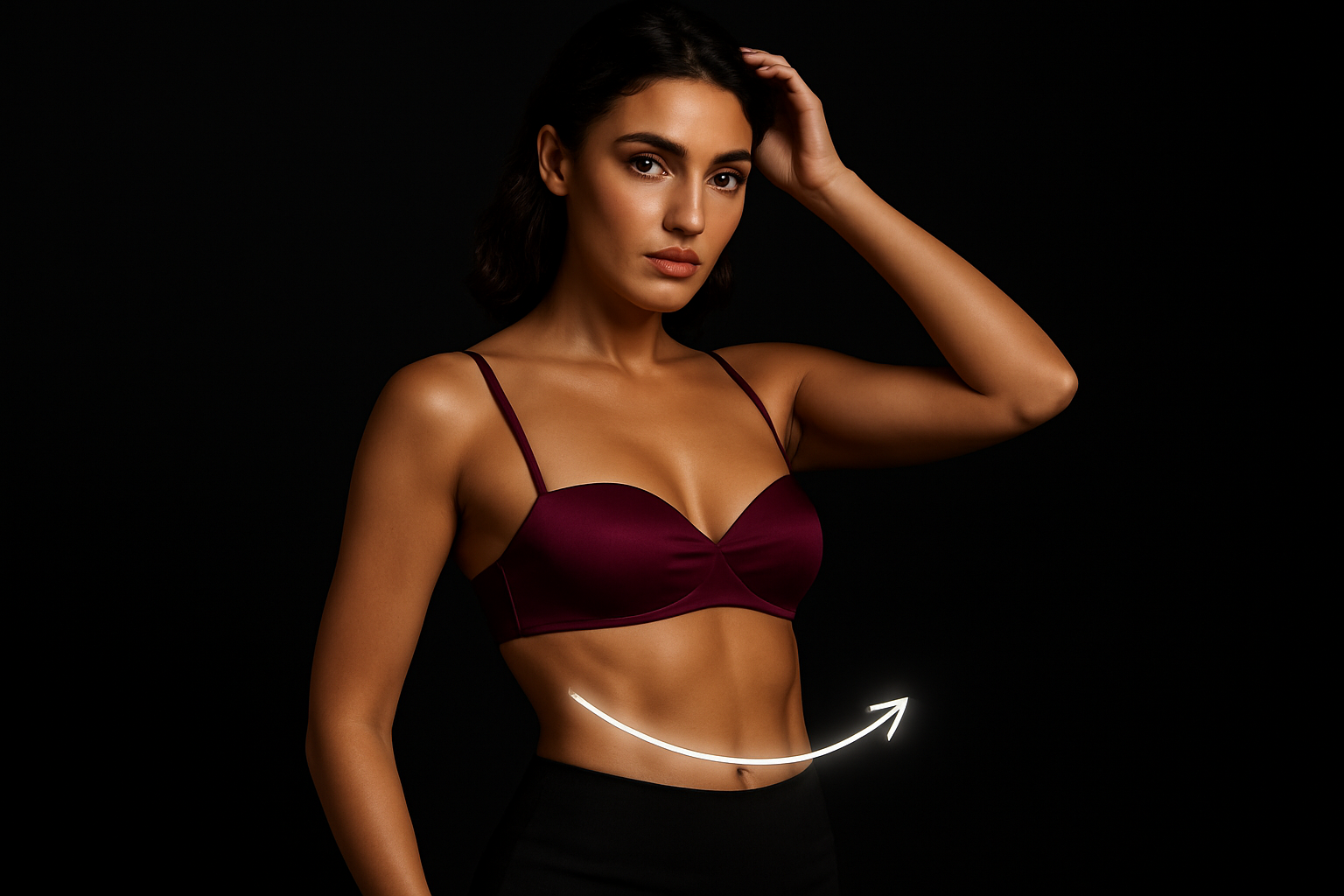
Stubborn fat deposits often resist even the most rigorous dietary regimes and structured physical training. For individuals seeking a sculpted aesthetic profile, laser liposuction turkey has emerged as one of the most effective, clinically refined body contouring solutions globally. By combining advanced laser thermal energy with gentle micro-cannula aspiration, laser-assisted lipolysis targets localized adiposity while simultaneously stimulating sub-dermal collagen contraction.
Table of Contents:
- Procedure & Treatment Overview
- Ideal Candidates & Medical Assessment
- Modern Surgical Techniques & Technologies
- Step-by-Step Procedure Process
- Recovery Timeline, Aftercare & Expected Results
- Global Cost & Destination Comparison (Turkey vs UK, USA, Germany, Thailand, India)
- 5-Day VIP Patient Journey in Istanbul
- Frequently Asked Questions (FAQ)
- Summary & Next Steps
At Health Beauty Turkey, our internationally accredited plastic surgeons utilize state-of-the-art laser technology to redefine body contours with minimal surgical trauma, reduced post-operative bruising, and accelerated recovery times. This comprehensive clinical guide covers every aspect of undergoing laser liposuction in Istanbul, from physiological mechanisms and candidate selection to procedural steps, recovery milestones, and global cost comparisons.
Quick Medical Facts Summary
| Parameter | Clinical Details |
|---|---|
| Procedure Duration | 1 to 3 hours (depending on targeted areas) |
| Hospital Stay | Outpatient or 1 night overnight stay |
| Anesthesia Type | Tumescent local anesthesia with sedation or general anesthesia |
| Initial Recovery | 3 to 7 days for normal daily activities |
| Compression Garment Usage | 3 to 6 weeks continuous wear |
| Final Results Timeline | 3 to 6 months post-procedure |
| Clinical Success Rate | Over 95% patient satisfaction rate |
Procedure & Treatment Overview
Laser-Assisted Liposuction (LAL), commonly referred to as laser liposuction, is a minimally invasive surgical procedure designed to melt targeted subcutaneous fat tissue using precise wavelengths of thermal laser energy. Unlike traditional suction-assisted liposuction (SAL) which relies primarily on mechanical force to disrupt fat cells, laser liposuction liquefies adipocytes prior to extraction. This fundamental distinction drastically reduces mechanical trauma to surrounding vascular structures, connective tissues, and sensory nerves.
The underlying optical fiber delivers calibrated laser energy directly into the subcutaneous layer. This thermal reaction achieves two vital surgical objectives: liquefying stubborn fat deposits for easier aspiration and heating the deep dermis to induce neocollagenesis (new collagen formation). Consequently, patients benefit not only from targeted volume reduction but also from noticeable skin retraction in areas susceptible to minor laxity.
For patients considering non-surgical body sculpting, alternative options such as cold laser fat reduction techniques exist for minor fat bulges. However, surgical laser-assisted liposuction remains the definitive standard for significant, immediate, and permanent anatomical reshaping.
Ideal Candidates & Medical Assessment
Determining candidate suitability for laser liposuction requires a comprehensive clinical evaluation by a board-certified plastic surgeon. Laser liposuction is specifically engineered for body contouring and high-definition shaping rather than primary weight reduction.
Optimal candidates generally exhibit the following clinical characteristics:
- Stable Body Weight: Patients within 15% to 20% of their ideal body weight (BMI under 30) with localized fat pockets.
- Good Skin Elasticity: Mild to moderate skin laxity that can benefit from the collagen-stimulating thermal effects of the laser.
- Localized Adiposity: Persistent fat stores in areas such as the abdomen, flanks, inner and outer thighs, upper arms, submental area (double chin), or back.
- Overall Physical Health: Non-smokers without uncontrolled medical conditions such as severe cardiovascular disease, active infections, or systemic coagulopathies.
- Realistic Expectations: Understanding that laser liposuction refines body contours rather than treating generalized obesity.
For patients with significant skin redundant tissue, particularly following massive weight loss, combining laser lipolysis with excisional surgeries—such as a specialized brachioplasty arm lift surgery—may be recommended during your personalized consultation.
Modern Surgical Techniques & Technologies
The evolution of surgical laser technology has introduced specific light wavelengths (such as 980 nm, 1064 nm, and 1470 nm) that precisely target the absorption spectra of water and fat lipids. Modern laser systems utilized at Health Beauty Turkey feature fine, flexible optical fibers enclosed within ultra-thin stainless steel micro-cannulas.
When evaluating thermal lipolysis versus soundwave-based fat disruption, understanding the differences between laser and Vaser technologies is key. While Vaser utilizes ultrasound energy to emulsify broad fat sheets, laser energy offers superior small-vessel hemostasis (blood vessel coagulation) and exceptional skin tightening capabilities in delicate anatomical zones.
Additionally, for localized skin laxity without extensive fat deposits, targeted modalities such as ENDOLIFT laser skin tightening offer non-invasive dermal restructuring. However, when both fat evacuation and skin tightening are required, multi-wavelength laser liposuction remains the leading surgical solution.
Step-by-Step Procedure Process
Laser liposuction performed at Health Beauty Turkey follows rigorous safety protocols and refined surgical steps to maximize aesthetic output and patient comfort:
- Step 1: Pre-Operative Marking & Mapping
While the patient is standing, the surgeon meticulously maps the localized fat deposits, outlining specific anatomical zones to target or preserve for harmonious muscle definition. - Step 2: Anesthetic Administration & Tumescent Infiltration
Following anesthesia, micro-incisions (2 to 3 mm) are made along discrete body creases. A specialized tumescent fluid (containing saline, lidocaine, and epinephrine) is infused into the subcutaneous layer to numb the site, constrict blood vessels, and expand fat lobules. - Step 3: Laser Thermal Lipolysis
A thin cannula carrying the optical fiber is introduced through the micro-incisions. The surgeon systematically passes the laser through the target tissue. The laser energy ruptures adipocyte cell membranes, converting solid fat into a liquid emulsion while simultaneously cauterizing small capillaries. - Step 4: Micro-Aspiration
Once the fat is emulsified, a dedicated low-pressure aspiration cannula gently evacuations the liquefied fat. In delicate areas, the melted fat may naturally metabolize and clear through the lymphatic system over subsequent weeks if minimal volume was targeted. - Step 5: Incision Closure & Garment Application
Micro-incisions are closed with fine surgical sutures or sterile skin tapes. A medical-grade compression garment is immediately fitted over the treated area to reduce tissue edema, prevent seroma formation, and encourage proper skin retraction.
Recovery Timeline, Aftercare & Expected Results
Recovery following laser liposuction is notably shorter and less painful than traditional liposuction due to reduced tissue trauma and effective vessel coagulation.
Recovery Milestones
- Days 1 – 3: Mild swelling, slight fluid drainage from incision sites, and localized tenderness comparable to post-workout soreness. Patients are encouraged to perform short, gentle walks indoors to promote vascular circulation.
- Week 1: Swelling begins to subside significantly. Most patients resume desk-based work and light non-strenuous routines within 4 to 7 days.
- Weeks 2 – 4: Bruising resolves entirely. Continuous wear of the specialized compression garment remains essential during this period to guide tissue contouring.
- Months 1 – 3: Dermal collagen synthesis intensifies, refining skin firmness over the treated areas. Incremental reduction in swelling reveals the final sculpted silhouette.
Essential Aftercare Guidelines
To ensure optimal clinical outcomes, patients must strictly follow post-operative instructions: maintain continuous use of compression garments as advised, avoid strenuous exercise or heavy lifting for 3 to 4 weeks, stay adequately hydrated, and attend all scheduled follow-up assessments with the medical team.
Global Cost & Destination Comparison (Turkey vs UK, USA, Germany, Thailand, India)
Turkey has firmly established itself as a premier global hub for cosmetic plastic surgery. Choosing laser liposuction turkey offers international patients world-class surgical expertise, JCI-accredited medical facilities, and comprehensive VIP package pricing that is significantly more cost-effective than in Western nations.
| Destination | Average Cost (Laser Liposuction) | Hospital Accreditation | All-Inclusive VIP Services | Travel Convenience |
|---|---|---|---|---|
| Turkey (Health Beauty Turkey) | $2,200 – $3,800 | JCI & Ministry of Health Certified | Included (VIP Transfers, 5-Star Hotel, Garments, Aftercare) | Direct flights from major global hubs |
| United States | $6,000 – $11,000 | AAAASF / JCI | Not Included (Extra costs for facility, anesthesia, garments) | Varies by region |
| United Kingdom | $5,500 – $9,500 | CQC Accredited | Not Included (Consultations & aftercare charged separately) | Short domestic travel |
| Germany | $5,000 – $8,500 | TÜV / ISO Standards | Rarely Included | Central European access |
| Thailand | $3,200 – $5,500 | JCI Accredited | Optionally Available | Long-haul travel for Western patients |
| India | $2,500 – $4,200 | NABH / JCI | Limited Packages | Long-haul travel |
The cost efficiency in Turkey is driven by favorable currency exchange rates, competitive medical tourism infrastructure, and lower operational overheads—without ever compromising surgical quality, sterile standards, or patient safety.
5-Day VIP Patient Journey in Istanbul
At Health Beauty Turkey, we provide a seamless, stress-free experience tailored specifically for our international patients arriving in Istanbul:
- Day 1: VIP Arrival & Luxury Transfer
Upon landing at Istanbul Airport, your private chauffeured VIP vehicle escorts you directly to your luxury 5-star partner hotel. You receive your detailed itinerary and care kit. - Day 2: Clinical Consultation, Pre-Op Diagnostics & Surgery
You meet your board-certified plastic surgeon for a comprehensive physical evaluation, anatomical marking, and pre-operative blood panels. Once cleared, the laser liposuction procedure is performed in a state-of-the-art hospital suite. - Day 3: In-Hospital Evaluation & Hotel Discharge
Following a comfortable overnight recovery in the hospital under continuous nursing care, your surgeon evaluates your initial healing, checks drainage, and clears you for discharge back to your hotel for rest. - Day 4: Post-Operative Rest & Guided Lymphatic Recovery
You rest at your luxury hotel. Our patient care coordinators remain in constant contact, providing guidance on compression garment adjustments and light mobilization. - Day 5: Final Medical Evaluation & Return Flight
You visit the clinic for your final check-up. The surgeon inspects incision sites, provides complete aftercare instructions, and approves your flight home. Private VIP transport conveys you to the airport for your departure.
Frequently Asked Questions (FAQ)
Are the results of laser liposuction permanent?
Yes. The fat cells targeted and liquefied by the laser are permanently removed from the body. Because adult bodies do not generate new fat cells in large quantities, the structural changes to your body contour are long-lasting. However, maintaining a stable weight through a balanced diet and regular physical activity is necessary to prevent remaining fat cells from expanding.
How does laser liposuction differ from Vaser liposuction?
While both are advanced body-sculpting techniques, they utilize different energy forms. Laser liposuction relies on thermal light energy to melt fat and heat dermal tissue for localized skin tightening. Vaser uses ultrasound wave energy to emulsify fat deposits over broader areas. For a detailed breakdown of clinical benefits, explore our complete laser vs Vaser liposuction comparison.
Does laser liposuction tighten loose skin?
Yes, one of the primary advantages of laser-assisted lipolysis is its secondary skin tightening effect. The thermal energy delivered to the deep dermal layers stimulates collagen fiber contraction and encourages long-term collagen synthesis, resulting in firmer skin overlying the treated contour compared to traditional liposuction.
Is the procedure painful?
Laser liposuction is performed under local tumescent anesthesia with sedation or general anesthesia, ensuring you feel no pain during the procedure. Post-operatively, mild discomfort and muscular soreness are expected for a few days, which can be easily managed with prescribed analgesics.
Summary & Next Steps
Laser liposuction in Turkey represents an advanced fusion of surgical precision, modern thermal technology, and cost-effective aesthetic care. Whether your goal is to eliminate stubborn abdominal fat, contour the flanks, or define delicate areas with minor skin laxity, Health Beauty Turkey offers tailored surgical protocols designed around your unique anatomy.
Take the first step toward achieving your ideal silhouette. Contact our medical consulting team today to schedule your complimentary online clinical evaluation and receive a customized treatment plan from our elite plastic surgeons.
Medical Disclaimer: The information provided in this article is intended for educational purposes only and does not constitute formal medical advice. Individual aesthetic and surgical results may vary based on anatomical factors, skin elasticity, and health status. A comprehensive physical consultation with a licensed plastic surgeon is required prior to undergoing any surgical procedure.
Related Articles: cold laser fat reduction techniques | brachioplasty arm lift surgery | differences between laser and Vaser technologies | ENDOLIFT laser skin tightening | laser vs Vaser liposuction comparison
References & Trusted Sources: National Institutes of Health (NIH) – Clinical Research | World Health Organization (WHO) – Health Guidelines | National Center for Biotechnology Information (NCBI / PubMed)