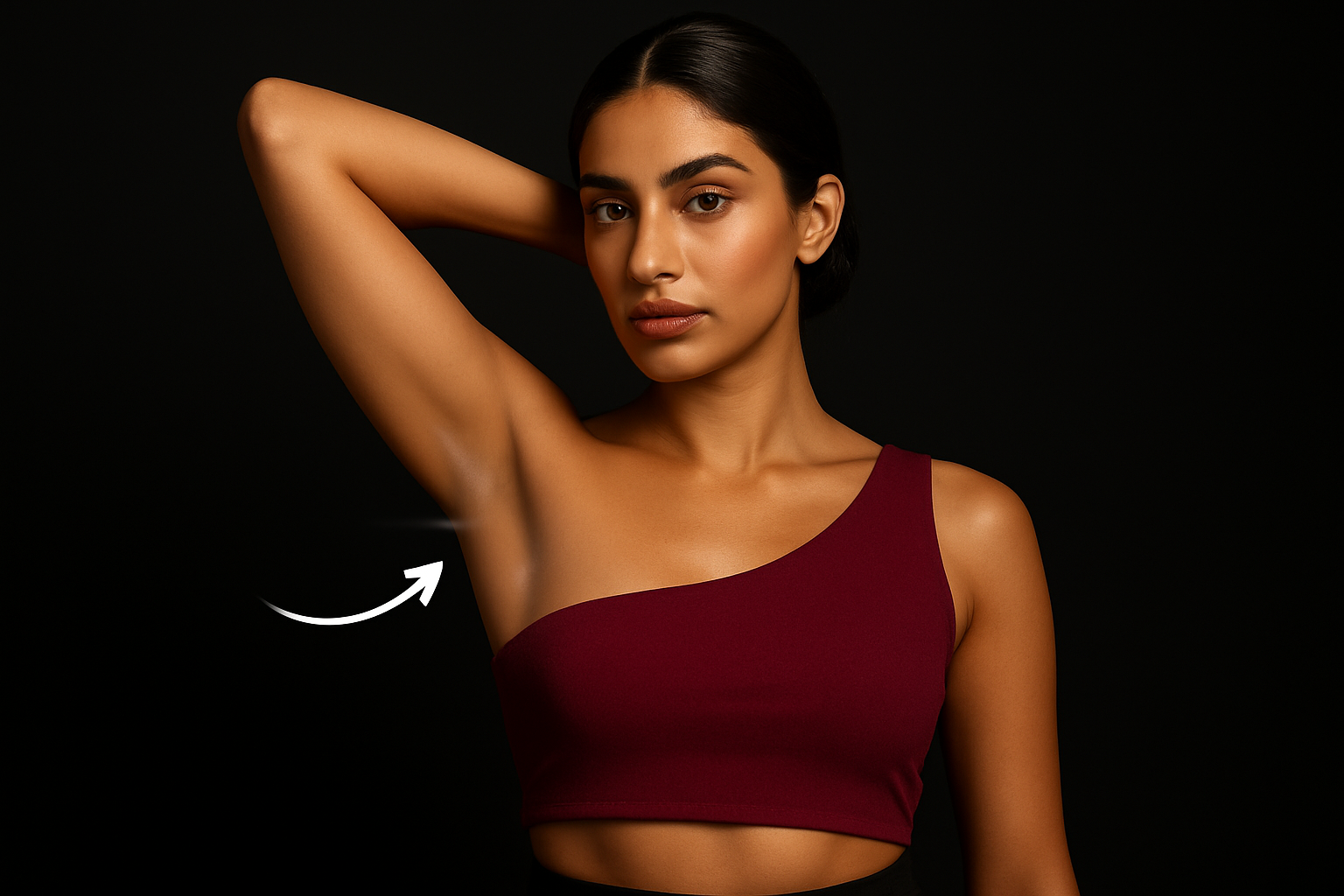
Significant weight loss, natural biological aging, and genetic predispositions often lead to severe skin laxity and localized lipodystrophy in the upper arms. Often referred to colloquially as ‘bat wings,’ redundant upper arm tissue rarely responds to targeted exercise or dietary modifications due to structural breakdown of collagen and elastin fibers within the dermis. For individuals seeking defined, contoured, and youthful upper extremities, an arm lift turkey procedure—medically designated as brachioplasty—provides a definitive surgical solution.
Table of Contents:
- Quick Medical Facts Summary
- Procedure & Treatment Overview
- Ideal Candidates & Medical Assessment
- Modern Surgical Techniques & Technologies
- Step-by-Step Procedure Process
- Recovery Timeline, Aftercare & Expected Results
- Global Cost & Destination Comparison
- 5-Day VIP Patient Journey in Istanbul
- Frequently Asked Questions (FAQ)
- Summary & Next Steps
At Health Beauty Turkey, our board-certified plastic surgeons utilize state-of-the-art surgical excision and energy-assisted lipolysis to reshape the contour from the axilla down to the elbow. By combining international surgical standards, world-class hospital infrastructure, and all-inclusive medical tourism management, we deliver exceptional aesthetic outcomes tailored to each patient’s anatomic profile.
Quick Medical Facts Summary
| Procedure Name | Brachioplasty (Arm Lift Surgery) |
|---|---|
| Surgical Duration | 2 to 3 hours |
| Anesthesia Type | General Anesthesia |
| Hospital Stay | 1 Night |
| Initial Recovery | 7 to 14 days |
| Full Recovery & Final Results | 6 to 12 months |
| Success Rate | Over 98% patient satisfaction |
Procedure & Treatment Overview
Brachioplasty is a reconstructive and aesthetic body-contouring operation designed to remove redundant, sagging skin and stubborn subcutaneous fat deposits from the upper arm. The primary target area spans from the underarm (axilla) down to the supracondylar region of the elbow. Depending on the volume of adipose tissue and the degree of dermal laxity, plastic surgeons employ varying surgical approaches to harmonize the arms with overall body proportions.
When skin elasticity remains moderately intact and fat accumulation is the primary concern, surgeons may incorporate specialized liposuction techniques. However, when extensive ptosis exists—frequently observed following bariatric intervention—surgical excision is mandatory to eliminate the tissue apron. For non-surgical mild laxity, alternative options such as ENDOLIFT laser skin tightening in Turkey may be considered during patient evaluation.
Ideal Candidates & Medical Assessment
A meticulous clinical assessment is vital to determine candidacy for an upper extremity lift. Candidates must undergo comprehensive physical examination and preoperative laboratory testing to ensure anatomical and physiological readiness.
- Massive Weight Loss Patients: Individuals who have stabilized their weight for at least 6 months following bariatric surgery or lifestyle modifications.
- Age-Related Skin Laxity: Patients experiencing progressive structural loss of dermal collagen leading to sagging upper arm skin.
- Good Physical Health: Non-smokers without uncontrolled chronic conditions (e.g., severe diabetes, cardiovascular disease) that impair wound healing.
- Realistic Clinical Expectations: Patients who understand that structural tissue excision requires a permanent surgical scar placed along the inner or posterior arm.
Modern Surgical Techniques & Technologies
Surgical methodologies are customized based on the severity of cutaneous ptosis and underlying lipodystrophy. Modern plastic surgery emphasizes minimal incision length, optimal scar placement, and nerve-sparing dissection.
1. Traditional (Standard) Brachioplasty
Indicated for patients with moderate-to-severe skin excess extending from the armpit to the elbow. The surgeon executes a longitudinal incision along the inner or posterior aspect of the arm, resecting redundant skin and tightening the underlying deep fascial system (superficial musculoaponeurotic system of the arm).
2. Extended Brachioplasty
Designed for post-bariatric patients who present with excessive tissue laxity continuing across the axilla and along the lateral chest wall. The incision extends from the elbow, through the armpit, and onto the thoracic wall to reshape both the arm and adjacent torso contour.
3. Minimal Incision / Axillary (Mini) Brachioplasty
Suitable for individuals with mild skin laxity confined to the upper third of the arm near the axilla. The incision is hidden discreetly within the armpit fold, allowing subtle tightening without visible longitudinal scarring down the arm.
4. Combination Liposuction & Brachioplasty
To establish optimal circumferential contouring, surgeons frequently combine tissue resection with High-Definition VASER or Power-Assisted Liposuction (PAL). Reviewing our arm lift and liposuction surgery in Turkey section details how fat liquefaction preserves vascular networks while facilitating smooth muscular definition.
Step-by-Step Procedure Process
- Preoperative Surgical Marking: While the patient is standing, the plastic surgeon marks exact excision lines, identifying excess skin boundaries and scar placement along the medial/posterior brachium.
- Anesthesia Administration: Board-certified anesthesiologists administer general anesthesia with continuous physiological monitoring throughout the operation.
- Tumescent Liposuction (Optional): Tumescent fluid containing saline, epinephrine, and lidocaine is infiltrated to minimize blood loss. Liposuction breaks down localized fat deposits.
- Tissue Resection & Fascial Plication: The surgeon resects the pre-measured crescent of skin and fat. Deep structural sutures tighten the internal fascial layers to reinforce arm contour.
- Precise Suturing & Placement of Drains: Layered closure is performed using absorbable sutures. Temporary surgical drains may be placed to prevent seroma formation.
- Compression Garment Application: Medical-grade compression sleeves are fitted immediately to support healing tissues and suppress postoperative edema.
Recovery Timeline, Aftercare & Expected Results
Understanding recovery parameters ensures a seamless clinical outcome and optimal scar maturation. Patient compliance with postoperative instructions is critical to preventing wound dehiscence or seroma accumulation.
- Days 1–3 (Immediate Healing): Mild to moderate swelling and bruising are anticipated. Strenuous movement is restricted, and arms should remain elevated on pillows when resting.
- Week 1 to 2 (Early Recovery): Drains are removed within 48-72 hours if utilized. Most patients return to desk work after 7 to 10 days. Compression garments must be worn 24/7.
- Weeks 3 to 6 (Tissue Stabilization): Light walking is permitted, but heavy lifting (>5 kg) and overhead arm movements are strictly prohibited. Incisions transition into initial scar maturation.
- Months 3 to 12 (Final Outcome): Swelling resolves completely. Scars gradually fade from hyperemic red to pale flesh tones. Patient feedback and detailed accounts can be explored in our patient experiences with arm lift surgery resource.
Global Cost & Destination Comparison
Turkey has emerged as a premier destination for body contouring procedures due to exceptional clinical expertise, international hospital accreditations, and transparent all-inclusive packaging. Below is a comparative overview of arm lift surgery parameters across leading medical destinations.
| Destination | Average Cost (USD) | JCI Quality Accreditation | Travel & Booking Ease | All-Inclusive VIP Services |
|---|---|---|---|---|
| Turkey (Health Beauty Turkey) | $2,500 – $3,800 | High (JCI Accredited Hospitals) | Extremely High (VIP Transfers & Hotel) | Included (Hotel, VIP Pick-up, Care) |
| United Kingdom | $7,500 – $11,000 | High (CQC Standards) | Moderate | Not Included (Extra Costs) |
| United States | $8,000 – $14,000 | High (AAAASF / JCI) | Low (Complex Medical Logistics) | Not Included (Extra Costs) |
| Germany | $7,000 – $10,500 | High (TÜV / ISO Standards) | Moderate | Rarely Included |
| Thailand | $4,000 – $6,000 | Moderate to High | Moderate (Long Flight Duration) | Partially Included |
| India | $3,000 – $4,500 | Moderate (NABH / JCI) | Moderate | Variable |
To learn more about tailored treatment options, please consult our comprehensive arm lift Turkey guide or read our specialized clinical insights on Arm Lift Surgery in Turkey.
5-Day VIP Patient Journey in Istanbul
Health Beauty Turkey provides a streamlined, stress-free medical itinerary for international patients visiting Istanbul for brachioplasty:
Day 1: Arrival & VIP Transport
Upon your arrival at Istanbul International Airport, your dedicated VIP chauffeur greets you and transfers you to your 5-star hotel. A personal patient coordinator provides your schedule and orientation.
Day 2: In-Person Consultation & Surgery
You are escorted to our JCI-accredited hospital for detailed blood work, ECG, and surgical evaluation with your chief plastic surgeon. Pre-op markings are finalized, followed by the surgical procedure under general anesthesia. You spend the night in a private room with dedicated nursing staff.
Day 3: Hospital Discharge & Rest
Your surgeon conducts morning rounds to inspect wound sites and evaluate drain output. Upon clearance, you are discharged with customized medications and compression garments, then transferred to your hotel for comfortable rest.
Day 4: Hotel Relaxation & Follow-up
A relaxing day spent recovering at your hotel. Your personal clinical coordinator remains in constant contact to monitor comfort levels and answer recovery questions.
Day 5: Final Evaluation & Return Home
You return to the clinic for final surgical evaluation, removal of drains/bandages, and scar care instruction. You receive your fit-to-fly certificate and are transferred via VIP transport to the airport for your return flight.
Frequently Asked Questions (FAQ)
Are arm lift surgical scars noticeable?
Because brachioplasty requires removing large sections of redundant skin, a surgical scar is inevitable. However, plastic surgeons strategically place incisions along the inner or under-side of the arm to minimize visibility during natural posturing. Scars fade significantly over 12 to 18 months with proper topical scar therapy.
Can I combine an arm lift with other plastic surgery procedures?
Yes. Brachioplasty is frequently combined with breast lift/augmentation, abdominoplasty, or thigh lift as part of a comprehensive Post-Bariatric Body Contouring or Mommy Makeover package. Combined procedures depend on overall patient health and anesthesia safety limits.
How long must I wear the postoperative compression garment?
Patients are instructed to wear the specialized elastic arm sleeves continuously (24 hours a day) for the first 3 to 4 weeks, followed by part-time wear for an additional 2 to 3 weeks to control edema and optimize tissue adherence.
What is the difference between non-surgical tightening and surgical brachioplasty?
Non-surgical modalities utilize radiofrequency or laser energy to induce subtle collagen contraction in mild cases. Surgical brachioplasty physically resects skin and fat, making it the only clinically effective treatment for moderate-to-severe tissue ptosis.
Summary & Next Steps
Surgical arm contouring via an arm lift turkey offers a transformative physical and psychological solution for patients suffering from persistent skin laxity. With world-renowned cosmetic surgeons, advanced surgical facilities, and all-inclusive healthcare management, Health Beauty Turkey ensures world-class outcomes with maximum comfort.
If you are ready to eliminate sagging arm skin and reclaim firm, contoured arms, contact the medical consulting team at Health Beauty Turkey today to request your complimentary online consultation and individualized surgical evaluation.
Medical Disclaimer: The clinical information provided in this guide is for educational purposes only and does not substitute for formal medical advice, diagnosis, or treatment. All surgical candidates must undergo direct clinical evaluation by a licensed plastic surgeon prior to undergoing operative procedures.
Related Articles: ENDOLIFT laser skin tightening in Turkey | arm lift and liposuction surgery in Turkey | patient experiences with arm lift surgery | comprehensive arm lift Turkey guide | Arm Lift Surgery in Turkey
References & Trusted Sources: National Institutes of Health (NIH) – Clinical Research | World Health Organization (WHO) – Health Guidelines | National Center for Biotechnology Information (NCBI / PubMed)