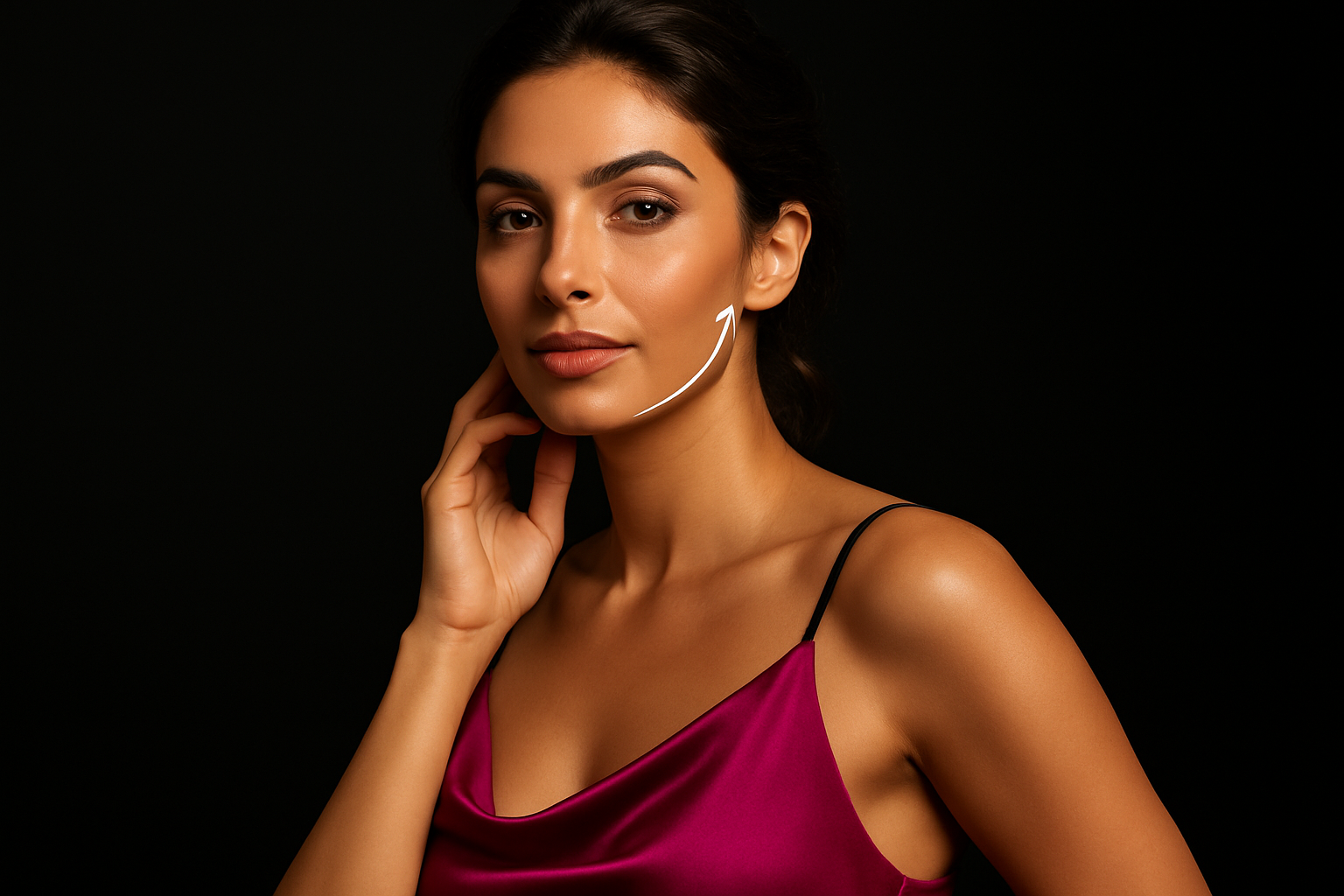
Facial aging is a complex biological process characterized by skin laxity, loss of subcutaneous volume, and the gradual downward shift of deeper anatomical tissue structures. As structural integrity decreases over time, deep nasolabial folds, jowls, and sagging along the jawline and neck become increasingly prominent. For individuals seeking a restored facial contour and long-lasting youthful structure, undergoing a modern facelift in Turkey provides an advanced anatomical solution tailored to precise physiological needs.
Table of Contents:
- Procedure & Treatment Overview
- Ideal Candidates & Medical Assessment
- Modern Surgical Techniques & Technologies
- Step-by-Step Procedure Process
- Recovery Timeline, Aftercare & Expected Results
- Global Cost & Destination Comparison
- 5-Day VIP Patient Journey in Istanbul
- Frequently Asked Questions (FAQ)
- Summary & Next Steps
Turkey has established itself as an international center of excellence for aesthetic plastic surgery. Board-certified facial plastic surgeons in Istanbul combine deep anatomical expertise with cutting-edge surgical methodologies. Whether addressing severe skin laxity or mild early signs of aging, patients receive world-class care designed to yield natural, harmonious, and long-lasting results.
| Medical Specification | Clinical Detail |
|---|---|
| Procedure Duration | 3 to 5 Hours (Depending on Technique) |
| Hospital Stay | 1 to 2 Nights Overnight Observation |
| Recovery Time | 10 to 14 Days Initial Rest; Full Maturation 3 to 6 Months |
| Anesthesia Type | General Anesthesia or Deep Intravenous Sedation |
| Target Success Rate | Over 95% High Patient Satisfaction |
Procedure & Treatment Overview
A rhytidectomy, commonly known as a facelift, is a surgical procedure designed to reposition underlying facial muscles, tighten the Superficial Musculoaponeurotic System (SMAS), and remove excess, non-elastic skin. Modern facial rejuvenation focuses heavily on multi-planar lifting, avoiding the flat or pulled appearance associated with older superficial techniques.
When opting for a surgical facelift in Turkey, surgeons customize the operative strategy based on bone structure, skin elasticity, and structural tissue descent. Patients can elect to combine a facelift with complementary procedures such as neck lifting, blepharoplasty (eyelid surgery), or fat grafting for complete pan-facial rejuvenation.
Ideal Candidates & Medical Assessment
Candidate selection requires a thorough pre-operative medical evaluation to ensure both physical safety and realistic structural expectations. Ideal candidates generally demonstrate the following clinical profile:
- Presence of Facial Laxity: Moderate to severe sagging in the midface, lower jawline (jowls), or neck area.
- Good Skin Elasticity: Moderate skin flexibility allows better redraping over newly anchored deep tissues.
- Stable Overall Health: Free from unmanaged medical conditions that could impair tissue healing or elevate surgical risks.
- Non-Smokers: Patients must refrain from smoking for several weeks pre- and post-operatively to ensure optimal microvascular capillary perfusion.
- Realistic Expectations: Understanding that surgery resets the aging clock rather than stopping biological aging completely.
Modern Surgical Techniques & Technologies
A successful facial procedure relies on matching surgical techniques to the anatomical requirements of each patient. During a facelift in Turkey, several modern operative approaches are utilized:
1. SMAS Facelift (Superficial Musculoaponeurotic System)
The SMAS layer sits beneath the skin and subcutaneous fat. In an SMAS plication or ectomy, this fibrous muscular network is elevated, tightened, and anchored back into its youthful position. This provides long-term structural support without creating tension on the outer skin layer.
2. Deep Plane Facelift
The deep plane technique goes beneath the SMAS layer, releasing key facial ligaments. This permits the simultaneous redistribution of the cheek fat pads and lower facial tissues without dissecting skin away from the underlying muscle. It offers exceptionally natural, tension-free results, particularly for midface restoration.
3. Mini Facelift
Designed for individuals with mild to moderate lower facial sagging, a mini facelift utilizes smaller incisions positioned around the front of the ear. It focuses primarily on correcting early jowling and restoring definition along the mandible.
4. Endoscopic & Ponytail Facelift
For patients seeking minimal visible scarring, techniques such as a ponytail facelift in Turkey use sub-periosteal tissue mobilization through tiny hidden incisions within the hairline, lifting the brows and midface vertically.
5. Non-Surgical & Energy-Based Alternatives
Patients exhibiting mild tissue descent who prefer minimal downtime may consider alternative treatments such as thread lifts or high-intensity focus technologies, including ultrasound facelift options to stimulate collagen production.
Step-by-Step Procedure Process
Understanding the surgical workflow helps reduce patient anxiety and prepares individuals for their clinical journey:
- Pre-Operative Assessment: Detailed physical examination, blood tests, cardiac clearing, and multi-angle digital photography.
- Anesthesia Administration: General anesthesia is administered by a dedicated anesthesiologist to ensure complete comfort and safety throughout the procedure.
- Incision Placement: Incisions are meticulously planned within natural skin creases, typically starting in the hairline at the temples, continuing around the earlobe, and ending in the lower scalp.
- Deep Tissue Repositioning: Deep muscular and fascial layers (SMAS/Deep Plane) are elevated, mobilized, and sutured securely to structural periosteal anchor points.
- Excess Tissue Excision & Closure: Redundant skin is gently redraped, excess tissue is excised without tension, and incisions are closed using fine cosmetic sutures.
Recovery Timeline, Aftercare & Expected Results
Following post-operative instructions carefully is vital to minimizing risks and achieving an optimal cosmetic outcome. Reviewing essential facts before a facelift assists patients in planning their recovery environment effectively.
Recovery Phase Overview
- Days 1–3: Peak acute swelling and mild bruising. Drain tubes (if used) are removed. Head elevation must be maintained continuously.
- Days 7–10: Fine surface sutures are removed. Most patients feel comfortable walking outside and engaging in light daily activities.
- Weeks 2–3: Bruising resolves significantly. Residual swelling continues to subside. Patients can typically return to desk work.
- Months 3–6: Surgical scars mature and fade to thin lines. Deep tissues stabilize fully, revealing final sharp facial contours.
Global Cost & Destination Comparison
Turkey has become a leading international destination for aesthetic surgery by combining accredited hospital infrastructure, board-certified surgeons, and cost-effective medical packages.
| Destination | Average Cost Range | JCI Accredited Facilities | Service Model |
|---|---|---|---|
| Turkey (Health Beauty Turkey) | £3,500 – £6,000 | Widespread Availability | All-Inclusive VIP (Hotel, Transfers, Care) |
| United Kingdom | £10,000 – £18,000 | Standard NHS/Private | Procedure Only (Separate Consults/Aftercare) |
| United States | $12,000 – $25,000 | Standard Private | Procedure Only (High Facility Fees) |
| Germany | €9,000 – €15,000 | Standard European Union | Procedure Only |
| Thailand | $5,500 – $9,000 | Select Major Centers | Partial Medical Tourism Bundles |
5-Day VIP Patient Journey in Istanbul
At Health Beauty Turkey, every medical tour is meticulously organized to offer a stress-free experience from arrival to final clearance:
- Day 1: VIP Arrival & Hotel Transfer
Upon arriving at Istanbul Airport, patients are greeted by a personal driver and transferred via VIP transport to a 5-star hotel for check-in and rest. - Day 2: In-Person Consultation & Surgery
Comprehensive pre-operative consultations, physical exams, and lab tests take place at the hospital. The patient then undergoes surgery and stays overnight under continuous nursing supervision. - Day 3: Post-Operative Monitoring & Discharge
The surgeon evaluates recovery, removes surgical drains, and provides post-operative care instructions. The patient is safely transported back to their hotel to rest. - Day 4: Hotel Rest & Follow-Up Check
A relaxing day in luxury accommodations, supported by 24/7 patient coordinators. A nurse performs localized wound care at the hotel if necessary. - Day 5: Final Evaluation & Departure Flight
The surgeon inspects the incision lines, performs suture removal, applies final dressings, and issues a fit-to-fly certificate before VIP airport transfer.
Frequently Asked Questions (FAQ)
How long do the results of a facelift surgery last?
A surgical facelift yields long-lasting structural changes. While biological aging continues, a well-executed deep-plane or SMAS facelift typically keeps a patient looking 10 to 15 years younger than their chronological age indefinitely.
Will surgical scars be visible after the healing process?
Facial plastic surgeons place incisions within natural anatomical boundaries, such as the hair margin and the natural folds around the ear cartilage. Once fully matured over 6 to 12 months, scar lines become inconspicuous.
Is a facelift in Turkey safe for international patients?
Yes. Turkey enforces strict surgical regulations through its Ministry of Health. Accredited hospitals in Istanbul operate with international JCI standards, using state-of-the-art technology, specialized anesthesiologists, and highly qualified plastic surgeons.
Summary & Next Steps
A facelift represents a transformative step toward structural facial restoration and renewed self-confidence. By addressing deep anatomical layers rather than relying solely on superficial skin tightening, modern surgical methods yield soft, youthful, and completely natural results.
If you are considering facial rejuvenation, our experienced surgical team is available to assist you. Contact Health Beauty Turkey today to request a personal medical evaluation and begin your journey toward expert aesthetic care in Istanbul.
Medical Disclaimer: The contents of this article are intended strictly for educational and informational purposes and do not constitute formal medical advice. Individual surgical candidacy, outcomes, and recovery timelines vary based on unique anatomical factors. Always consult a qualified, board-certified plastic surgeon for individualized diagnosis and treatment planning.
Related Articles: surgical facelift in Turkey | facelift in Turkey | ponytail facelift in Turkey | ultrasound facelift options | essential facts before a facelift
References & Trusted Sources: National Institutes of Health (NIH) – Clinical Research | World Health Organization (WHO) – Health Guidelines | National Center for Biotechnology Information (NCBI / PubMed)