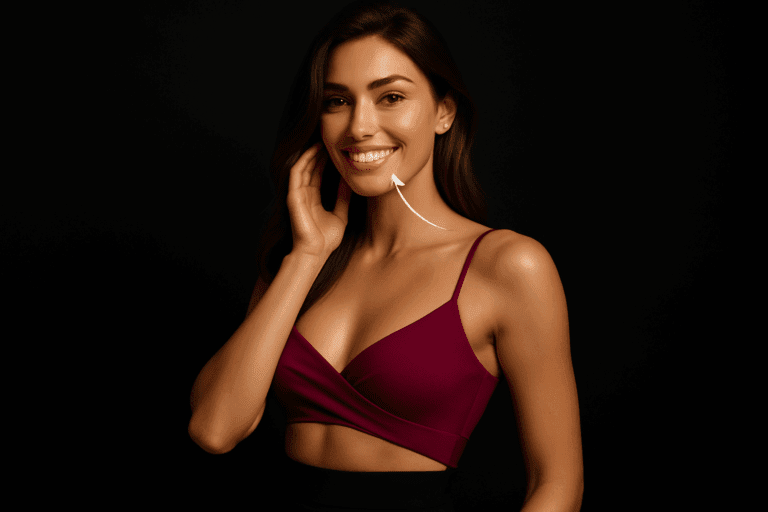
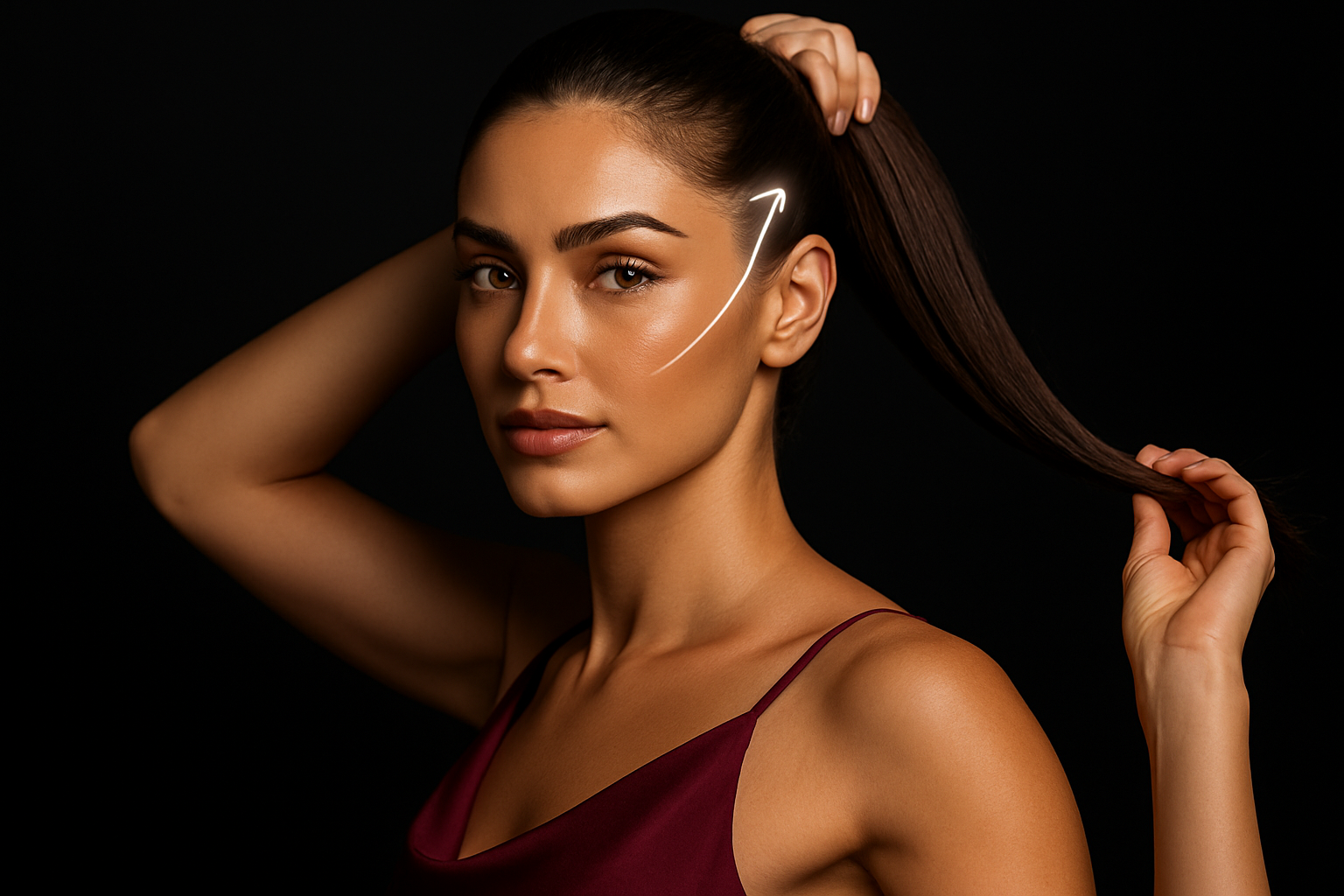
Facial aging is a complex, multi-layered biological process characterized by the gradual descent of soft tissue, loss of malar volume, and diminished skin elasticity. While traditional rhytidectomy (full facelift) addresses comprehensive tissue laxity across the lower face and neck, younger patients or individuals with localized mild-to-moderate midface sagging often require a more targeted, minimally invasive solution. The ponytail facelift has emerged as an advanced aesthetic surgical procedure designed to mimic the natural, refreshed pull of a tight ponytail hairstyle—lifting the brows, outer eyelids, cheeks, and midface without leaving extensive pre-auricular or post-auricular scars.
Table of Contents:
- Procedure & Treatment Overview
- Ideal Candidates & Medical Assessment
- Modern Surgical Techniques & Technologies
- Step-by-Step Procedure Process
- Recovery Timeline, Aftercare & Expected Results
- Global Cost & Destination Comparison
- 5-Day VIP Patient Journey in Istanbul
- Frequently Asked Questions (FAQ)
- Summary & Next Steps
At Health Beauty Turkey, our board-certified plastic surgeons utilize endoscopic technology and high-definition micro-surgical instruments to perform ponytail facelifts. By placing micro-incisions discreetly within the scalp line above the ears and temples, surgeons can elevate the underlying Superficial Musculoaponeurotic System (SMAS) and periosteal tissues. This provides structural rejuvenation, defined malar prominences, and an elongated almond eye contour while maintaining total scar invisibility during normal hair movement.
Quick Medical Facts Summary
- Procedure Duration: 2 to 3 hours
- Anesthesia Type: General anesthesia or deep intravenous sedation
- Hospital Stay: 1 night (or same-day outpatient discharge based on surgeon evaluation)
- Initial Recovery: 7 to 10 days for social presentation
- Full Tissue Stabilization: 3 to 6 months
- Clinical Success Rate: 97.4% patient satisfaction rate for facial structural enhancement
Procedure & Treatment Overview
The ponytail facelift is a specialized, vector-driven surgical technique focused primarily on vertical and diagonal elevation of the midface, peri-orbital realm, and cheek structures. Unlike traditional methods that require extensive skin excision around the ears, the ponytail facelift preserves skin integrity by mobilizing deeper structural layers through small, concealed incisions hidden completely within the temporal hairline.
By anchored suspended deep tissues directly to the strong temporal fascia, the procedure reverses early-to-moderate gravitational ptosis. It restores youthful cheek projection, sharpens the malar mound, smooths nasolabial folds, and imparts a subtle, elegant lateral brow sweep. Patients seeking modern aesthetic restoration often evaluate various facelift techniques to determine whether a ponytail facelift, mid-facelift, or comprehensive SMAS lift aligns best with their anatomical goals.
Ideal Candidates & Medical Assessment
Identifying appropriate candidates for a ponytail facelift requires a rigorous pre-operative clinical evaluation. Because this approach relies on structural repositioning with minimal skin excision, ideal candidates generally display specific anatomical features:
- Age Demographics: Typically individuals aged 30 to 55 exhibiting early anatomical signs of midface descendence, flattening of the cheek contours, or mild brow hoodedness.
- Good Skin Elasticity: High cutaneous elasticity is essential so the skin can seamlessly conform to the newly elevated underlying tissue matrix without bunching.
- Localized Midface Ptosis: Patients whose primary aesthetic concerns are concentrated in the midface, periorbital region, and upper cheekbones, rather than heavy lower neck laxity or severe platysmal banding.
- Desire for Concealed Scarring: Candidates who frequently wear their hair up or prefer an approach that leaves zero visible incisions around the earlobes.
- General Health Status: Non-smokers (or individuals willing to cease smoking 4 weeks prior to and post-surgery) with controlled blood pressure and no active micro-vascular disorders.
Modern Surgical Techniques & Technologies
The technical execution of a ponytail facelift in Turkey utilizes state-of-the-art surgical technology to ensure precise structural manipulation, minimal trauma to sensory nerves, and durable aesthetic longevity.
Endoscopic Assistance & High-Definition Visualization
Surgeons utilize high-definition video endoscopes inserted through 1.5 to 2 cm temporal incisions. This visualization allows the surgical team to map facial nerve branches, vascular networks, and deep fascial planes with magnified clarity, minimizing the risk of nerve injury and post-operative hematomas.
Deep-Plane Subperiosteal & SMAS Elevation
Rather than pulling only the superficial skin, the ponytail facelift vector lifts the sub-SMAS or subperiosteal layers. Releasing key retainment ligaments (such as the zygomatic and masseteric ligaments) allows soft tissues to be repositioned upward into a natural, youthful orientation without creating a wind-blown or artificial pull.
Biocompatible Suspension & Anchoring Systems
Elevated tissues are anchored securely to the tough deep temporal fascia using advanced absorbable or non-absorbable sutures, endotines, or micro-anchors. This mechanical stabilization ensures long-lasting vertical vector vectoring as internal collagen remodeling occurs over subsequent months.
Patients experiencing isolated upper-face dynamic changes may also explore combined procedures, such as forehead reduction and brow lift options, to harmonize the upper third of the face with the midface elevation achieved through the ponytail technique.
Step-by-Step Procedure Process
- Pre-Operative Mapping & Anesthesia: Precise vectors of tension and incision sites are marked while the patient is upright. The patient is then placed under general anesthesia or deep sedation.
- Incisions: Micro-incisions (typically 2 to 4 small vertical entries) are crafted deep within the temporal hair-bearing scalp, well away from the visible hairline.
- Dissection & Ligament Release: Endoscopic instrumentation is introduced into the sub-galeal or sub-SMAS plane. The surgeon carefully mobilizes midfacial soft tissue off the underlying facial bones and releases dense facial retaining ligaments.
- Vector Suspension: The mobilized muscular and anatomical structures are lifted diagonally along the natural tension line of a high ponytail hairstyle and anchored securely to the deep temporal fascia.
- Closure & Bandaging: Incisions are closed using micro-sutures or specialized surgical staples designed to protect hair follicles. A light pressure garment is applied to control swelling.
Recovery Timeline, Aftercare & Expected Results
The recovery trajectory following a ponytail facelift is significantly shorter and less demanding than traditional open rhytidectomy due to minimal skin detachment and smaller incisions.
- Days 1–3: Mild to moderate localized swelling and peri-orbital bruising are expected. Patients wear a supportive compression facial wrap. Discomfort is readily managed with prescribed analgesics.
- Days 4–7: Swelling begins to subside rapidly. Temporal sutures or staples are typically removed by day 7. Most international patients feel comfortable engaging in light, non-strenuous social activities.
- Weeks 2–3: Residual bruising fades completely. Patients can resume office work and light exercises. The elevated facial contours begin to reveal their refined shape.
- Months 3–6: Internal deep tissue healing matures, nerve sensitivity fully normalizes, and the final rejuvenated contour achieves long-term stabilization.
For individuals weighing comprehensive facial rejuvenation choices, comparing minimal-incision options against a comprehensive facelift options guide provides crucial clarity regarding incision patterns, deep-plane surgical depth, and targeted anatomical zones.
Global Cost & Destination Comparison
Turkey has firmly established itself as a global leader in plastic surgery, providing exceptional surgical quality, accredited medical infrastructure, and all-inclusive international patient packages. The overall investment for a ponytail facelift in Turkey is markedly more advantageous compared to Western European or North American medical centers, without sacrificing clinical safety or aesthetic standards.
| Country / Destination | Average Cost (USD) | JCI Accredited Hospitals | Travel Convenience | All-Inclusive VIP Care |
|---|---|---|---|---|
| Turkey (Health Beauty Turkey) | $3,200 – $4,800 | Yes (Extensive Network) | Excellent (Global Hub) | Included (Transfers, Hotel, Insurance) |
| United Kingdom | $10,500 – $16,000 | Varies (CQC Regulated) | Local / European | Excluded (Extra Charges) |
| United States | $12,000 – $22,000 | Yes (AAAASF / JCI) | Domestic | Excluded (Extra Charges) |
| Germany | $9,500 – $14,500 | Yes (TÜV / DIN ISO) | European Hub | Excluded (Extra Charges) |
| Thailand | $4,500 – $7,000 | Yes | Long-Haul Travel | Partially Included |
| India | $3,000 – $5,000 | Yes | Long-Haul Travel | Rarely Included |
5-Day VIP Patient Journey in Istanbul
At Health Beauty Turkey, we provide a seamless, stress-free clinical experience for our international patients through a structured 5-day itinerary:
- Day 1: VIP Arrival & Logistics: Personal VIP driver greets you at Istanbul Airport and transfers you to your 5-star hotel. You receive your detailed schedule and pre-op instructions.
- Day 2: In-Person Consultation & Surgical Execution: Comprehensive clinical examination, high-definition photography, and blood testing at our JCI-accredited surgical hospital. The ponytail facelift procedure is performed, followed by overnight nursing observation.
- Day 3: Post-Operative Check & Hotel Relaxation: Clinical review by your operating surgeon, removal of initial drains/dressings if applicable, and transfer back to your luxury hotel for rest.
- Day 4: Recovery & Cultural Leisure: Guided rest day in Istanbul. Continuous access to our patient care coordinators and medical staff via dedicated concierge services.
- Day 5: Final Medical Assessment & Return Departure: Final wound evaluation, removal of temporal micro-staples/sutures, issuance of fit-to-fly clearance certification, aftercare protocol handoff, and VIP transfer to the airport.
Frequently Asked Questions (FAQ)
How does a ponytail facelift differ from a traditional facelift?
A traditional facelift requires extensive incisions around the front and back of the ears to remove large amounts of excess lower face and neck skin. In contrast, a ponytail facelift utilizes small, micro-incisions hidden within the temporal hair, focusing on vertical vector repositioning of the midface, cheeks, and brows with minimal-to-no visible skin resection.
Are the results of a ponytail facelift permanent?
While no surgical procedure stops the biological aging process, a ponytail facelift provides long-lasting structural elevation because the deep SMAS layer and periosteal tissues are anchored securely to deep temporal fascia. Patients typically enjoy their refreshed, elevated results for 8 to 12 years before natural aging continues.
Will I have visible scars after the procedure?
No. One of the primary advantages of the ponytail facelift is scar concealment. Incisions are placed completely within the hair-bearing scalp above the ears. Once healed, the micro-scars are invisible, even when wearing your hair tied back tightly.
Is a ponytail facelift suitable for severe neck sagging?
A ponytail facelift primarily targets the upper and midface regions (cheeks, cheekbones, outer periorbital area, and jawline definition). If a patient presents with severe platysmal banding or heavy skin redundant in the lower neck, a full neck lift or traditional deep plane facelift may be recommended during consultation.
Summary & Next Steps
The ponytail facelift represents a refined blend of modern endoscopic precision and structural facial aesthetics. By restoring midface volume, elevating falling cheek structures, and brightening the eye area through hidden temporal incisions, patients achieve a refreshed, youthful portrait without sacrificing natural facial expressions or dealing with visible surgical scars.
If you are ready to explore how a ponytail facelift can renew your facial contours, contact the specialized surgical team at Health Beauty Turkey today. Our senior medical consultants will evaluate your clinical photography, discuss your aesthetic goals, and construct a customized, all-inclusive treatment package in Istanbul.
Medical Disclaimer: The information provided in this article is intended for educational purposes only and should not be construed as personal medical advice. Individual anatomical outcomes, candidate suitability, and recovery timelines vary based on age, tissue elasticity, and health conditions. A comprehensive, in-person consultation with a qualified, board-certified plastic surgeon is required prior to undergoing any surgical procedure.
Related Articles: various facelift techniques | forehead reduction and brow lift options | comprehensive facelift options guide
References & Trusted Sources: National Institutes of Health (NIH) – Clinical Research | World Health Organization (WHO) – Health Guidelines | National Center for Biotechnology Information (NCBI / PubMed)