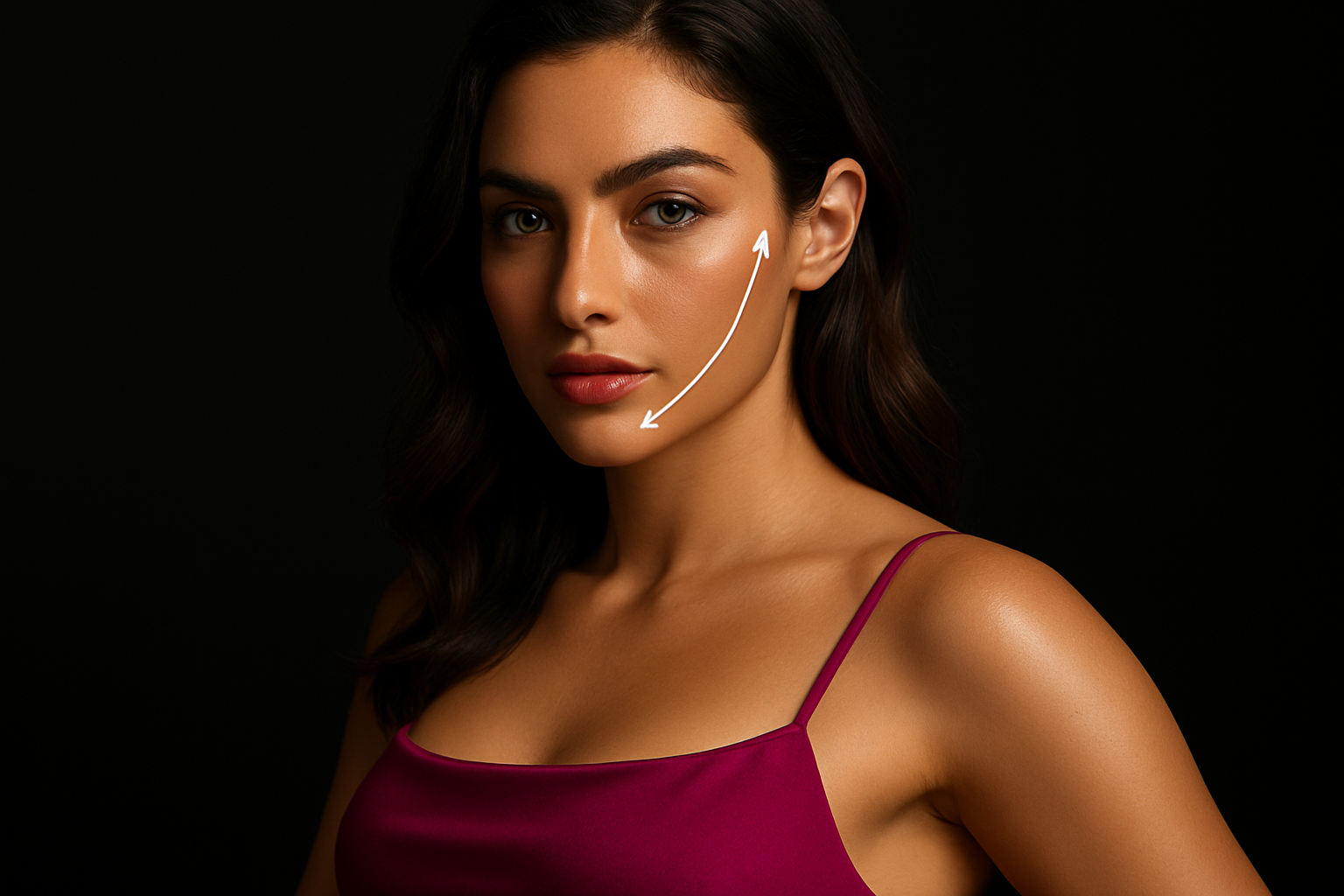
Facial symmetry is intrinsically linked to human perception of harmony, attractiveness, and balance. While minor variations between the left and right sides of the face are entirely natural, pronounced skeletal or soft-tissue imbalances can lead to functional impairment, dental malocclusion, and significant psychosocial distress. Experiencing facial disproportion—whether congenital, developmental, or acquired through trauma—often prompts individuals to seek targeted corrective intervention.
Table of Contents:
- Procedure & Treatment Overview
- Ideal Candidates & Medical Assessment
- Modern Surgical Techniques & Technologies
- Step-by-Step Procedure Process
- Recovery Timeline, Aftercare & Expected Results
- Global Cost & Destination Comparison
- 5-Day VIP Patient Journey in Istanbul
- Frequently Asked Questions (FAQ)
- Summary & Next Steps
Achieving surgical equilibrium requires a nuanced, multi-specialty approach. Modern advanced facial asymmetry treatment in Turkey combines craniofacial surgical precision, 3D computer-assisted design, and customized aesthetic techniques to reconstruct skeletal foundations and restore harmonious contouring. At Health Beauty Turkey, world-class maxillofacial surgeons and plastic surgery experts deliver comprehensive corrective strategies engineered for structural balance and natural aesthetics.
| Procedure Duration | 2 to 5 hours (depending on surgical complexity) |
|---|---|
| Hospital Stay | 1 to 2 nights (inpatient monitoring) |
| Recovery Timeline | Initial swelling resolves in 2–3 weeks; full bone and tissue healing takes 6–12 months |
| Anesthesia Type | General Anesthesia |
| Clinical Success Rate | Exceeds 95% for functional and aesthetic correction |
Procedure & Treatment Overview
Addressing structural disharmony requires identifying whether the underlying etiology stems from skeletal malalignment, soft-tissue volume deficits, localized muscular hypertrophy, or dental misalignments. Comprehensive diagnostic modalities, including 3D Cone Beam Computed Tomography (CBCT) and digital cephalometric mapping, allow surgeons to isolate the exact micro-millimeters of variance between facial structures.
Depending on clinical findings, multi-modal interventions are tailored to correct discrepancies in the jawline, chin, cheekbones, or soft tissues. Surgical correction may involve repositioning the maxilla or mandible, augmenting deficient bony structures, or contouring asymmetric bony prominences. For complex skeletal jaw shifts, undergoing specialized mandibular deviation treatment offers precise anatomical realignment to restore both bite mechanics and profile symmetry.
Ideal Candidates & Medical Assessment
Determining candidacy for reconstructive or aesthetic facial correction requires rigorous clinical evaluation. Ideal candidates for corrective treatment present with one or more of the following conditions:
- Skeletal Discrepancies: Congenital or acquired misalignment of the maxilla, mandible, or chin (genioplasty candidates).
- Post-Traumatic Deformities: Residual asymmetry following facial fractures, trauma, or previous sub-optimal surgeries.
- Soft Tissue Deficits: Unilateral facial atrophy, Romberg’s disease, or asymmetric fat volume distribution across cheekbones and jawlines.
- Functional Malocclusion: Patients experiencing impaired mastication, temporomandibular joint (TMJ) pain, or speech difficulties caused by jaw misalignment.
- Developmental Hypertrophy: Unilateral enlargement of the masseter muscle or bony structures developed during adolescence.
Candidates must possess mature bone structure (typically age 18 or older), maintain realistic aesthetic expectations, and be in stable general physical health without unmanaged systemic contraindications.
Modern Surgical Techniques & Technologies
Modern surgical corrections have transitioned away from generalized aesthetic techniques to hyper-personalized, computer-guided reconstructions. Key technologies and surgical methodologies utilized in Turkey include:
1. Computer-Aided Orthognathic Surgery
Orthognathic surgery corrects structural jaw discrepancies. Utilizing virtual surgical planning (VSP) software, surgeons simulate bone cuts (osteotomies) digitally before entering the operating room. Surgical splints printed via 3D additive manufacturing guide the exact repositioning of the upper and lower jaws.
2. Precision Jawbone Reshaping & Osteotomy
For patients with lateral jaw widening, hypertrophic angles, or disproportionate mandibular arches, targeted jawbone reshaping provides precise bone shaving, burring, or reduction osteotomies to achieve mirror-image proportion.
3. Custom Patient-Specific Implants (PSI) & Tissue Augmentation
When asymmetry is driven by severe skeletal deficiency or bone loss, off-the-shelf prosthetics may not suffice. Custom PEEK (Polyetheretherketone) or titanium implants are sculpted using the patient’s CT scans to fit non-conforming bone deficits seamlessly. Alternatively, long-lasting silicone facial implants or structural autologous fat transfer (fat grafting) can address targeted soft-tissue volume discrepancies.
Step-by-Step Procedure Process
The journey toward achieving structural facial harmony follows a systematic clinical protocol:
- Step 1: Diagnostic Mapping & 3D Imaging: Comprehensive physical examination, high-resolution 3D CBCT scanning, photographic analysis, and digital occlusion modeling.
- Step 2: Pre-Surgical Virtual Planning: Collaboration between maxillofacial surgeons and orthodontic specialists to engineer surgical splints and simulate final skeletal alignments.
- Step 3: Surgical Execution (General Anesthesia): Executed under full general anesthesia within accredited hospital operating theaters. Surgical incisions are primarily intra-oral (inside the mouth) to avoid visible external facial scarring.
- Step 4: Bone Realignment & Fixation: Osteotomies are performed, bones are repositioned according to the 3D plan, and rigid internal fixation is secured using biocompatible titanium mini-plates and screws.
- Step 5: Soft-Tissue Adjustments & Closure: Incisions are meticulously closed with absorbable sutures. Pressure dressings or surgical drains are applied as needed to minimize early postoperative edema.
Recovery Timeline, Aftercare & Expected Results
Healing after complex skeletal or soft-tissue facial surgery is a gradual process requiring patient commitment to postoperative protocols.
Immediate Post-Op (Days 1–5)
Facial swelling and localized bruising reach their peak within 48 to 72 hours. Patients stay 1 to 2 nights in the hospital for pain management, intravenous antibiotic therapy, and continuous monitoring. Liquid and soft-food diets are strictly enforced for intraoral healing.
Intermediate Phase (Weeks 2–4)
Major swelling begins to decline rapidly, allowing patients to resume non-strenuous daily activities and remote work. Oral hygiene protocols, such as warm saline rinses and prescribed antiseptic mouthwashes, prevent intraoral infection.
Long-Term Recovery & Final Outcomes (Months 3–12)
Residual minor tissue swelling gradually subsides over 6 to 12 months. Nerve sensation (if temporarily altered) fully restores as micro-nerves regenerate. Bone structures achieve total osseous fusion. The final result is a structurally balanced, functional, and natural facial presentation.
Global Cost & Destination Comparison
Turkey has positioned itself as a world-class destination for advanced craniofacial reconstructive surgery and total facial contouring. High volume surgical expertise, lower operational overheads, and comprehensive medical tourism packages allow Istanbul clinics to offer world-class medical standards at significantly accessible rates compared to North America and Western Europe.
| Destination | Average Estimated Cost (USD) | JCI Quality Standards | Travel Convenience | All-Inclusive VIP Care |
|---|---|---|---|---|
| Turkey (Health Beauty Turkey) | $3,500 – $7,500 | Equipped / International Accreditation | High (Hub for global flights) | Yes (Transfers, Hotel, Hospital, Translator) |
| United Kingdom | $12,000 – $22,000 | National Standards (CQC) | Moderate | No (Separate hospital & lodging costs) |
| United States | $15,000 – $30,000 | State & Joint Commission | Varies | No (High out-of-pocket extras) |
| Germany | $11,000 – $20,000 | TÜV / International Standards | High (EU Hub) | Rarely (Medical fees separate) |
| Thailand | $5,000 – $9,500 | JCI Accredited Facilities | Moderate to Long-haul | Selective packages |
5-Day VIP Patient Journey in Istanbul
To ensure total comfort and surgical precision, Health Beauty Turkey organizes a seamless 5-day surgical experience for international patients:
- Day 1: VIP Arrival & Hotel Check-in: Private luxury transfer picks you up from Istanbul Airport (IST or SAW) and transports you to your 5-star hotel. Personal patient host handles all logistics.
- Day 2: Clinical Consultation, Diagnostics & Surgery: In-person evaluation with your lead surgical consultant, final 3D CT scans, blood work, and pre-anesthesia clearance. Surgery is performed in an accredited hospital under general anesthesia.
- Day 3: Inpatient Recovery & Clinical Monitoring: Inpatient post-op care, pain management, and nutritional support monitored by dedicated surgical nursing staff.
- Day 4: Discharge & Hotel Rest: Surgical evaluation by the primary surgeon. Patient is discharged to the hotel with explicit medication, soft-diet instructions, and 24/7 medical host support.
- Day 5: Final Check-up & Safe Departure: Final follow-up consultation, removal of external splints/dressings if applicable, post-op fit-to-fly certification, and private VIP transport to the airport for your journey home.
Frequently Asked Questions (FAQ)
Can facial asymmetry be completely corrected without surgery?
Mild asymmetries caused by soft-tissue deficits or uneven muscle mass can often be improved using non-surgical interventions like hyaluronic acid dermal fillers, autologous fat grafting, or botulinum toxin injections (to relax a hypertrophic masseter muscle). However, moderate to severe structural, skeletal, or jawline asymmetries require surgical intervention for true long-term balance.
Will there be visible scars on my face after surgery?
The vast majority of modern reconstructive jaw and chin surgeries utilize intraoral incisions made inside the mouth between the gum tissue and lip lining. This ensures no visible external facial scars. If external incisions are required for custom implant placements, they are hidden discreetly along natural hairline or anatomical creases.
How long do I need to stay in Turkey for facial asymmetry treatment?
We recommend a stay of 5 to 7 days for international patients. This timeline allows ample duration for comprehensive pre-operative diagnostics, the surgical procedure itself, hospital inpatient monitoring, and critical early post-operative follow-up before safe travel.
Is orthognathic surgical realignment painful?
Patients are under general anesthesia throughout the procedure and feel no pain during surgery. Postoperatively, localized discomfort, tightness, and pressure are managed effectively with prescribed intravenous and oral analgesics. Most patients report feeling pressure and swelling rather than acute pain.
Summary & Next Steps
Restoring symmetry to your facial features is both an art and a strict medical science. Whether correcting structural jaw shifts, refining bone contours, or restoring lost volume, modern surgical techniques offer long-lasting physical balance and enhanced self-confidence. With advanced 3D virtual planning, board-certified reconstructive surgeons, and all-inclusive VIP patient logistics, Istanbul represents a premiere destination for corrective craniofacial care.
If you are ready to explore your options for structural facial balance, reach out to our medical team at Health Beauty Turkey to request your comprehensive digital assessment and personalized treatment plan.
Medical Disclaimer: The information provided in this article is for educational and informational purposes only and does not constitute formal medical advice, diagnosis, or treatment. Clinical decisions regarding facial reconstructive or aesthetic surgery must always be made in direct consultation with a qualified, board-certified surgeon following an individualized physical examination and diagnostic evaluation.
Related Articles: mandibular deviation treatment | jawbone reshaping | silicone facial implants | facial contouring
References & Trusted Sources: National Institutes of Health (NIH) – Clinical Research | World Health Organization (WHO) – Health Guidelines | National Center for Biotechnology Information (NCBI / PubMed)