Chemical resurfacing represents one of the most effective, clinically proven non-surgical modalities in modern cosmetic dermatology. Over time, intrinsic aging, persistent solar exposure, pollution, and hormonal fluctuations impair cellular turnover, leading to textural irregularities, dyschromia, fine lines, and stubborn post-inflammatory blemishes. Undergoing a professional chemical peel in Turkey provides patients with access to board-certified dermatologists, customized pharmaceutical-grade formulations, and advanced clinical care designed to restore epidermal vitality, smooth skin texture, and promote long-term dermal collagen synthesis.
Table of Contents:
- Quick Medical Facts Summary
- Procedure & Treatment Overview
- Ideal Candidates & Medical Assessment
- Modern Surgical Techniques & Technologies
- Step-by-Step Procedure Process
- Recovery Timeline, Aftercare & Expected Results
- Global Cost & Destination Comparison (Turkey vs UK, USA, Germany, Thailand, India)
- 5-Day VIP Patient Journey in Istanbul
- Frequently Asked Questions (FAQ)
- Summary & Next Steps
At Health Beauty Turkey, every chemical peeling protocol is individualized following a rigorous dermatological evaluation. By removing damaged superficial epidermal layers and stimulating the underlying dermis, medical-grade chemical solutions initiate controlled cellular renewal. Whether addressing superficial dullness or deep photoaging, clinical exfoliation under expert supervision offers predictable, transformative results for diverse skin types.
Quick Medical Facts Summary
| Clinical Parameter | Patient Overview |
|---|---|
| Procedure Duration | 30 to 60 minutes |
| Anesthesia Type | Topical numbing agent (for medium/deep peels) or none required |
| Hospital Stay | Outpatient / Same-day clinical procedure |
| Initial Recovery Phase | 3 to 7 days (Superficial), 7 to 14 days (Medium/Deep) |
| Primary Indications | Hyperpigmentation, melasma, acne scarring, fine lines, sun damage |
| Clinical Success Rate | Over 95% satisfaction rate across tailored treatment cycles |
Procedure & Treatment Overview
A chemical peel involves the controlled application of specific chemical acids to the face, neck, chest, or hands to slough off damaged skin layers. As the exfoliated skin peels away, a fresh, smoother, and more evenly pigmented layer emerges underneath. The depth of exfoliation depends directly on the concentration, chemical composition, and application time of the active agents used.
In clinical dermatology, peels are classified into three primary depths:
- Superficial Peels: Formulated with mild Alpha Hydroxy Acids (AHAs) like glycolic or lactic acid, or Beta Hydroxy Acids (BHAs) such as salicylic acid. These target only the outer layer of the skin (epidermis) to refresh skin tone and manage light blemishes with minimal to zero downtime.
- Medium-Depth Peels: Utilizing Trichloroacetic Acid (TCA) in concentrations between 20% and 35%, often combined with glycolic acid. Medium peels penetrate the upper papillary dermis, effectively treating moderate photoaging, fine rhytids, and pronounced solar lentigines.
- Deep Peels: Incorporating high-strength TCA or phenol formulations that reach the mid-to-deep reticular dermis. Deep chemical peels induce significant dermal remodeling to treat severe wrinkles, deep acne scars, and extensive sun damage, requiring precise medical administration and structured healing protocols.
For patients seeking detailed insight into clinical options, exploring our comprehensive chemical peeling skin improvement guide provides extensive background on specific active acid combinations and expected anatomical responses.
Ideal Candidates & Medical Assessment
Candidate selection for a chemical peel in Turkey relies on a thorough diagnostic evaluation by a consultant dermatologist. While chemical resurfacing yields excellent outcomes across diverse populations, skin phototype, medical history, and specific cosmetic concerns govern protocol safety.
Primary Clinical Indications
- Active facial hyperpigmentation, melasma, and post-inflammatory dark spots.
- Rough, uneven skin texture and enlarged pores.
- Fine lines, periocular wrinkles, and mild skin laxity.
- Active comedonal acne and residual post-acne scarring.
- Actinic keratoses and chronic sun damage.
Pre-Treatment Dermatological Assessment
During your initial clinical consultation in Istanbul, the dermatologist evaluates your Fitzpatrick skin phototype. Fitzpatrick types IV through VI require specialized preparation and lower acid concentrations to mitigate the risk of post-inflammatory hyperpigmentation (PIH). Patients suffering specifically from dark spots or residual blemishes are often evaluated alongside specialized treatments such as targeted post-acne hyperpigmentation treatment protocols to ensure comprehensive skin clarity.
Modern Surgical Techniques & Technologies
Cosmetic dermatology clinics in Turkey utilize pharmaceutical-grade peeling solutions enriched with anti-inflammatory agents, antioxidants, and cellular growth factors. Modern treatment protocols frequently combine chemical resurfacing with complementary non-surgical procedures to maximize skin rejuvenation results.
Advanced dermatological modalities commonly integrated with chemical peels include:
- Combination Acid Systems: Instead of relying on single-agent solutions, multi-acid formulations (e.g., TCA blended with salicylic, retinoic, and kojic acids) allow for controlled tissue penetration while addressing pigmentation, inflammation, and cellular renewal simultaneously.
- Microneedling Synergy: In select treatment plans, combining mild chemical agents with Derma Pen microneedling therapy enhances drug delivery into the deeper dermal channels, accelerating collagen synthesis for structural tightening.
- Targeted Light and Laser Therapies: For patients with stubborn dermal pigment or deep vascular lesions, chemical peels are carefully sequenced alongside advanced pigmentation treatment solutions to optimize light reflection and uniform skin tone.
Step-by-Step Procedure Process
The clinical application of a chemical peel follows strict medical guidelines to guarantee safety, patient comfort, and uniform skin penetration:
Step 1: Clinical Preparation & Cleansing
The face is thoroughly cleansed using medical-grade antiseptic solutions and degreasing solvents (such as acetone or alcohol) to remove surface lipids. This step ensures equal absorption of the chemical peeling solution across all anatomical facial zones.
Step 2: Ocular & Mucosal Protection
Sensitive anatomical zones, including the medial and lateral ocular canthi, nasal alar folds, and lip borders, are protected with barrier ointments such as petroleum jelly to prevent unwanted chemical pooling.
Step 3: Precise Acid Application
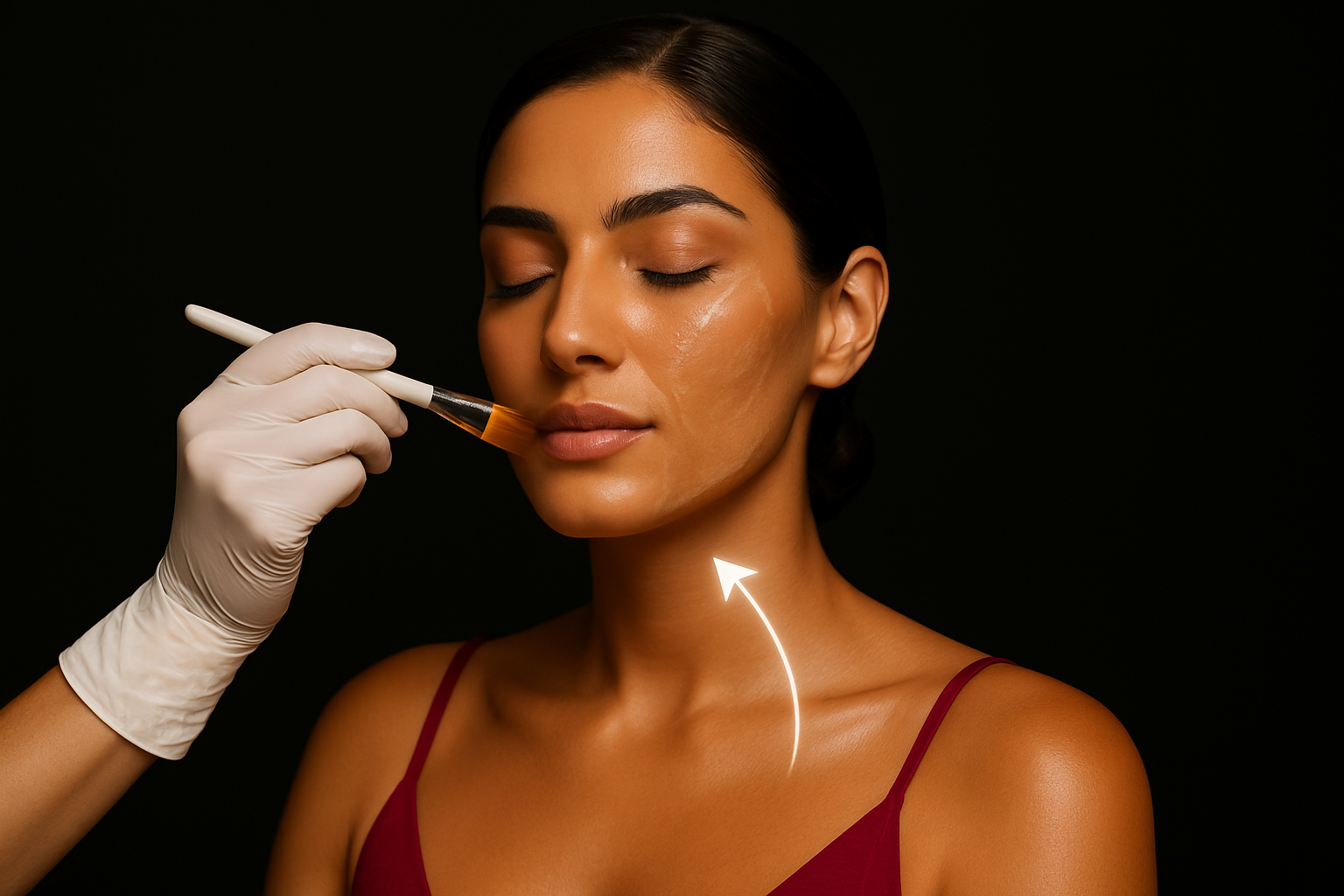
The dermatologist applies the chosen acid formulation systematically using specialized applicators, sponges, or brushes. Frosting—a physiological phenomenon where epidermal proteins coagulate—is closely monitored to gauge depth of penetration, particularly during medium-depth TCA peels.
Step 4: Neutralization & Cooling
Depending on the specific acid utilized (such as glycolic acid), a neutralizing solution is applied to halt chemical activity once the target depth is reached. Self-neutralizing formulas (such as certain TCA or salicylic acid peels) are allowed to stabilize naturally before soothing clinical compresses are applied.
Step 5: Post-Peel Barrier Restoration
A broad-spectrum physiological repair cream and high-SPF mineral sunscreen are applied immediately to protect the newly exposed skin layers and lock in essential moisture.
Recovery Timeline, Aftercare & Expected Results
Adherence to medical post-care instructions is crucial for optimal re-epithelialization and for preventing post-procedure complications such as secondary infection or hyperpigmentation.
Post-Procedure Care Guidelines
- Avoid Manual Peeling: Never pick, pull, or mechanically scrub flaking skin. Allow dead epidermal layers to shed spontaneously.
- Strict Photoprotection: Apply broad-spectrum SPF 50+ mineral sunscreen every two hours, and minimize direct sunlight exposure for at least two weeks post-treatment.
- Intense Hydration: Use hypoallergenic, fragrance-free barrier repair creams containing ceramides, hyaluronic acid, and lipid-replenishing agents.
- Discontinue Active Topicals: Pause all retinoids, AHA/BHA products, and vitamin C serums for 7 to 10 days post-procedure or until the skin barrier has fully recovered.
Expected Healing Phases
- Days 1–2: Skin feels tight, warm, and may exhibit mild erythema (redness) similar to a mild sunburn.
- Days 3–5: Active desquamation (peeling) begins around the mouth and nose, spreading outwards across the cheeks and forehead.
- Days 6–7: Epithelial peeling subsides, revealing fresh, luminous, and smoother underlying skin.
- Weeks 2–4: Dermal remodeling continues, with visible improvements in hyperpigmentation, overall skin clarity, and refined texture.
Global Cost & Destination Comparison (Turkey vs UK, USA, Germany, Thailand, India)
Choosing to undergo a chemical peel in Turkey provides international patients with high-grade pharmaceutical products, world-class dermatological care, and substantial cost savings. Combined with luxury hospitality and seamless medical coordination, Istanbul remains a premier destination for advanced medical aesthetic procedures.
| Country / Destination | Average Treatment Cost (USD) | JCI Accredited Facilities | Travel & Hospitality Convenience | All-Inclusive VIP Care Packages |
|---|---|---|---|---|
| Turkey (Health Beauty Turkey) | $250 – $600 | Extensive, World-Class | Exceptional (Seamless VIP Services) | Included (Transfers, Hotel, Consultation) |
| United Kingdom | $800 – $1,800 | Standard National Standards | Moderate | Not Available (Pay per service) |
| United States | $1,000 – $2,500 | High Quality / Expensive | Limited Assistance | Not Available |
| Germany | $750 – $1,600 | High Standards | Moderate | Rarely Offered |
| Thailand | $400 – $900 | Good Quality | High Tourism Focus | Select Packages Only |
| India | $300 – $700 | Variable Standards | Moderate | Limited Medical Concierge |
5-Day VIP Patient Journey in Istanbul
At Health Beauty Turkey, we organize every aspect of your clinical aesthetic journey to ensure complete comfort, stress-free travel, and superior results.
Day 1: VIP Arrival & Luxury Transfer
Upon your arrival at Istanbul Airport, our private VIP transport driver greets you and conducts a seamless transfer to your luxury hotel. You receive your detailed appointment itinerary for the week.
Day 2: Clinical Assessment & Chemical Resurfacing
You meet your expert dermatologist at our state-of-the-art facility. Following a digital skin analysis and medical consultation, your personalized chemical peel protocol is performed. Post-treatment soothe therapies and customized skincare kits are provided.
Day 3: Guided Rest & Skin Recovery
You enjoy a relaxing day at your hotel while the initial cellular exfoliation begins. Our medical team stays in daily contact to monitor your recovery and offer personalized guidance.
Day 4: Follow-Up Evaluation & Hydration Therapy
You return to the clinic for a professional evaluation. The dermatologist checks the re-epithelialization process, applies deep moisturizing recovery serums, and provides detailed aftercare instructions.
Day 5: Final Check & Departure
After a final check-up confirming successful skin recovery, your VIP driver escorts you back to the airport for your flight home, equipped with radiant, rejuvenated skin and professional maintenance products.
Frequently Asked Questions (FAQ)
Is a chemical peel painful?
Most patients experience a mild tingling, warm, or stinging sensation during the active acid application phase, which lasts only a few minutes. For deeper peels, topical numbing creams or cooling devices are utilized to ensure absolute comfort throughout the treatment.
How many chemical peel sessions will I need?
While a single superficial or medium chemical peel yields immediate improvements in radiance and clarity, optimal correction of chronic conditions like deep melasma, stubborn post-acne marks, or solar lentigines typically requires a series of 3 to 6 sessions spaced 3 to 4 weeks apart.
Are chemical peels safe for darker skin tones?
Yes. However, darker skin phototypes (Fitzpatrick IV-VI) require specialized pre-peel conditioning and specific acid selection—such as mandelic, salicylic, or low-concentration TCA formulations—to avoid post-inflammatory hyperpigmentation. Consultation with an experienced cosmetic dermatologist is mandatory.
What is the difference between a home peel and a clinical chemical peel?
Over-the-counter home exfoliants contain low concentrations of acids (typically under 10% with a higher pH level), serving primarily as basic surface cleansers. Clinical chemical peels feature high-potency, low-pH medical formulations that reach the deeper layers of the epidermis and dermis to deliver significant anatomical tissue remodeling.
Summary & Next Steps
A professional chemical peel in Turkey offers a safe, highly effective, and scientifically backed solution for reversing visible signs of aging, sun damage, and irregular pigmentation. By combining expert medical supervision, customized multi-acid formulations, and world-class patient support, Health Beauty Turkey delivers outstanding clinical outcomes tailored to your skin’s unique needs.
If you are ready to reveal smoother, brighter, and healthier skin, contact our medical team today to schedule your comprehensive skin assessment and embark on your personalized rejuvenation journey in Istanbul.
Medical Disclaimer: The information provided in this article is for educational purposes only and should not replace professional medical advice, diagnosis, or treatment. Always consult a qualified dermatologist or medical practitioner before undergoing any clinical aesthetic procedure.
Related Articles: chemical peeling skin improvement guide | post-acne hyperpigmentation treatment | advanced pigmentation treatment | Derma Pen microneedling therapy
References & Trusted Sources: National Institutes of Health (NIH) – Clinical Research | World Health Organization (WHO) – Health Guidelines | National Center for Biotechnology Information (NCBI / PubMed)