
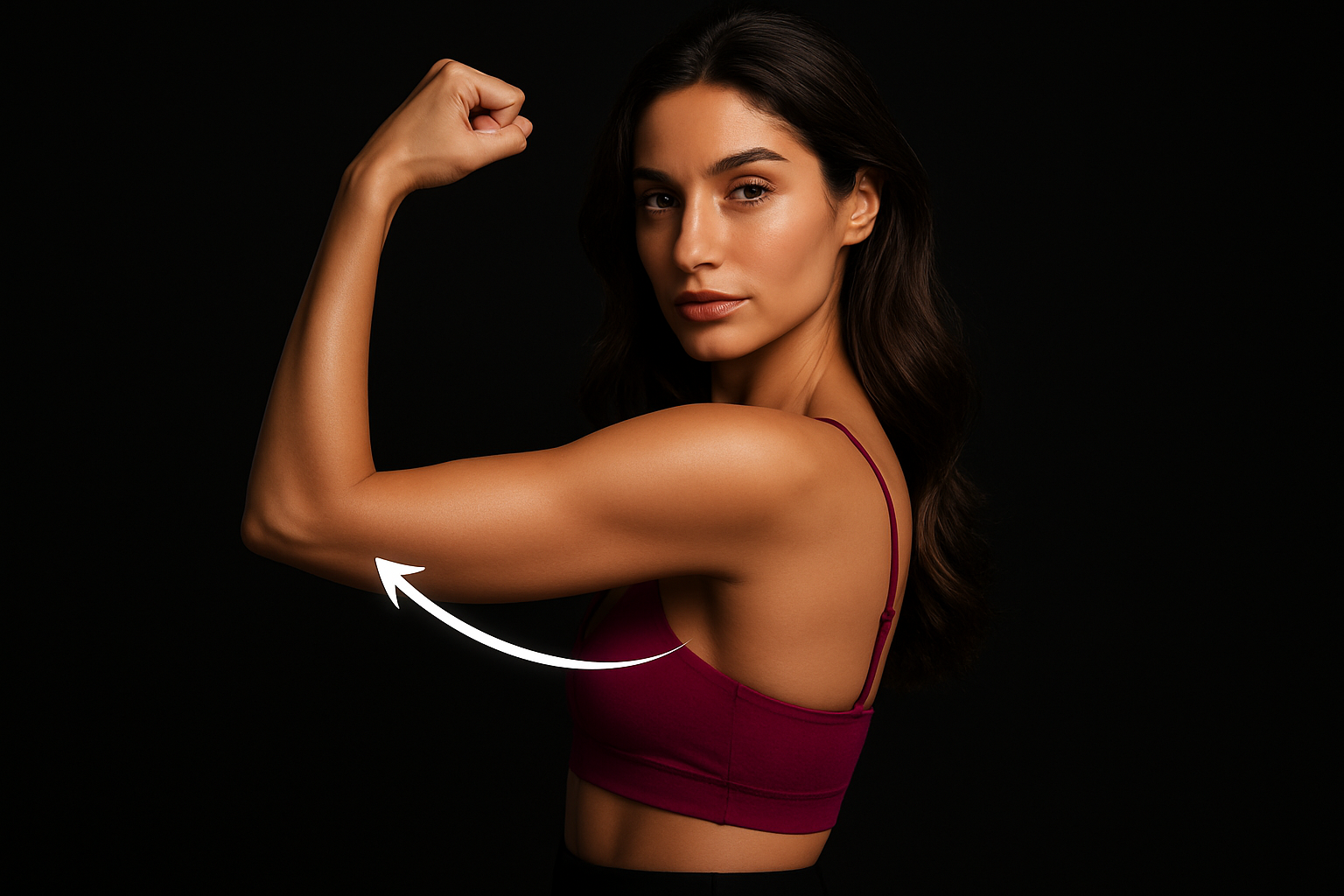
Upper arm skin laxity, commonly known as ptosis of the upper arm, is a frequent anatomical concern for individuals who have undergone massive weight loss, experience natural aging, or exhibit genetic tissue hyperlaxity. When superficial skin elasticity diminishes and sub-dermal collagen networks breakdown, exercise and diet alone are insufficient to restore tautness. Brachioplasty, or arm lift surgery, provides a definitive surgical solution by excising redundant skin, debulking localized adiposity, and redraping the superficial muscular aponeurotic framework of the upper extremities.
Table of Contents:
- Quick Medical Facts Summary
- Procedure & Treatment Overview
- Ideal Candidates & Medical Assessment
- Modern Surgical Techniques & Technologies
- Step-by-Step Procedure Process
- Recovery Timeline, Aftercare & Expected Results
- Global Cost & Destination Comparison
- 5-Day VIP Patient Journey in Istanbul
- Frequently Asked Questions (FAQ)
- Summary & Next Steps
Choosing an arm lift in Turkey at Health Beauty Turkey allows international patients to access board-certified plastic surgeons utilizing advanced surgical methodologies in JCI-accredited medical facilities. This comprehensive guide outlines the clinical protocols, candidate selection, technological innovations, cost analyses, and post-operative recovery frameworks associated with modern arm contouring.
Quick Medical Facts Summary
- Procedure Duration: 2 to 3 hours
- Anesthesia Type: General anesthesia
- Hospital Stay: 1 to 2 nights
- Initial Recovery: 10 to 14 days
- Full Recovery & Maturation: 6 to 12 months
- Clinical Success Rate: Exceeds 98% with adherence to post-operative care
Procedure & Treatment Overview
Brachioplasty is a reconstructive and aesthetic procedure designed to reshape the upper arm from the axillary vault to the medial epicondyle of the humerus. Over time, tissue distension occurs due to fat accumulation, loss of skin elasticity, and atrophy of the underlying dermis. Traditional weight reduction reduces intra-adipocyte volume but leaves behind stretched cutaneous tissue envelope.
During an arm lift, the surgeon evaluates the extent of skin laxity and localized subcutaneous fat. Surgical intervention involves marking incision lines along the inner or posterior surface of the arm where scar visibility can be minimized. Through these incisions, redundant cutaneous tissue is resected, subcutaneous fat is removed (often combined with high-definition liposuction), and deep fascial layers are plicated to reconstruct a youthful, ergonomic contour.
Ideal Candidates & Medical Assessment
Patient selection is paramount to achieving optimal aesthetic outcomes and minimizing surgical risks. Ideal candidates for an arm lift in Turkey exhibit the following clinical characteristics:
- Significant Cutaneous Laxity: Marked redundancy of upper arm skin (“bat wing” deformity) unresponsive to non-surgical aesthetic modalities.
- Weight Stability: Candidates must maintain a stable Body Mass Index (BMI below 30 is preferred) for at least 6 months prior to surgery. Subsequent major weight fluctuations can compromise structural outcomes.
- Non-Smokers: Smoking severely impairs microvascular perfusion, increasing the risk of wound dehiscence, skin necrosis, and hypertrophic scarring. Nicotine cessation is mandatory for a minimum of 4 weeks pre- and post-surgery.
- Good Systemic Health: Absence of uncontrolled cardiovascular, metabolic, or autoimmune conditions that compromise tissue healing.
- Realistic Expectations: Understanding that surgical removal of extensive tissue requires a permanent longitudinal scar along the inner arm.
Modern Surgical Techniques & Technologies
Surgical approach varies based on the anatomical distribution of excess tissue and skin elasticity. Modern plastic surgery employs tailored techniques to minimize scarring while maximizing contour definition:
1. Standard (Transverse/Longitudinal) Brachioplasty
Indicated for moderate-to-severe skin ptosis extending from the armpit to the elbow. The incision is strategically placed along the medial bicipital groove or posterior aspect of the arm. Excess cutaneous and subcutaneous layers are systematically resected.
2. Extended Brachioplasty
Designed for massive weight loss patients where redundant tissue extends beyond the axilla onto the lateral chest wall. The surgical incision continues through the axillary region and slightly along the lateral thorax to eliminate continuous skin folds.
3. Mini / Axillary Arm Lift (Short-Scar Brachioplasty)
Suitable for patients with mild tissue laxity confined to the upper third of the arm. The surgeon creates a crescent-shaped incision concealed within the axillary crease, pulling up skin without extending a long longitudinal incision down the arm.
4. VASER Lipo-Assisted Brachioplasty
Integrating ultrasound-assisted liposuction (VASER) prior to surgical resection allows surgeons to selectively melt fat deposits, preserve neurovascular structures, and induce collagen contraction. Combining Arm Lift and Liposuction Surgery in Turkey refines contouring while reducing intraoperative trauma.
Step-by-Step Procedure Process
Understanding each phase of the surgical journey provides reassurance and mental preparation for international patients:
Phase 1: Pre-Operative Assessment & Marking
Upon arrival at the clinic, the surgical team performs comprehensive laboratory screening, electrocardiograms (ECG), and physical evaluations. Precise surgical markings are applied while the patient is standing, establishing the resection boundaries to avoid over-tightening or joint mobility restriction.
Phase 2: Anesthesia & Surgical Resection
The patient is placed under general anesthesia. Tumescent fluid containing saline, local anesthetic, and epinephrine is infiltrated to reduce bleeding. VASER liposuction is performed if indicated. Precise skin incisions are executed, and redundant tissues are excised with meticulous hemostasis.
Phase 3: Fascial Plication & Layered Closure
The deep fascia (Clavipectoral/Brachial Fascia) is sutured to support internal arm structures. Multilayered sub-cuticular suturing with absorbable threads ensures wound apposition with minimal surface tension, reducing scar thickness. Surgical drains may be inserted to manage fluid collection.
Phase 4: Post-Operative Dressing
Sterile dressings and surgical compression sleeves are applied to compress the surgical space, mitigate edema, and promote early tissue adherence.
Recovery Timeline, Aftercare & Expected Results
Adherence to post-operative protocols is vital to preventing complications and optimizing final scarring.
- Days 1 to 3 (Immediate Post-Op): Mild to moderate discomfort, managed with prescribed analgesics. Surgical compression sleeves must be worn 24/7. Arm elevation is recommended to assist lymphatic drainage.
- Week 1 to 2: Surgical drains (if placed) are removed within 48 to 72 hours. Stitches are typically absorbable. Patients can resume basic activities of daily living, avoiding strenuous movement of the upper body.
- Weeks 3 to 6: Swelling begins to subside significantly. Light daily walking is encouraged, but lifting objects heavier than 2-3 kg, rigorous pushing, or pull exercises are strictly prohibited.
- Month 3 to 12: The incision scar transitions from pink/purple to a faded white line. Application of medical-grade silicone scar gels, sheets, and fractional laser treatments (if advised) optimizes final scar maturation.
Global Cost & Destination Comparison
Turkey has established itself as a top destination for plastic surgery by delivering high-caliber medical standards, accredited hospitals, and all-inclusive service models at accessible price points compared to North America and Western Europe.
| Destination | Average Cost (USD) | JCI Accreditation | Travel & VIP Logistics | Care Model |
|---|---|---|---|---|
| Turkey (Health Beauty Turkey) | $2,500 – $4,000 | Yes (High Density) | Full VIP Transfers & 5-Star Hotel Included | All-Inclusive Integrated Care |
| United States | $8,000 – $14,000 | Variable | Self-Managed | Fee-for-Service Only |
| United Kingdom | $7,500 – $12,000 | CQC Regulated | Self-Managed | Fee-for-Service Only |
| Germany | $7,000 – $11,000 | Yes | Self-Managed | Clinical Service Only |
| Thailand | $4,000 – $6,500 | Yes | Partial Accommodation | Hospitality Mixed |
| India | $3,000 – $5,000 | Yes | Variable | Clinical Service Only |
5-Day VIP Patient Journey in Istanbul
At Health Beauty Turkey, we provide a structured, stress-free medical itinerary for international patients seeking an arm lift:
Day 1: VIP Arrival & Consultation
Your private VIP driver greets you at Istanbul Airport and transfers you to your 5-star hotel. Later, you attend an in-person consultation with your plastic surgeon for pre-operative medical testing and final surgical mapping.
Day 2: Surgery & Inpatient Care
You are transferred to the JCI-accredited hospital. The surgical team executes the brachioplasty under general anesthesia. Following surgery, you recover in a private room under 24/7 nursing supervision.
Day 3: Hospital Discharge & Hotel Rest
Your surgeon evaluates your condition, removes drains if appropriate, changes dressings, and provides surgical compression sleeves. You are safely escorted back to your luxury hotel room to rest.
Day 4: Recovery & Optional Leisure
Rest and recover in comfort. Our patient care coordinators remain in constant contact to monitor your pain levels and recovery milestones while offering support for room service or localized assistance.
Day 5: Final Evaluation & Return Flight
You attend a final check-up at the clinic where your surgeon verifies wound integrity and provides a customized aftercare kit, medication, and post-operative guidelines. Your private transfer delivers you to the airport for your flight home.
Frequently Asked Questions (FAQ)
Will arm lift surgery leave noticeable scars?
Yes. Brachioplasty requires a longitudinal incision to remove excess cutaneous tissue. Surgeons strategically place incisions along the inner arm or posterior boundary to minimize visibility. Over 6 to 12 months, the scar fades significantly, especially when managed with silicone sheets, sun protection, and prescribed topical creams.
Can an arm lift be combined with other surgical procedures?
Absolutly. Brachioplasty is frequently combined with breast augmentation, mastopexy, tummy tuck (abdominoplasty), or lipo-contouring as part of a post-bariatric body transformation or Mommy Makeover. Combined procedures depend on your overall health assessment and total operating time limits.
How long will the results of an arm lift last?
The results of a brachioplasty are long-lasting. Skin and fat removed during surgery cannot grow back. However, maintaining a stable weight and engaging in regular muscle-toning exercises are essential to preserve the firm contour over the long term.
Is arm lift surgery painful during recovery?
Pain levels are generally mild to moderate and well-managed with prescribed oral analgesics. Patients often report tightness in the arm area rather than sharp pain, which subsides as swelling resolves over the first two weeks.
Summary & Next Steps
Undergoing an arm lift in Turkey allows patients to eliminate redundant upper arm skin, restore bodily proportions, and regain clothing confidence. By pairing board-certified plastic surgery expertise with state-of-the-art medical infrastructure and complete VIP support, Health Beauty Turkey ensures a safe, elegant, and transformative patient experience.
If you are ready to explore your options for brachioplasty and personalized body contouring, we invite you to reach out to our medical consultation team for a comprehensive virtual evaluation and customized treatment plan.
Medical Disclaimer: The information provided in this article is for educational purposes only and does not constitute formal medical advice. Individual anatomical variations require direct clinical consultation with a qualified plastic surgeon prior to surgical intervention.
Related Articles: arm lift in Turkey | Arm Lift and Liposuction Surgery in Turkey
References & Trusted Sources: National Institutes of Health (NIH) – Clinical Research | World Health Organization (WHO) – Health Guidelines | National Center for Biotechnology Information (NCBI / PubMed)