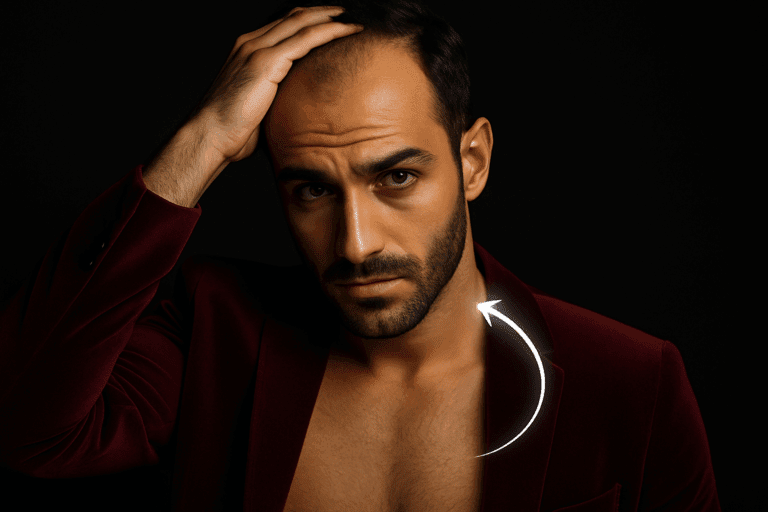
Hair thinning and androgenetic alopecia present significant emotional and psychological challenges for both men and women worldwide. In recent years, regenerative medicine has transformed dermatological treatments, bringing autologous micro-grafting and cellular therapies to the forefront of restorative care. Among these advances, the application of hair stem cells has established itself as an effective, minimally invasive solution aimed at reactivating dormant hair follicles, improving shaft diameter, and halting progressive density loss.
Table of Contents:
- Procedure & Treatment Overview
- Ideal Candidates & Medical Assessment
- Modern Surgical Techniques & Technologies
- Step-by-Step Procedure Process
- Recovery Timeline, Aftercare & Expected Results
- Global Cost & Destination Comparison
- 5-Day VIP Patient Journey in Istanbul
- Frequently Asked Questions (FAQ)
- Summary & Next Steps
Turkey has built an international reputation as a leading center for surgical and non-surgical hair restoration. Patients traveling to Istanbul for biological hair treatments seek authentic clinical insights regarding safety, recovery, and long-term density improvements. By understanding the underlying cellular mechanisms, reviewing real patient experiences, and exploring comprehensive care protocols, individuals facing scalp miniaturization can make fully informed treatment decisions.
| Medical Metric | Clinical Specification |
|---|---|
| Procedure Duration | 60 to 90 Minutes |
| Hospital Stay | Outpatient (Same Day Discharge) |
| Anesthesia Type | Local Anesthesia with Optional Sedation |
| Recovery Timeframe | 24 to 48 Hours for Routine Activities |
| Clinical Success Rate | 88% to 94% Follicular Reactivation Rate |
Procedure & Treatment Overview
Autologous stem cell therapy for scalp rejuvenation relies on harvesting progenitor cells, growth factors, and extracellular matrix components from the patient’s own tissue. Unlike traditional hair restoration methods that relocate intact donor follicles, this cellular approach stimulates existing, miniaturized follicles that have ceased producing robust hair shafts due to hormonal or genetic influences. To better understand the biological triggers behind thinning, reviewing causes of hair loss and effective treatment methods provides essential context for prospective patients.
During the procedure, small tissue samples—typically taken from the posterior scalp where hair follicles are genetically resistant to dihydrotestosterone (DHT)—are processed using specialized mechanical disaggregation devices. This process isolates progenitor cells and micro-grafts containing crucial signaling molecules. Once reinjected into thinning zones, these cellular units trigger angiogenesis (new vessel formation), reduce perifollicular inflammation, and transition dormant follicles back into the active growth (anagen) phase.
Ideal Candidates & Medical Assessment
Not every pattern of alopecia responds identically to progenitor cell therapies. Candidate selection involves diagnostic scalp trichoscopy, blood screening, and an evaluation of donor site health.
- Early to Moderate Androgenetic Alopecia: Patients displaying Norwood Grade II to IV or Ludwig Scale I to II baldness achieve the highest rates of tissue response.
- Diffuse Thinning: Individuals experiencing generalized density reduction across the vertex and mid-scalp who still retain active micro-follicles.
- Female Pattern Hair Loss: Women seeking non-surgical density restoration frequently benefit from therapy, as detailed in our analysis of hair transplant for women in Turkey.
- Adjunctive Surgical Candidates: Patients combining follicular unit extraction with biological therapies to enhance graft survival rates and accelerate donor site recovery.
Modern Surgical Techniques & Technologies
The clinical application of stem cell technologies relies on precise micro-processing systems to maintain maximum cellular viability. In Turkey, accredited surgical centers utilize state-of-the-art closed disaggregation protocols that keep processing fully sterile and automated.
By combining progenitor micro-grafting with advanced hair transplantation methods, surgeons can simultaneously address localized baldness while protecting areas showing early miniaturization. Additionally, patients who prefer to avoid shaving their donor areas can benefit from unshaven hair transplant techniques paired with localized biological injections.
Step-by-Step Procedure Process
The clinical protocol for autologous hair stem cell therapy follows a strict multi-step surgical plan designed for maximum safety and comfort:
Step 1: Clinical Mapping & Local Anesthesia
The clinical team marks the target injection sites on the scalp and administers local anesthesia to both the donor region (usually behind the ear) and the treatment areas, ensuring a painless process.
Step 2: Micro-Punch Tissue Harvesting
Using specialized 2mm dermatological punch instruments, 3 to 5 micro-tissue samples are extracted from the DHT-resistant donor area. These tiny punch sites are self-healing and leave virtually invisible micro-scars.
Step 3: Mechanical Disaggregation & Cell Isolation
The harvested micro-graft tissues are placed inside a sterile, single-use processing device. Through precise mechanical filtration and disaggregation, thousands of viable progenitor cells, vascular endothelial growth factors (VEGF), and cytokines are isolated without chemical reagents.
Step 4: Target Scalp Micro-Injections
The concentrated cellular solution is drawn into fine mesotherapy needles and systematically injected into the dermal layer of the scalp, concentrating on zones exhibiting follicular miniaturization.
Recovery Timeline, Aftercare & Expected Results
Because the procedure is autologous—using only the patient’s own organic tissues—the risk of allergic reaction, rejection, or systemic complications is minimal. Recovery is straightforward, enabling rapid integration back into daily life.
- Days 1–3 (Immediate Post-Procedure): Mild redness or slight tenderness at the micro-punch harvest sites may occur. Patients are instructed to avoid washing the scalp for the first 24 hours and to keep the scalp elevated.
- Weeks 1–4 (Cellular Integration Phase): Micro-inflammation subsides completely. The injected progenitor cells begin signaling surrounding vascular networks, increasing local blood perfusion.
- Months 2–3 (Initial Biological Response): Shedding decreases significantly. Microscopic evaluation often reveals thickening of individual hair shaft diameters.
- Months 6–12 (Visible Density Improvement): Noticeable increases in hair coverage, texture improvement, and overall scalp health become visible as dormant follicles return to active growth.
Global Cost & Destination Comparison
When selecting a destination for specialized regenerative scalp therapies, prospective patients should weigh total financial investment against institutional accreditations and comprehensive patient support services.
| Destination | Average Cost (USD) | JCI Accreditation | Travel & Logistics | All-Inclusive VIP Care |
|---|---|---|---|---|
| Turkey (Health Beauty Turkey) | $1,500 – $2,500 | Yes (High Density) | Highly Streamlined | Included (Transfers, Hotel, Translator) |
| United Kingdom | $5,000 – $8,000 | Variable | Local Standard | Excluded (Additional Cost) |
| United States | $6,000 – $10,000 | High Standard | Local Standard | Excluded (Additional Cost) |
| Germany | $4,500 – $7,500 | High Standard | Regional Standard | Excluded (Additional Cost) |
| Thailand | $3,000 – $5,000 | Yes | Moderate | Rarely Included |
| India | $2,000 – $3,500 | Yes | Long Distance | Partially Included |
To evaluate complete pricing variables across different regenerative techniques and surgical procedures, review our ultimate hair transplant in Turkey guide.
5-Day VIP Patient Journey in Istanbul
Health Beauty Turkey offers international patients a structured, stress-free medical itinerary that blends high-level clinical management with private travel support.
Day 1: Arrival & Private VIP Transfer
Upon landing in Istanbul, patients are met at the airport by a private driver and escorted to a luxury 5-star hotel in a dedicated VIP vehicle.
Day 2: Diagnostic Evaluation & Treatment
The patient attends the clinic for trichoscopic analysis, blood testing, final surgical planning, and the autologous micro-grafting stem cell procedure under sterile operating conditions.
Day 3: Clinical Follow-Up & Scalp Care
The medical team inspects the donor and injection sites, applies specialized moisturizing solutions, and demonstrates proper, gentle washing techniques.
Day 4: Rest & Cultural Experience
Patients enjoy a free day to relax at their hotel or explore Istanbul’s historical and cultural landmarks at a comfortable pace.
Day 5: Final Medical Clearance & Departure
The medical team performs a final scalp check, provides a long-term care kit with post-treatment serums and vitamins, and transfers the patient to the airport for their return flight.
Frequently Asked Questions (FAQ)
Are hair stem cell treatments safe?
Yes. Because autologous micro-grafting uses only the patient’s own biological tissue, there is zero risk of foreign tissue rejection or severe allergic reactions. All disaggregation equipment used is single-use and fully sterile.
How long do the results of hair stem cell therapy last?
Results typically persist between 2 to 5 years, depending on individual genetic factors and the natural progression of androgenetic alopecia. Maintenance sessions can be performed periodically to sustain follicular vitality.
Can hair stem cell therapy replace a hair transplant?
For patients with severe baldness where follicles are completely inactive or scarred over, stem cell therapy cannot produce entirely new hair follicles. In such instances, a hair transplant is necessary, though stem cell therapy can be combined with surgery to strengthen surrounding native hair and increase graft survival.
Is the procedure painful?
The entire treatment is conducted under local anesthesia. Patients may feel mild discomfort during the administration of the local anesthetic, but the micro-punch harvesting and scalp injection steps are virtually painless.
Summary & Next Steps
Autologous hair stem cell therapy represents a major step forward in non-surgical biological hair restoration. By leveraging the body’s natural regenerative capabilities, patients experiencing hair thinning can slow down hair loss, reactivate dormant follicles, and improve overall hair quality with minimal downtime.
If you are exploring advanced regenerative treatments for scalp health, contact our medical team at Health Beauty Turkey today for a personalized remote evaluation and consultation.
Medical Disclaimer: The clinical information provided in this article is for educational purposes only and should not replace professional medical advice, diagnosis, or treatment. Individual clinical outcomes may vary depending on patient health, underlying genetic factors, and adherence to post-treatment instructions.
Related Articles: causes of hair loss and effective treatment methods | advanced hair transplantation methods | hair transplant in Turkey guide | hair transplant for women in Turkey | unshaven hair transplant techniques
References & Trusted Sources: National Institutes of Health (NIH) – Clinical Research | World Health Organization (WHO) – Health Guidelines | National Center for Biotechnology Information (NCBI / PubMed)