Facial aging is characterized by a gradual loss of collagen, diminished dermal elasticity, and the gravitational descent of sub-dermal soft tissues. While traditional rhytidectomy (surgical facelift) remains the gold standard for severe tissue laxity, patients seeking noticeable tissue elevation without incisions, general anesthesia, or prolonged downtime now turn to minimally invasive procedures. The spider web facelift technique has emerged as a premier non-surgical treatment in aesthetic dermatology and anti-aging medicine.
Table of Contents:
- Quick Medical Facts Summary
- Procedure & Treatment Overview
- Ideal Candidates & Medical Assessment
- Modern Techniques & Thread Technologies
- Step-by-Step Procedure Process
- Recovery Timeline, Aftercare & Expected Results
- Global Cost & Destination Comparison
- 5-Day VIP Patient Journey in Istanbul
- Frequently Asked Questions (FAQ)
- Summary & Next Steps
- Medical Disclaimer
By inserting biocompatible polydioxanone (PDO) threads into the subdermal layers in a precise matrix pattern resembling a spider web, this procedure creates a supporting structural scaffold. This framework triggers a robust neocollagenesis response, stimulating the body to produce new collagen, elastin, and hyaluronic acid. For international patients seeking world-class aesthetic care, Turkey has established itself as a global leader in advanced thread lifting technologies and comprehensive medical tourism services.
Quick Medical Facts Summary
- Procedure Duration: 45 to 60 minutes
- Hospital Stay: Outpatient (No overnight stay required)
- Anesthesia Type: Local topical and infiltrative anesthesia
- Recovery Time: 2 to 5 days for minor swelling; full integration in 2 weeks
- Clinical Results Duration: 18 to 24 months (with progressive collagen production)
- Target Areas: Cheeks, nasolabial folds, jawline, jowls, neck, and brow line
Procedure & Treatment Overview
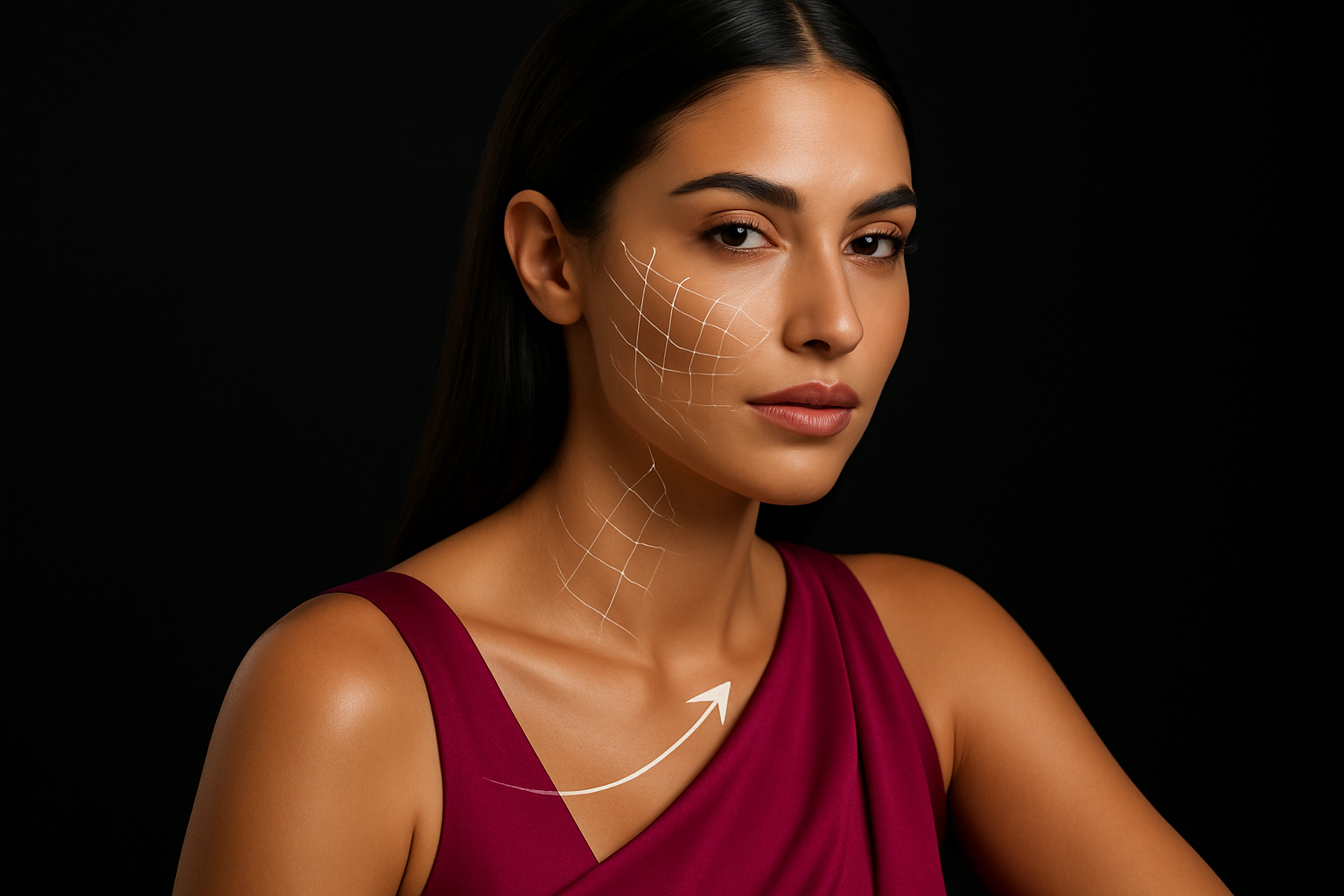
The spider web facelift technique is an advanced evolution of micro-threading methodology. Unlike conventional thread lifts that primarily rely on single bidirectional barbed threads to mechanically pull tissue, the spider web technique constructs a dense, multi-layered meshwork beneath the skin.
Using ultra-fine, sterile needles pre-loaded with medical-grade polydioxanone (PDO), poly-L-lactic acid (PLLA), or polycaprolactone (PCL) filaments, the aesthetic physician creates a crisscross grid pattern within the superficial musculoaponeurotic system (SMAS) interface and dermis. This web-like structure provides immediate mechanical support to sagging soft tissues while initiating a biochemical foreign-body reaction that encourages fibroblast proliferation, capillary microcirculation, and systemic collagen production. Over several months, the threads naturally dissolve via hydrolysis, leaving behind a reinforced mesh of indigenous structural collagen.
For optimal mid-face and lower-face rejuvenation, patients often combine this approach with a broader non-surgical facelift and neck lift in Turkey to address combined vector sagging across the submental and cervical zones.
Ideal Candidates & Medical Assessment
Pre-procedural clinical evaluation is critical to ensure patient selection aligns with realistic anatomical outcomes. A spider web lift delivers maximum efficacy for individuals experiencing mild to moderate tissue laxity who do not yet require surgical SMAS plication.
- Mild to Moderate Facial Sagging: Loss of definition along the mandibular border, early jowl formation, or subtle deepening of the nasolabial grooves.
- Sub-dermal Elasticity Loss: Patients exhibiting thinning skin texture due to depleted collagen and environmental photoaging.
- Surgical Contraindications or Preferences: Individuals seeking facial elevation without general anesthesia, scarring, or extended recovery periods.
- Age Demographic: Typically effective for patients between 30 and 60 years of age.
- Medical Clearance: Candidates must be free of active localized skin infections, uncontrolled autoimmune disorders, severe bleeding diatheses, or known allergies to polydioxanone materials.
Modern Techniques & Thread Technologies
The success of a modern thread lift relies heavily on material selection and precise spatial application. Specialized clinics in Turkey employ medical-grade bio-absorbable polymers tailored to specific tissue densities:
- Polydioxanone (PDO) Threads: The industry standard for tensile strength and safety. PDO threads dissolve completely within 6 to 8 months while generating sustained collagen synthesis lasting up to 2 years.
- Poly-L-Lactic Acid (PLLA) Threads: Biocompatible polymers that provide enhanced volumetric restoration by stimulating type I collagen synthesis over a extended degradation period (12 to 18 months).
- Polycaprolactone (PCL) Threads: The latest generation of bio-resorbable threads, offering prolonged structural retention (up to 24 months) and superior collagen remodeling capabilities.
- Barbed vs. Mono Threads Matrix: The spider web approach integrates non-barbed mono threads for cellular matrix activation alongside micro-cog threads for localized mechanical tissue anchorage.
Understanding these subtle material variations helps patients choose the right approach. You can read more about individual experiences with a thread facelift in Turkey to see how customized thread patterns yield subtle, harmonious rejuvenation.
Step-by-Step Procedure Process
The spider web facelift is conducted in a sterile outpatient clinical setting under strict aseptic protocols:
Step 1: Clinical Mapping & Anesthesia
The physician outlines vector lines and grid intersection points on the patient’s face while upright. A high-potency topical anesthetic cream is applied, followed by localized micro-injections of lidocaine with epinephrine to ensure complete patient comfort and minimize intra-procedural bruising.
Step 2: Vector Grid Insertion
Using micro-cannulas or fine hypodermic needles, dozens of delicate threads are systematically inserted into the deep dermis and subdermal adipose layers. The physician crafts a dense cross-hatch structure across the cheeks, malar mound, jawline, and submental region.
Step 3: Tissue Anchoring & Tensioning
Where barbed or cogged elements are introduced within the web, subtle manual manipulation is applied to anchor soft tissues into an elevated, youthful position. The interwoven threads distribute tension evenly, preventing unnatural pulling or localized dimpling.
Step 4: Post-Procedure Sanitization & Protection
The entry points are sanitized, treated with topical antibiotic ointment, and secured with lightweight sterile tapes. The entire treatment takes under an hour, after which the patient is fully ambulatory.
Recovery Timeline, Aftercare & Expected Results
One of the primary advantages of the non-surgical spider web technique is minimal post-procedural downtime. Clinical recovery generally follows a standardized timeline:
- Days 1 to 3: Mild localized edema, erythema, and transient tenderness are normal. Minor micro-bruising around entry points can be concealed with medical concealer after 48 hours. Cold compresses help reduce localized swelling.
- Days 4 to 7: Tissue tightness stabilizes. Patients can resume routine light activities and office work. Strenuous exercise, facial massages, exaggerated facial expressions, and saunas must be avoided.
- Weeks 2 to 4: The threads begin integrating fully into the dermal matrix. Initial mechanical lifting becomes supplemented by early neocollagenesis. Facial movements feel completely natural.
- Months 2 to 6: Fibroblasts synthesize fresh collagen around the degrading thread framework, improving skin density, elasticity, and overall surface radiance. Peak cosmetic results are visible around month 3 and persist for up to 2 years.
Global Cost & Destination Comparison
Turkey has become a leading destination for non-surgical aesthetic procedures, combining international medical accreditation with cost-effective options for international patients.
| Destination | Average Cost (USD) | JCI Quality Standards | Travel Convenience | All-Inclusive VIP Services |
|---|---|---|---|---|
| Turkey (Health Beauty Turkey) | $1,200 – $2,200 | World-Class Accredited Clinics | Direct International Flights & Visa On Arrival | Included (VIP Transfers, 5-Star Hotel, Translation) |
| United States | $4,500 – $8,500 | High Standards | Domestic Travel | Not Included (Billed Separately) |
| United Kingdom | $3,800 – $7,000 | High Standards | Regional Flight | Not Included (Billed Separately) |
| Germany | $3,500 – $6,500 | Strict EU Standards | Regional Flight | Rarely Included |
| Thailand | $2,000 – $3,500 | Accredited Facilities | Long-haul Travel | Available as Extra Add-on |
| India | $1,500 – $2,800 | Variable Quality | Long-haul Travel | Limited VIP Packages |
5-Day VIP Patient Journey in Istanbul
For international patients traveling to Istanbul, medical travel is organized into an efficient, stress-free 5-day itinerary:
Day 1: VIP Arrival & Luxury Hotel Transfer
Upon arrival at Istanbul Airport (IST or SAW), a dedicated VIP chauffeur transfers the patient directly to a 5-star partner hotel. An assigned multilingual patient coordinator provides all schedule details and documentation.
Day 2: Clinical Consultation & Treatment
The patient visits the clinic for a comprehensive facial assessment, digital photography, and skin elasticity evaluation. Following mutual confirmation of the treatment plan, the spider web facelift procedure is executed under local anesthesia. The patient returns to their hotel to relax after post-care instructions are explained.
Day 3: Rest & Guided Local Exploration
A scheduled rest day allows minor post-procedural swelling to settle. Patients may opt for light sight-seeing in historic Istanbul while following post-procedure sun protection guidelines.
Day 4: Post-Treatment Evaluation & Medical Check
The patient attends a follow-up assessment at the clinic. The cosmetic doctor examines thread positioning, entry site healing, and symmetry, applying supplementary light-therapy treatments if indicated to speed up healing.
Day 5: Final Certificate & Departure
The VIP transfer service escorts the patient back to the airport for their return flight home, equipped with dynamic post-care products, detailed aftercare guidelines, and 24/7 direct access to our clinical team.
Frequently Asked Questions (FAQ)
Is the spider web facelift painful?
No. The procedure is performed under local topical and infiltrative anesthesia. Most patients report only mild pressure or micro-sensations during thread placement. Any post-procedural soreness is mild and managed with standard over-the-counter analgesics.
How long do the results of a spider web thread lift last?
While the threads naturally biodegrade within 6 to 12 months, the new structural collagen network created by the body remains intact for 18 to 24 months. Duration depends on individual metabolic rate, age, lifestyle, and skin quality.
Are there noticeable scars after the treatment?
No surgical incisions are made. Threads are introduced via tiny micro-needles or blunt-tip cannulas. Entry points heal within a few days without leaving visible scarring.
Can a spider web lift be combined with dermal fillers or Botox?
Yes. Many patients benefit from a comprehensive facial harmonization plan. Neuromodulators and hyaluronic acid fillers can be administered simultaneously or in staged sessions to address dynamic wrinkles and volume loss alongside thread lifting.
Summary & Next Steps
The spider web facelift offers an advanced non-surgical solution for facial tissue lifting, skin tightening, and cellular rejuvenation. By creating a bio-absorbable matrix beneath the skin, this procedure restores youthful facial contours and natural collagen production without the risks or downtime of open plastic surgery.
If you are considering a non-surgical aesthetic transformation in Turkey, our expert medical consultants are available to evaluate your aesthetic goals. Contact our clinical team today to receive a personalized virtual consultation and customized treatment plan.
Medical Disclaimer
This content is for educational and informational purposes only and does not constitute formal medical advice, diagnosis, or treatment recommendations. Individual anatomical responses to thread lifting procedures vary based on skin elasticity, age, lifestyle, and underlying health status. A formal clinical consultation with a board-certified aesthetic physician or dermatologist is required prior to undergoing any non-surgical intervention.
Related Articles: non-surgical facelift and neck lift in Turkey | thread facelift in Turkey
References & Trusted Sources: National Institutes of Health (NIH) – Clinical Research | World Health Organization (WHO) – Health Guidelines | National Center for Biotechnology Information (NCBI / PubMed)