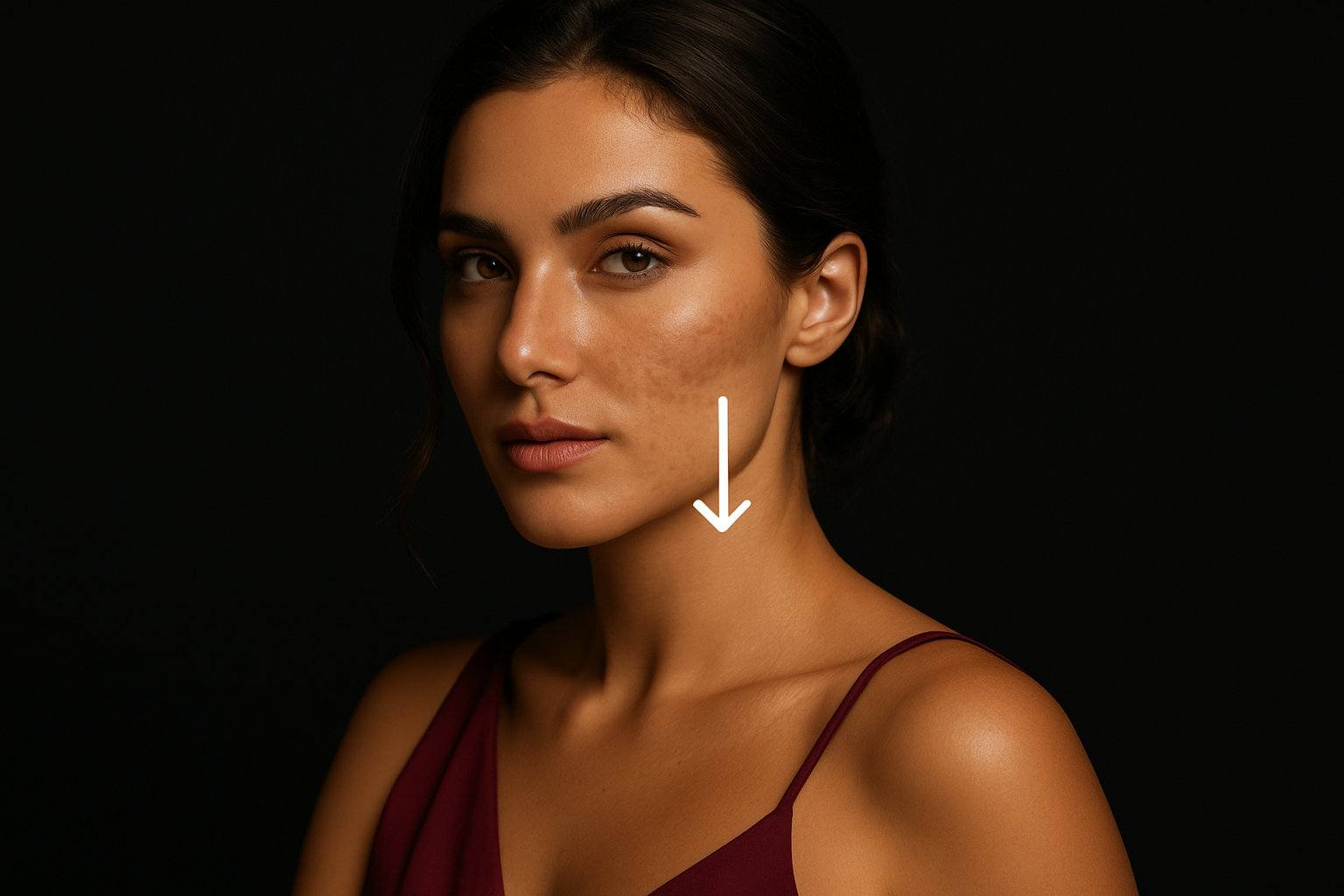
Facial scars and post-inflammatory acne scarring represent significant clinical and cosmetic concerns for millions of individuals worldwide. Whether caused by severe nodulocystic acne, mechanical trauma, or prior surgical interventions, facial skin irregularities often affect psychological well-being, self-confidence, and personal comfort. Achieving smoother, healthier dermal texture requires specialized medical expertise, tailored clinical protocols, and state-of-the-art dermatological equipment.
Table of Contents:
- Procedure & Treatment Overview
- Ideal Candidates & Medical Assessment
- Modern Surgical Techniques & Technologies
- Step-by-Step Procedure Process
- Recovery Timeline, Aftercare & Expected Results
- Global Cost & Destination Comparison
- 5-Day VIP Patient Journey in Istanbul
- Frequently Asked Questions (FAQ)
- Summary & Next Steps
Turkey has firmly established itself as an international center of excellence for advanced dermatological care and cosmetic plastic surgery. At Health & Beauty Turkey, our board-certified dermatologists and reconstructive surgeons utilize evidence-based modalities to treat complex scar tissue. By combining fractional ablative lasers, radiofrequency microneedling, subcision, and surgical excision, we provide individualized clinical solutions designed to reconstruct dermal integrity and promote long-term cellular regeneration.
Quick Medical Facts Summary
| Procedure Name | Facial Scar Revision & Acne Scar Treatment |
|---|---|
| Treatment Duration | 30 to 90 minutes per session (depending on technique) |
| Anesthesia Type | Topical numbing cream, local anesthesia, or mild sedation |
| Hospital Stay | Outpatient procedure (0 days hospital stay) |
| Recovery Time | 3 to 7 days for initial downtime; complete remodelling over 3 to 6 months |
| Success Rate | 85% – 95% significant structural improvement |
Procedure & Treatment Overview
Acne scarring occurs when severe skin inflammation destroys deep dermal structures. The body attempts to repair this tissue by producing collagen; however, an irregular, unbalanced collagen response leads to visible surface deformities. Scars generally fall into two broad physiological categories: atrophic scars, characterized by a loss of skin tissue (such as icepick, boxcar, and rolling scars), and hypertrophic or keloidal scars, characterized by an overproduction of raised collagen fibrous tissue.
An effective scar treatment solution in Turkey focuses on deep tissue remodeling, collagen induction, and surface re-epithelialization. Rather than relying on a single modality, advanced clinical practice combines multiple synergistic therapies. Treating deep tethered scars requires releasing the underlying fibrotic bands, whereas superficial texture irregulars benefit from controlled thermal micro-injuries that stimulate endogenous type I and type III collagen synthesis.
Ideal Candidates & Medical Assessment
Determining whether a patient is suitable for clinical skin resurfacing or scar revision requires a rigorous pre-treatment consultation. The ideal candidate must present with inactive acne, as ongoing active bacterial infection (such as active Propionibacterium acnes breakouts) can exacerbate post-treatment inflammation or risk secondary infections.
- Active Inflammatory Status: Patients must have stable skin free of active cystic lesions.
- Skin Phototype Evaluation: Identifying the patient’s Fitzpatrick skin type is essential to minimize the risk of post-inflammatory hyperpigmentation (PIH) or hypopigmentation.
- Medical History: Patients who have used oral isotretinoin within the past 6 to 12 months require specific evaluation, as epithelial healing rates may be temporarily altered.
- Realistic Expectations: Clinical scar management aims to achieve 60% to 90% structural improvement, restoring natural texture rather than absolute microscopic perfection.
Modern Surgical Techniques & Technologies
Modern dermatological care offers a comprehensive array of non-invasive, minimally invasive, and surgical techniques customized to specific scar morphologies:
Fractional CO2 and Erbium:YAG Lasers
Laser skin resurfacing remains a benchmark technology for tissue remodelling. Fractional CO2 lasers deliver microscopic columns of thermal energy deep into the dermis, creating controlled zones of micro-thermal injury while leaving surrounding tissue intact for rapid healing. For patients seeking refined epidermal resurfacing, surface laser resurfacing treatments gently remove damaged outer layers with minimal collateral thermal damage.
RF Microneedling (Radiofrequency)
This modality combines mechanical micro-punctures with precise thermal radiofrequency energy emitted directly into the reticular dermis. RF microneedling bypasses the epidermis, making it an exceptionally safe option for darker skin phototypes with minimal risk of hyperpigmentation.
Subcision for Tethered Rolling Scars
Rolling scars are held down by underlying fibrotic collagen bands that pull the epidermis toward the subcutaneous fascia. During subcision, a specialized surgical needle is inserted beneath the scar to mechanically break these fibrous tethers, releasing the depression and allowing new extracellular matrix to fill the space.
TCA CROSS (Chemical Reconstruction of Skin Scars)
Specifically designed for deep icepick scars, TCA CROSS involves the high-concentration focal application of trichloroacetic acid directly into the scar base. This triggers localized coagulation and intensive dermal remodelling, progressively elevating the scar base.
Platelet-Rich Plasma (PRP) and Stem Cell Therapies
Autologous PRP, derived from the patient’s own blood, contains high concentrations of growth factors that accelerate tissue regeneration when combined with laser treatments or microneedling. Advanced clinic protocols frequently integrate PRP to reduce recovery times and optimize collagen synthesis.
Patients exploring full facial rejuvenation can also combine these protocols with other advanced cosmetic treatments in Turkey to achieve harmonious facial aesthetic outcomes.
Step-by-Step Procedure Process
- Clinical Evaluation & Digital Dermoscopy: Detailed high-definition skin mapping to assess scar depth, density, and tissue elasticity.
- Topical Anesthesia Application: A medical-grade topical numbing cream is applied 45 to 60 minutes prior to the session to ensure patient comfort.
- Subcision & Deep Tissue Release (If required): Local anesthesia is infiltrated, and fibrotic scar bands are surgically released.
- Energy-Based Application: Precise application of customized Fraxel laser skin resurfacing or fractional CO2 laser based on pre-calculated depth and energy parameters.
- Regenerative Serum Infusion: Direct topical application of PRP or specialized post-laser healing serums to maximize cellular uptake through open micro-channels.
- Post-Procedure Soothing & Sun Barrier: Application of cooling medical hydrogel sheets and mineral-based broad-spectrum sun block.
Recovery Timeline, Aftercare & Expected Results
Adhering to post-procedure care protocols is essential to prevent complications and achieve optimal dermal regeneration.
- Days 1 – 3: Expect moderate erythema (redness) and mild edema (swelling) similar to a sunburn sensation. Gentle cleansing with non-comedogenic, soap-free cleansers is recommended. Apply prescribed occlusive healing ointments frequently.
- Days 4 – 7: Micro-crusting and light peeling begin. Patients must avoid picking at peeling skin to prevent scar recurrence or hyperpigmentation. Normal light social activities may usually be resumed.
- Weeks 2 – 4: Erythema gradually fades to a normal skin tone. Internal neo-collagenesis begins beneath the epidermis.
- Months 1 – 6: Progressive continuous improvement in skin smoothness, firmness, and depth reduction as new collagen networks mature. Multiple sessions (typically 3 to 5 sessions spaced 4 to 6 weeks apart) yield cumulative clinical benefits.
Global Cost & Destination Comparison
Turkey offers world-class medical facilities, JCI-accredited hospitals, and highly specialized dermatological care at significantly lower costs compared to Western nations. The following table provides a realistic overview of costs and patient services across key international destinations:
| Destination | Average Cost Range (USD) | JCI Accreditation & Quality Standards | Travel & Visa Convenience | All-Inclusive VIP Services |
|---|---|---|---|---|
| Turkey (Health & Beauty Turkey) | $500 – $1,800 | World-Class JCI Accredited Clinics | Seamless / e-Visa Availability | Full VIP: Hotel, Transfers, Personal Translator |
| United Kingdom | $2,500 – $6,000 | Standard NHS / Private Clinics | Regional Travel | Not Included (Paid separately) |
| United States | $3,000 – $8,000 | High Standards (AAAASF / JCI) | Complex Visa Requirements | Not Included (High out-of-pocket costs) |
| Germany | $2,200 – $5,500 | High European Standards | Schengen Visa Required | Rarely Included |
| Thailand | $1,200 – $3,000 | High (Select Hospitals) | Long Flight Times | Partial Inclusions |
| India | $800 – $2,200 | Variable Quality | Visa Required | Limited Concierge Care |
5-Day VIP Patient Journey in Istanbul
At Health & Beauty Turkey, we provide a smooth, stress-free medical experience tailored for international patients:
- Day 1: VIP Arrival & Consultation Readiness
Upon landing at Istanbul Airport, private VIP transport transfers you directly to your 5-star hotel. Your personal patient coordinator provides all preliminary instructions. - Day 2: Clinical Assessment & Treatment Session
You visit our state-of-the-art clinic for detailed skin analysis and consultation with your specialist dermatologist. The agreed treatment protocol (subcision, laser resurfacing, or combined therapy) is safely performed. - Day 3: Post-Treatment Evaluation & Rest
A comfortable recovery day at your hotel. Dedicated medical support is available 24/7 to monitor your skin healing and answer any post-care questions. - Day 4: Clinical Review & LED Light Therapy
You return to the clinic for a follow-up assessment. A specialized low-level LED light therapy session is conducted to accelerate wound healing and reduce residual erythema. - Day 5: Final Evaluation & Safe Departure
Your clinical specialist inspects the healing progress, provides a comprehensive long-term skincare package, and certifies you safe for travel. Private VIP transport transfers you back to the airport.
Frequently Asked Questions (FAQ)
Is acne scar treatment painful?
Most dermatological scar revision procedures involve minimal discomfort. High-potency topical anesthetic creams are routinely applied prior to treatment. For deeper surgical procedures like subcision, localized nerve blocks or local infiltrative anesthesia are used to ensure complete patient comfort.
How many treatment sessions will I require?
The exact number of sessions depends on scar depth, type, and skin regeneration capacity. While visible improvement is often observed after a single session, a series of 3 to 5 targeted treatments spaced several weeks apart is recommended for severe or deep scarring.
Are the results of acne scar removal permanent?
Yes. Corrective interventions such as subcision, laser resurfacing, and TCA CROSS permanently alter and rebuild the dermal collagen matrix. Once a tethered scar is released or new collagen fills a structural depression, the structural improvement is permanent. However, maintaining results requires ongoing sun protection and proper dermatological maintenance.
Can dark skin tones safely undergo laser scar treatment?
Yes, provided appropriate technologies are selected. While traditional high-energy ablative lasers carry hyperpigmentation risks for darker phototypes, technologies like radiofrequency microneedling and non-ablative fractional lasers can safely treat hyperpigmentation and scars in darker skin tones under expert medical supervision.
Summary & Next Steps
Facial scars and post-acne irregularities do not have to be permanent. With precise clinical diagnosis, modern laser technology, and individualized treatment plans, achieving restored skin texture and renewed confidence is entirely attainable. Learn more about personalized professional scar treatment in Turkey and discover how state-of-the-art dermatological protocols can transform your skin health.
We invite you to reach out to our senior medical team at Health & Beauty Turkey today. Send us high-resolution photographs of your concern areas to receive a complimentary, individualized medical assessment and personal treatment program tailored specifically to your needs.
Medical Disclaimer: The information provided in this article is strictly for educational purposes and does not constitute formal medical advice. Clinical outcomes can vary based on individual physiological traits, scar types, and adherence to post-treatment care guidelines. Always consult a qualified physician or dermatologist for personal medical advice and treatment options.
Related Articles: scar treatment solutions in Turkey | surface laser resurfacing treatments | Fraxel laser skin resurfacing | advanced cosmetic treatments in Turkey | professional scar treatment in Turkey
References & Trusted Sources: National Institutes of Health (NIH) – Clinical Research | World Health Organization (WHO) – Health Guidelines | National Center for Biotechnology Information (NCBI / PubMed)