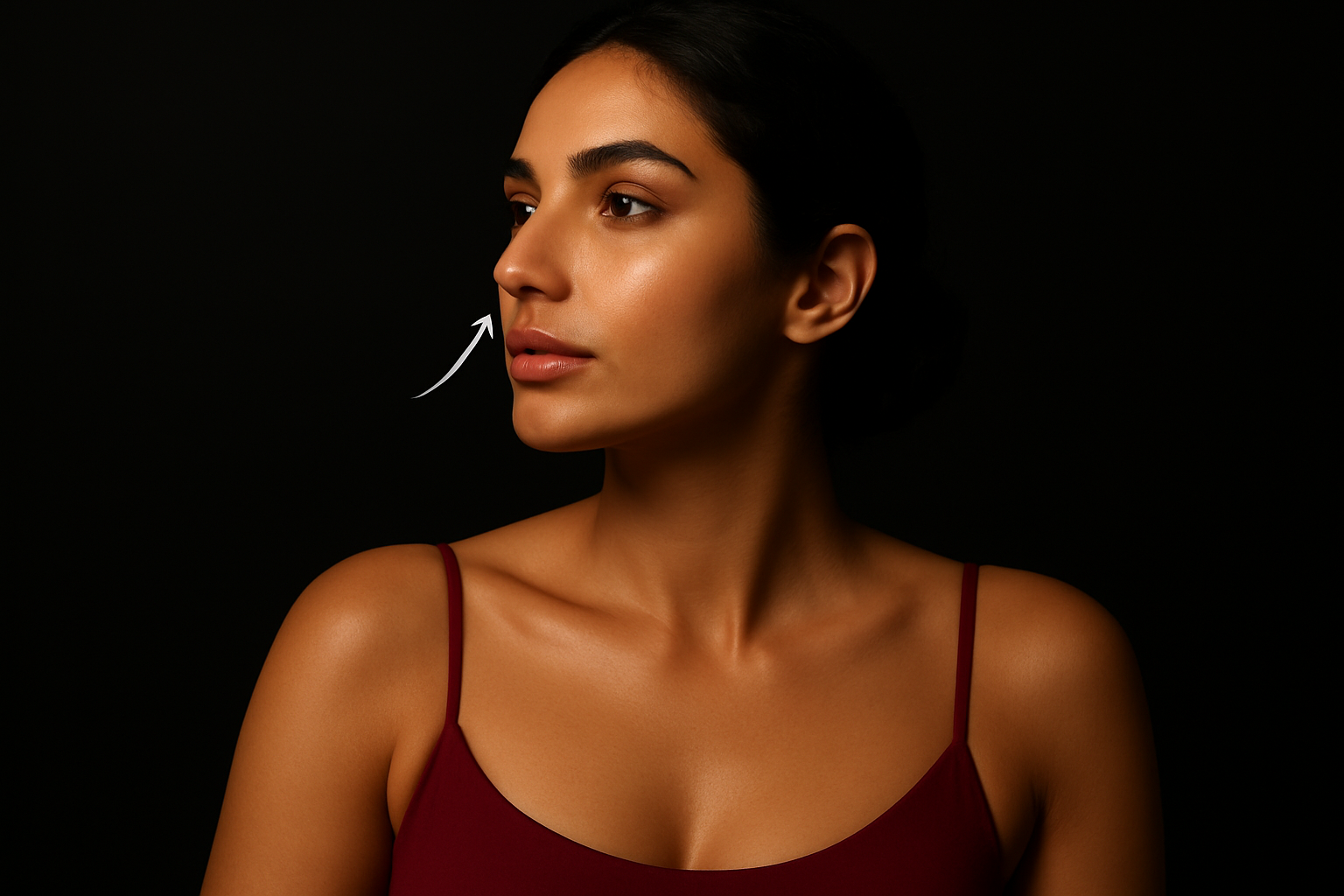
Facial harmony and unhindered respiratory function are fundamentally linked to the central pillar of the face: the nose. When structural deviations, trauma, congenital anomalies, or previous unsuccessful rhinoplasties impair either airflow or aesthetic equilibrium, corrective nose surgery serves as the definitive medical solution. In modern surgical practice, corrective rhinoplasty is not merely an isolated cosmetic refinement; it is a sophisticated dual-purpose intervention that harmonizes intricate facial osteotomy with advanced airway reconstruction.
Table of Contents:
- Quick Medical Facts Summary
- Procedure & Treatment Overview
- Ideal Candidates & Medical Assessment
- Modern Surgical Techniques & Technologies
- Step-by-Step Procedure Process
- Recovery Timeline, Aftercare & Expected Results
- Global Cost & Destination Comparison
- 5-Day VIP Patient Journey in Istanbul
- Frequently Asked Questions (FAQ)
- Summary & Next Steps
Turkey has established itself as an international center of excellence for sophisticated facial plastic procedures. Combining world-renowned board-certified plastic surgeons, state-of-the-art surgical technology, and comprehensive VIP care packages, patients seeking functional and cosmetic restoration receive world-class care. Understanding the distinct nuances of cosmetic vs reconstructive surgery is paramount when planning a structural nasal modification, ensuring both anatomical restoration and personalized aesthetic outcomes.
Quick Medical Facts Summary
| Attribute | Clinical Details |
|---|---|
| Procedure Duration | 2.5 to 4.5 Hours (depending on revision or structural complexity) |
| Hospital Stay | 1 Night (Overnight clinical observation) |
| Anesthesia Type | General Anesthesia with endotracheal intubation |
| Primary Recovery Phase | 7 to 10 Days (Splint and suture removal at Day 7) |
| Final Anatomical Result | 80% at 3 months; 100% complete tissue maturation at 12–18 months |
| Surgical Success Rate | 95%+ (when performed by experienced rhinoplasty specialists) |
Procedure & Treatment Overview
Corrective nose surgery, clinically classified under secondary rhinoplasty, septorhinoplasty, or reconstructive nasal surgery, focuses on rectifying both internal anatomical obstructions and external deformities. Unlike primary cosmetic rhinoplasty—which primarily modifies untouched cartilage and bone—corrective procedures frequently require re-engineering damaged structures, grafting cartilage, and realigning severe septal deviations.
From a functional standpoint, the procedure addresses internal nasal valve collapse, hypertrophic turbinates, septal spurs, and traumatic nasal fractures. From an aesthetic perspective, corrective surgery resolves nasal dorsal humps, asymmetrical bridges, collapsed nasal tips, and excessive dorsal width. For patients with unique anatomical variations such as a flared or broad osseous base, specialized techniques like wide nose rhinoplasty can be seamlessly integrated into the corrective treatment plan to narrow the nasal architecture while preserving structural integrity.
Ideal Candidates & Medical Assessment
Candidates for corrective nose surgery undergo a comprehensive pre-operative evaluation to ensure physiological suitability and realistic surgical expectations. The ideal candidate includes individuals who exhibit:
- Chronic Nasal Airway Obstruction: Persistent difficulty breathing through one or both nostrils due to septal deviation or internal/external valve dysfunction.
- Post-Traumatic Deformities: Anatomical displacement resulting from physical injury, sports trauma, or motor vehicle accidents.
- Unsatisfactory Primary Rhinoplasty Results: Aesthetic deformities, asymmetry, or breathing complications following a previous nose operation.
- Congenital Anomalies: Inherent structural irregularities impacting both appearance and respiratory performance.
- Stable Facial Skeleton: Completed growth of the facial bones (typically age 18 or older).
- Overall Good Health: Non-smokers or individuals willing to cease smoking pre- and post-operatively to promote microvascular tissue healing.
During the initial surgical assessment, three-dimensional CT scans or endoscopic nasal examinations are performed to map the internal airway and evaluate septum curvature, turbinate size, and cartilage integrity. In cases where nasal realignment is combined with lower facial structural corrections, such as jaw surgery, an integrated orthognathic and facial plastic approach ensures complete midface-to-lower-face proportion and functional alignment.
Modern Surgical Techniques & Technologies
Modern corrective nose surgery in Turkey utilizes cutting-edge medical technologies designed to minimize tissue trauma, increase structural precision, and accelerate healing.
1. Ultrasonic Piezo Surgery
Rather than using traditional hammers and chisels, surgeons employ ultrasonic Piezo devices. Piezoelectric instruments use high-frequency sound waves to cut and reshape nasal bones with micrometric precision without damaging surrounding soft tissues, blood vessels, or mucous membranes. This significantly reduces post-operative ecchymosis (bruising) and edema (swelling).
2. Open vs. Closed Approach
- Open Corrective Rhinoplasty: Involves a tiny, precise incision across the columella, granting direct visualization of the entire cartilage and osseous framework. This is the gold standard for complex structural revisions and severe septal deviations.
- Closed Corrective Rhinoplasty: All incisions are concealed within the nostrils. Ideal for moderate corrections that require dorsal refinement or minor septal work without major tip grafting.
3. Structural Autologous Grafting
In cases of collapsed nasal bridges or over-resected tissue from past surgeries, surgeons utilize autologous cartilage grafts harvested from the nasal septum, ear concha, or costal (rib) cartilage. These grafts act as structural support pillars (spreader grafts, columellar struts) to stabilize the airway and rebuild the nasal framework.
Step-by-Step Procedure Process
- Pre-Operative Anesthesia & Planning: The patient is placed under full general anesthesia monitored by senior anesthesiologists. The surgeon marks precise anatomical landmarks on the nose.
- Surgical Incision & Flap Elevation: Depending on the open or closed approach, precise incisions are made to gently elevate the skin flap from the underlying cartilage and bone.
- Septal & Functional Airway Correction: The surgeon rectifies septal deviations (septoplasty), reduces hypertrophied turbinates (radiofrequency or turbinoplasty), and reinforces internal valves using spreader grafts.
- Structural & Aesthetic Reshaping: Bony humps are shaved or reduced using Piezo technology, lateral osteotomies are performed to narrow or realign the bridge, and tip cartilage is sculpted and secured with microscopic sutures.
- Closure & Internal Splinting: Soft silicon internal splints (Doyle splints) are placed to allow immediate post-operative nasal breathing while supporting the septum. The external skin is closed with fine micro-sutures, and a protective thermal cast is applied.
Recovery Timeline, Aftercare & Expected Results
Post-operative compliance is essential for achieving an optimal structural and aesthetic result. Following a structured care routine guarantees smooth tissue healing and long-term stabilization.
Recovery Timeline
- Days 1–3: Mild discomfort managed with prescribed analgesics. Soft silicone splints allow partial airway passage. Head must remain elevated at 45 degrees.
- Day 7: External thermoplastic cast, silicone splints, and columellar sutures are removed by the surgeon. Initial swelling is visible, but the structural improvement is immediately apparent.
- Weeks 2–4: Residual bruising fades completely. Patients can return to desk jobs and light social activities. Nasal breathing continues to improve rapidly as mucosal swelling subsides.
- Months 1–3: 80% of soft tissue swelling disappears. Refined anatomical contouring becomes increasingly defined. Light exercise can be resumed.
- Months 12–18: Complete tissue healing, bone remolding, and cartilage stabilization. Final long-term aesthetic and functional outcome is established.
Patients seeking comprehensive facial rejuvenation often explore complementary procedures during their recovery period, such as facial aesthetic treatments or consults on safe cosmetic surgery options in Turkey to optimize their overall rejuvenation experience.
Global Cost & Destination Comparison
Turkey offers an unmatched balance of surgical excellence, world-class hospital infrastructure, and cost-effective medical tourism packages. Below is a comparative overview of corrective nose surgery across key international medical destinations:
| Destination | Average Cost (USD) | JCI Accreditation Quality | All-Inclusive VIP Services | Travel & Waiting Time |
|---|---|---|---|---|
| Turkey (Health Beauty Turkey) | $3,200 – $4,800 | World-Leading Density of JCI Hospitals | Included (5-Star Hotel, VIP Transfers, Translation) | Immediate / Minimal Waiting |
| UK / USA | $12,000 – $22,000 | High | Excluded (Billed separately per service) | Long waiting lists (3–6 months) |
| Germany | $9,500 – $14,000 | Very High | Excluded | Moderate waiting lists |
| Thailand | $5,000 – $7,500 | Moderate to High | Partially Included | Long travel distance for Westerners |
| India | $3,800 – $5,500 | Moderate | Rarely Included | Long flight time & complex visa protocols |
5-Day VIP Patient Journey in Istanbul
Health Beauty Turkey provides a fully coordinated, stress-free 5-day surgical experience tailored for international patients:
- Day 1: VIP Arrival & Luxury Transfer
You are greeted at Istanbul Airport by a private multi-lingual chauffeur and transported to your luxury 5-star hotel in a high-end VIP vehicle. - Day 2: Clinical Assessment & Surgery
Comprehensive pre-operative consultation, 3D anatomical imaging, blood analysis, and anesthesia clearance at our JCI-accredited surgical center, followed by the surgical procedure. Night spent resting in a private hospital suite under 24/7 nursing supervision. - Day 3: Hospital Discharge & Hotel Relaxation
Post-operative check by your senior plastic surgeon, instruction on nasal irrigation and oral medications, followed by VIP transfer to your hotel room for rest. - Day 4: Rest & Personal Aftercare Support
A quiet recovery day at your hotel. Our clinical patient coordinator stays in contact to monitor your progress and ensure maximal comfort. - Day 5: Cast Removal, Final Check & Return Flight
Final in-clinic assessment. Your external splint, internal silicone tubes, and sutures are removed. Your surgeon inspects the airway and clears you for your return flight home.
Frequently Asked Questions (FAQ)
Is corrective nose surgery painful?
Corrective nose surgery is performed under general anesthesia, ensuring you experience no pain during the procedure. Post-operatively, patients describe feeling pressure and nasal congestion rather than acute pain. Prescribed pain medication comfortably manages any mild discomfort during the first few days.
How long do internal silicone splints stay in place?
Modern silicone splints (which feature internal air channels allowing you to breathe) are typically removed 5 to 7 days after surgery during your post-operative checkup. Splint removal is fast and virtually painless.
Can corrective nose surgery fix both breathing problems and appearance at the same time?
Yes. Corrective septorhinoplasty is specifically designed to simultaneously fix internal structural issues (like a deviated septum or collapsed valve) and refine external aesthetic proportions (such as a dorsal hump, wide bridge, or asymmetrical tip) in a single surgical session.
When can I resume exercise and flying after surgery?
You can safely fly home on Day 5 or 6 post-surgery after your final clinical evaluation and splint removal. Light walking is encouraged right away, but strenuous exercise, heavy lifting, and contact sports should be avoided for 4 to 6 weeks to prevent bleeding and elevated blood pressure in the nasal tissues.
Summary & Next Steps
Corrective nose surgery is a transformative surgical procedure that yields profound functional airway improvements while restoring natural facial balance. By combining advanced ultrasonic Piezo technology, autologous structural grafting, and meticulous surgical expertise, patients achieve long-lasting structural health and visual symmetry.
If you are experiencing functional nasal obstruction, post-traumatic deformities, or dissatisfaction with a previous nose surgery, our expert medical team at Health Beauty Turkey is here to assist you. Contact our senior medical consultants today to receive a personal surgical consultation and a customized treatment plan tailored specifically to your anatomical needs.
Medical Disclaimer: The medical information provided in this article is for educational and informational purposes only and does not constitute formal medical advice, diagnosis, or treatment. Always consult a qualified board-certified plastic surgeon or otolaryngologist regarding any surgical procedure or medical condition.
Related Articles: cosmetic vs reconstructive surgery | wide nose rhinoplasty | jaw surgery | safe cosmetic surgery options in Turkey
References & Trusted Sources: National Institutes of Health (NIH) – Clinical Research | World Health Organization (WHO) – Health Guidelines | National Center for Biotechnology Information (NCBI / PubMed)