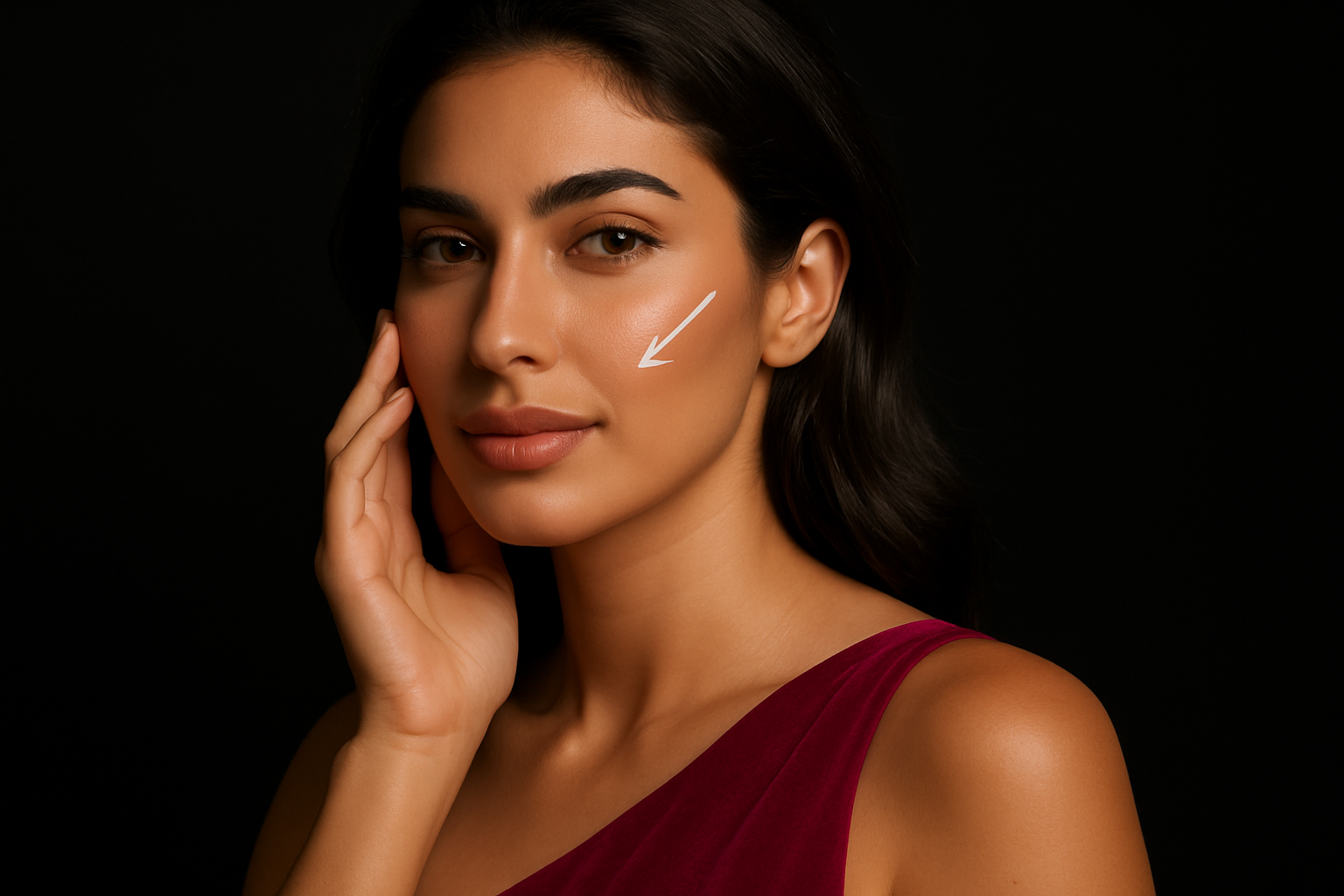
Midface volume loss, characterized by flattened malar contours and the downward migration of structural fat pads, is one of the primary drivers of facial aging. Cheek augmentation in Turkey has emerged as a globally recognized surgical and aesthetic solution designed to restore dynamic high cheekbones, enhance facial symmetry, and rebuild the anatomical framework of the upper face. Whether addressed through permanent surgical implants, autologous micro-fat transfer, or advanced hyaluronic acid injectables, midface reconstruction provides profound rejuvenate effects for patients seeking structural balance.
Table of Contents:
- Procedure & Treatment Overview
- Ideal Candidates & Medical Assessment
- Modern Surgical Techniques & Technologies
- Step-by-Step Procedure Process
- Recovery Timeline, Aftercare & Expected Results
- Global Cost & Destination Comparison (Turkey vs UK, USA, Germany, Thailand, India)
- 5-Day VIP Patient Journey in Istanbul
- Frequently Asked Questions (FAQ)
- Summary & Next Steps
By leveraging state-of-the-art 3D facial imaging, ultra-precise surgical technique, and internationally accredited hospital settings, medical tourism in Istanbul offers patients world-class surgical outcomes alongside an luxurious patient care journey.
Quick Medical Facts Summary
- Procedure Duration: 45 minutes to 2 hours (depending on technique)
- Hospital Stay: Outpatient or 1 overnight stay for combination surgical procedures
- Recovery Time: 7 to 10 days for soft tissue healing; final structural settling in 3 to 6 months
- Anesthesia Type: General anesthesia for surgical implants; local anesthesia or IV sedation for fat transfer and fillers
- Success Rate: Greater than 97% patient satisfaction rate across high-volume surgical units
Procedure & Treatment Overview
Cheek augmentation encompasses both surgical and non-surgical modalities designed to augment the malar and submalar complexes. Anatomically, the cheek area provides essential structural support to the lower eyelids, nasolabial folds, and lower face. As structural bone resorption occurs over time alongside subcutaneous fat atrophy, the midface collapses inward and downward, creating a fatigued or hollow appearance.
Surgical correction focuses on augmenting the zygomatic bone matrix using biocompatible implants or transferring purified autologous adipose tissue into specific anatomical planes. Non-surgical options utilize high-G-prime dermal fillers to temporarily recreate projection. Patients seeking comprehensive structural enhancement often combine these techniques through specialized cheek augmentation and filling solutions in Turkey to achieve optimal soft tissue coverage over bony structures.
Ideal Candidates & Medical Assessment
Candidate selection relies on an in-depth clinical evaluation of facial bone architecture, skin elasticity, and soft tissue volume. Surgeons evaluate candidates across several anatomical criteria:
- Congenital Malar Hypoplasia: Individuals born with underdeveloped cheekbones who seek improved three-dimensional facial harmony.
- Age-Related Volume Atrophy: Patients experiencing malar fat pad descent, skeletal resorption, and deepening nasolabial grooves.
- Post-Traumatic Reconstructive Needs: Patients requiring facial symmetry restoration following orbital or zygomatic trauma.
- Overall Health Status: Candidates must be free of uncontrolled systemic diseases, active facial skin infections, or bleeding disorders. Non-smokers are strongly preferred, as tobacco use compromises peripheral microvascular circulation crucial for graft survival and incision healing.
Modern Surgical Techniques & Technologies
The choice of cheek augmentation technique is determined during the preoperative planning phase, where high-definition 3D facial scans help surgeons map out precisely how much projection and volume are required.
1. Permanent Cheek Implants
For patients seeking a lifetime structural resolution, custom silicone or porous polyethylene (Medpor) implants are surgically positioned directly over the zygomatic bone. Implant pockets are created through discrete intraoral incisions, eliminating visible facial scarring. This approach provides stable, predictable projection that cannot be absorbed by the body over time. Detailed insights regarding permanent implant solutions can be explored in our guide to permanent cheek augmentation in Turkey.
2. Autologous Micro-Fat Transfer
Autologous fat grafting involves harvesting adipose tissue via gentle liposuction from donor areas such as the abdomen or thighs. The harvested tissue is processed, purified, and reinjected into the deep sub-muscular and subcutaneous layers of the cheeks. Fat transfer provides a soft, completely natural feel and can be integrated seamlessly with other procedures, detailed within our clinical overview of natural fat transfer surgery in Turkey.
3. High-Density Dermal Fillers
For individuals desiring minimal downtime without undergoing an invasive surgical procedure, highly viscous hyaluronic acid (HA) or calcium hydroxyapatite (CaHA) fillers are administered directly above the periosteum to mimic structural bone density. While temporary (lasting 12 to 18 months), injectables offer immediate volume restoration with virtually zero operational recovery time.
4. Comprehensive Midface Transformation
Surgical cheek enhancement is frequently paired with lower blepharoplasty, deep plane facelift, or chin reshaping to maximize holistic facial proportions. Discover how midface balance fits into broader aesthetic goals through comprehensive facial contouring in Turkey.
Step-by-Step Procedure Process
Understanding the clinical timeline of a surgical cheek augmentation reduces preoperative anxiety and ensures proper patient preparation:
- Step 1: Preoperative Planning & Marking: The surgical team conducts 3D surface mapping, marking target vectors for projection, implant positioning, or fat infiltration while the patient is upright.
- Step 2: Anesthesia Administration: Depending on the surgical extent, general anesthesia or intravenous sedation is administered by a board-certified anesthesiologist.
- Step 3: Incision & Pocket Creation: For implants, a small incision is made inside the upper mouth (gingivobuccal sulcus) or along the lower eyelid lash line. A subperiosteal pocket is created directly over the zygomatic bone.
- Step 4: Graft Grafting or Implant Fixation: Implants are placed securely into the pocket and stabilized using titanium micro-screws if necessary. In fat transfer procedures, purified fat cells are injected using blunted micro-cannulas in micro-droplet layers.
- Step 5: Incision Closure & Dressing: Intraoral incisions are closed with self-dissolving sutures. Support tape or compression garments are applied to control postoperative edema.
Recovery Timeline, Aftercare & Expected Results
Surgical recovery requires adherence to strict postoperative protocols to optimize tissue integration and minimize swelling:
- Days 1 to 3: Peak edema and mild bruising around the midface and lower eyes. Patients should apply cold compresses and maintain a soft, non-acidic diet if intraoral incisions were used. Oral hygiene must involve prescribed antiseptic mouthwashes.
- Week 1: Initial edema subsides significantly. Intraoral stitches begin to dissolve. Most patients feel comfortable resuming non-strenuous daily activities and light office work.
- Weeks 2 to 4: Postoperative swelling continues to dissipate, revealing refined cheek definition. Strenuous physical exercise, heavy lifting, and contact sports must be avoided.
- Months 3 to 6: Residual micro-swelling completely resolves. Implants become fully integrated into the surrounding bone fascia, and fat grafts establish permanent blood supply. The final contoured aesthetic is fully visible.
Global Cost & Destination Comparison (Turkey vs UK, USA, Germany, Thailand, India)
Turkey has established itself as an international center of excellence for plastic surgery, delivering world-class surgical expertise at significantly lower costs than Western nations due to favorable operational economic factors and complete medical tourism packages.
| Destination | Average Cost Range (USD) | JCI Accreditation Quality | Travel & Logistical Convenience | All-Inclusive VIP Services |
|---|---|---|---|---|
| Turkey (Health Beauty Turkey) | $2,200 – $4,000 | World-Class Standard | Highly Streamlined (Visa on Arrival/e-Visa) | Included (VIP Transfer, 5-Star Hotel, Translators) |
| United Kingdom | $6,500 – $11,000 | High Standard | Local / European Travel | Rarely Included (Out-of-Pocket Extras) |
| United States | $7,500 – $14,000 | High Standard | Varies by State | Not Included |
| Germany | $6,000 – $10,500 | High Standard | Central European Hub | Not Included |
| Thailand | $3,000 – $5,500 | Moderate to High | Long-Haul Flight Requirements | Occasionally Included |
| India | $2,500 – $4,500 | Moderate | Long-Haul / Complex Visa Processes | Rarely Included |
5-Day VIP Patient Journey in Istanbul
Our all-inclusive medical travel experience ensures maximum patient safety, comfort, and peace of mind throughout every step of your surgical transformation in Istanbul:
- Day 1: VIP Arrival & Transfer: You are greeted at Istanbul Airport by a private multi-lingual VIP driver and transported to your luxury 5-star hotel accommodation.
- Day 2: Pre-Op Consultation & Surgery: In-person clinical evaluation with your senior plastic surgeon, final 3D imaging, laboratory blood testing, and completion of the surgical procedure in an accredited hospital facility.
- Day 3: In-Hospital & Hotel Rest: Post-operative nursing check, pain management support, and transfer back to your luxury hotel for comfortable rest.
- Day 4: Hotel Recovery & City Relaxation: Dedicated recovery time with 24/7 remote medical coordinator assistance. Light walking is encouraged to promote healthy circulation.
- Day 5: Final Evaluation & Return Flight: Comprehensive final examination by your surgeon, removal of surgical tapes/dressings, presentation of long-term aftercare instructions, and private transfer back to the airport for your flight home.
Frequently Asked Questions (FAQ)
Is cheek augmentation permanent?
Permanence depends entirely on the chosen technique. Surgical cheek implants (silicone or Medpor) offer permanent structural projection that lasts a lifetime unless removed. Autologous fat transfer offers permanent volume retention for the fat cells that successfully integrate (typically 60-70% of transferred fat). Dermal fillers, conversely, are temporary and require maintenance injections every 12 to 18 months.
Will surgical cheek implants leave visible scars on my face?
No. When surgical cheek implants are placed via an intraoral approach (inside the upper lip/gum area), there are zero visible external scars on the facial skin. If implants are placed during a lower facelift or lower eyelid blepharoplasty, incisions are concealed within the natural skin creases or lash lines.
How long should I stay in Turkey for cheek augmentation surgery?
We recommend a total stay of 5 to 7 days in Istanbul. This allows sufficient time for preoperative clearance, the surgical procedure, initial recovery, and a crucial post-operative clearance evaluation prior to your flight home.
Can cheek augmentation be combined with other facial surgeries?
Yes. Cheek augmentation is frequently combined with rhinoplasty, chin implants, buccal fat removal, or facelifts to achieve global facial balance and harmony during a single surgical session under one anesthetic event.
Summary & Next Steps
Cheek augmentation in Turkey offers a reliable, clinically advanced solution for individuals seeking to rebuild structural midface volume, correct asymmetry, or reverse facial signs of aging. By combining highly experienced plastic surgeons, cutting-edge hospital facilities, and comprehensive all-inclusive care, patients achieve natural, long-lasting aesthetic improvements.
If you are ready to explore how cheek augmentation can transform your facial balance, contact our expert medical team today to schedule your complimentary, personalized 3D virtual consultation.
Medical Disclaimer: The information provided in this article is intended solely for educational purposes and should not replace professional medical advice, diagnosis, or treatment. Always consult with a qualified, board-certified surgeon regarding any medical condition or planned surgical procedure.
Related Articles: cheek augmentation and filling solutions in Turkey | permanent cheek augmentation in Turkey | natural fat transfer surgery in Turkey | facial contouring in Turkey
References & Trusted Sources: National Institutes of Health (NIH) – Clinical Research | World Health Organization (WHO) – Health Guidelines | National Center for Biotechnology Information (NCBI / PubMed)