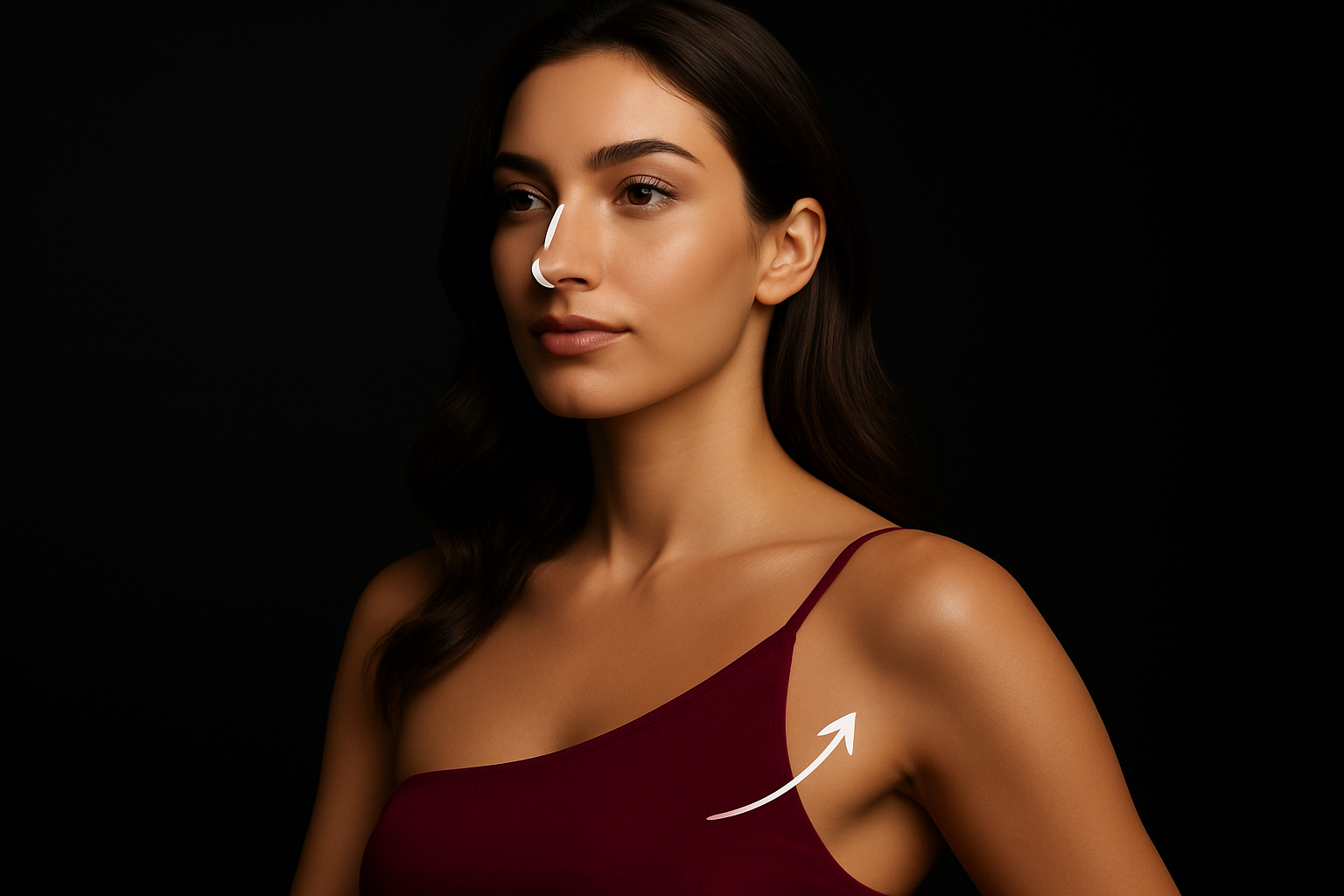

A harmoniously proportioned nose is central to facial symmetry and aesthetic balance. When the nasal structure is disproportionately broad, whether due to wide nasal bones, an enlarged tip, or flared nostrils, it can draw attention away from other facial features. Wide nose rhinoplasty is a specialized cosmetic and functional surgical procedure designed to narrow the upper, middle, or lower third of the nose to create balanced, natural facial proportions.
Table of Contents:
- Procedure & Treatment Overview
- Ideal Candidates & Medical Assessment
- Modern Surgical Techniques & Technologies
- Step-by-Step Procedure Process
- Recovery Timeline, Aftercare & Expected Results
- Global Cost & Destination Comparison
- 5-Day VIP Patient Journey in Istanbul
- Frequently Asked Questions (FAQ)
- Summary & Next Steps
Turkey has emerged as an elite global hub for complex structural nasal surgeries. With board-certified facial plastic surgeons, state-of-the-art medical infrastructure, and advanced surgical methodologies like Piezo ultrasonic bone reshaping, international patients receive world-class outcomes at accessible costs. At Health Beauty Turkey, we provide bespoke patient care, meticulous pre-operative planning, and comprehensive recovery management to ensure your transformation is safe, predictable, and life-changing.
Quick Medical Facts Summary
- Procedure Duration: 2.5 to 3.5 hours
- Hospital Stay: 1 Night (Overnight Monitoring)
- Anesthesia Type: General Anesthesia
- Initial Recovery Time: 7 to 10 days (Splint removal on Day 7)
- Final Aesthetic Results: 6 to 12 months (Gradual refinement of soft tissue)
- Surgical Success Rate: Over 98% in accredited centers
Procedure & Treatment Overview
A wide nose can present in distinct anatomical zones of the nasal architecture. Effective surgical correction requires pinpointing the exact anatomical drivers behind the width. During a comprehensive assessment for comprehensive rhinoplasty in Turkey, surgeons analyze four key structural components:
- Wide Upper Nasal Bones: Broad nasal bones located at the bridge create a flattened, spreading appearance between the eyes.
- Broad Cartilaginous Midstructure: Excess width in the upper lateral cartilages makes the middle third of the nose look wide.
- Bulbous Nasal Tip: Divergent, thick, or oversized lower lateral cartilages cause a rounded, wide, or boxy tip.
- Flared Nostrils or Wide Alar Base: Wide nasal aperture or thick alar wings create an expansive lower base during repose or smiling.
Wide nose rhinoplasty carefully restructures these elements without compromising airway performance. By surgically mobilizing the nasal bones, reshaping tip cartilages, and performing precise alar reductions, the surgeon achieves a refined, narrower silhouette that complements your ethnic and individual facial traits.
Ideal Candidates & Medical Assessment
Determining candidacy for wide nose rhinoplasty involves a thorough evaluation of both aesthetic goals and internal anatomical function. Ideal candidates include individuals who meet the following clinical criteria:
- Physical maturity, typically age 18 or older, ensuring complete growth of nasal bones and cartilages.
- Good general health with no uncontrolled systemic conditions that could impair tissue healing.
- Nasal width that feels disproportionate to the distance between the eyes or the width of the mouth.
- Thick or moderate skin elasticity capable of draping smoothly over a narrowed structural frame.
- Realistic expectations regarding surgical limitations and long-term tissue remodeling.
Pre-operative assessment includes digital high-definition photography, 3D facial imaging, and internal endoscopic examination. If a patient presents with breathing obstruction alongside external width, structural corrections such as septoplasty or turbinate reduction are integrated into the primary surgical plan.
Modern Surgical Techniques & Technologies
Correcting a wide nose requires extreme precision to preserve structural integrity while reducing breadth. Traditional blind osteotomies with manual hammers and chisels have been largely replaced in top Turkish clinical centers by advanced precision technologies.
1. Piezo Ultrasonic Rhinoplasty
Piezoelectric equipment utilizes ultrasonic sound waves to sculpt, micro-shave, and cut nasal bones with millimeter accuracy. Because ultrasonic waves interact exclusively with mineralized bone tissue, delicate soft tissues, blood vessels, and mucosal linings remain untouched. This significantly reduces post-operative bruising, swelling, and trauma compared to traditional tools.
2. Controlled Lateral Osteotomies
To narrow broad nasal bones, the surgeon performs delicate, controlled cuts along the sides of the maxilla and nasal frame (lateral osteotomies). The bones are gently brought inward toward the midline, closing the widened bridge and creating a sleeker profile.
3. Alar Base Resection (Alarplasty)
When the width is localized to the lower nostrils, an alar base resection is performed. Techniques such as the Weir excision or sill excision remove small, wedge-shaped pieces of tissue at the junction where the nostril meets the cheek. The incisions are strategically hidden within natural anatomical creases, minimizing visible scarring.
4. Structural Tip Narrowing & Cartilage Grafting
For a bulbous tip, lower lateral cartilages are trimmed, re-aligned, and secured using precise suturing techniques. Cartilage grafts taken from the nasal septum are used as structural struts to preserve tip support and maintain optimal airflow.
Patients exploring different types of rhinoplasty operations can rest assured that structural stability is prioritized alongside aesthetic narrowing.
Step-by-Step Procedure Process
Understanding what occurs inside the operating theater provides clarity and confidence for international patients considering nose reduction surgery in Turkey. The surgical sequence follows a standardized medical protocol:
Step 1: Anesthesia & Patient Preparation
The patient is placed under general anesthesia administered by an experienced anesthesiologist. Local anesthetic containing epinephrine is infiltrated into the nasal tissues to maintain fluid control and minimize operative bleeding.
Step 2: Incision & Exposure
In an open rhinoplasty approach, a tiny inverted-V incision is made across the columella (the tissue strip separating the nostrils), extending inside the nostril rim. This provides full visual access to the structural architecture of the nose.
Step 3: Bone Narrowing via Ultrasonic Osteotomy
Using Piezo technology, the surgeon mobilizes broad nasal bones, performing precise lateral and medial osteotomies to bring the bony bridge closer to the midline.
Step 4: Tip & Middle Vault Reshaping
Bulbous lower lateral cartilages are sculpted and sutured tightly. Cartilage grafts are placed to reinforce the structural tripod of the nose, ensuring long-term resistance against nasal collapse.
Step 5: Alar Base Reduction (If Indicated)
If the nostrils remain broad after narrowing the bony frame, small tissue wedges are precisely excised from the alar base, and delicate non-absorbable sutures are applied.
Step 6: Closure & Internal/External Splinting
Incisions are meticulously closed using fine suture material. Internal silicone splints with airway channels are placed to support the septum, and a rigid external thermoplastic cast is secured over the bridge.
Recovery Timeline, Aftercare & Expected Results
Recovery following structural wide nose surgery requires patience and strict adherence to post-operative protocols. Because bone mobilization and cartilage repositioning are involved, tissue healing occurs in distinct phases:
- Days 1 to 3: Peak swelling and mild bruising around the eyes. Patients sleep with their heads elevated at a 45-degree angle. Mild nasal congestion is managed with prescribed saline sprays.
- Day 7: The external thermoplastic cast and internal silicone splints are professionally removed at our Istanbul clinic. Immediate structural narrowing is visible, though soft tissue edema is present.
- Weeks 2 to 4: Approximately 70% of facial edema resolves. Patients can return to desk jobs, light social activities, and non-strenuous walking.
- Months 1 to 3: Substantial resolution of swelling occurs. The nasal bridge and tip appear progressively defined. Light exercise can be resumed.
- Months 6 to 12: Final tissue remodeling takes place. Residual micro-swelling in the nasal tip dissipates, revealing the final sculpted contour.
For patients seeking non-surgical temporary improvements, non-surgical rhinoplasty options using dermal fillers can disguise minor bumps, but surgical intervention remains the only definitive medical solution to narrow broad bone structures. Should a patient have experienced inadequate results from previous procedures elsewhere, our specialist surgeons also perform complex secondary corrections outlined in our revision rhinoplasty guide.
Global Cost & Destination Comparison
Turkey offers an ideal balance of world-class medical accreditation, high surgical volume expertise, and competitive procedural costs due to economic efficiencies and all-inclusive international healthcare models.
| Destination / Clinic | Average Cost (USD) | JCI Quality Accreditation | Travel Convenience | All-Inclusive VIP Care |
|---|---|---|---|---|
| Turkey (Health Beauty Turkey) | $2,800 – $4,500 | World-Class Standard | High (Visa-on-arrival/E-Visa) | Yes (Hotel, Transfers, Care) |
| United Kingdom | $8,500 – $13,000 | Standard NHS/Private | High Local Access | No (Procedure Only) |
| United States | $10,000 – $18,000 | Standard AAAHC/JCI | High Local Access | No (Procedure Only) |
| Germany | $7,500 – $11,500 | Standard EU Board | High Regional Access | No (Procedure Only) |
| Thailand | $3,500 – $6,000 | Moderate to High | Moderate Flight Times | Partial Packages |
| India | $2,500 – $4,200 | Variable Accreditation | Longer Flight Times | Rarely Included |
5-Day VIP Patient Journey in Istanbul
We streamline every aspect of your surgical journey to ensure maximum comfort, privacy, and clinical efficiency:
Day 1: VIP Arrival & Private Transfer
Upon your arrival at Istanbul Airport (IST or SAW), a private luxury vehicle chauffeur meets you at the gate and transfers you directly to your 5-star partner hotel in the heart of Istanbul.
Day 2: In-Person Consultation, Lab Analysis & Surgery
You meet your plastic surgeon for final physical examination, 3D anatomical planning, and pre-operative blood work. Following clearance, the surgery is performed under general anesthesia. You spend the night in our modern hospital under continuous nursing monitoring.
Day 3: Discharge & VIP Hotel Relaxation
Your surgeon reviews your healing progress during morning rounds. Once approved, you are safely escorted to your hotel to rest, equipped with a comprehensive package of medications, ice packs, and post-op care kits.
Day 4: Rest & Virtual Follow-Up
A relaxing day to recover comfortably at your hotel. Our dedicated patient care coordinator remains in continuous communication with you to monitor pain levels, swelling, and overall well-being.
Day 5: Cast Removal, Final Check & Departure
You return to the hospital clinic for cast and splint removal. Your surgeon evaluates the initial narrowed results, provides long-term aftercare instructions, and issues your official fit-to-fly medical certificate for your journey home.
Frequently Asked Questions (FAQ)
Will wide nose rhinoplasty leave visible scars on my face?
For open rhinoplasty, a tiny incision is placed across the columella, which heals into an almost invisible line. If an alar base reduction is performed to narrow broad nostrils, incisions are hidden precisely within the natural crease where the nostril meets the cheek.
How does Piezo ultrasonic technology reduce post-op swelling?
Piezo instruments selective cut bone using high-frequency sound waves without damaging soft tissues, blood vessels, or surrounding cartilage. This lack of soft tissue trauma dramatically minimizes blue bruising and severe inflammation compared to old hammer-and-chisel techniques.
Is alar base reduction painful during recovery?
Alar base reduction causes minimal discomfort. Mild tightness around the nostrils is normal during the first week, but pain is effectively managed with standard mild oral analgesics prescribed by your medical team.
How many days do I need to stay in Turkey for recovery?
We recommend a total stay of 5 to 7 days in Istanbul. This allows sufficient time for surgical preparation, post-operative rest, and professional removal of your thermoplastic splint and internal dressings prior to your flight home.
Summary & Next Steps
Wide nose rhinoplasty is an intricate structural procedure that requires exceptional surgical skill, precise anatomical understanding, and advanced technology. By combining Piezo ultrasonic precision with specialized tip refinement and alar base reduction, our surgeons create natural, proportionate results that harmonize beautifully with your individual facial features.
If you are ready to take the next step toward achieving a refined nasal contour, contact the medical team at Health Beauty Turkey today. Our specialists are available to review your photos, discuss your surgical goals, and provide a complimentary, personalized treatment consultation.
Medical Disclaimer: The information provided in this article is strictly for educational purposes and does not constitute formal medical advice. Individual anatomical variations, healing rates, and surgical outcomes vary. A comprehensive personal evaluation by a qualified plastic surgeon is required prior to undergoing any cosmetic procedure.
Related Articles: comprehensive rhinoplasty in Turkey | different types of rhinoplasty operations | nose reduction surgery in Turkey | non-surgical rhinoplasty options | revision rhinoplasty guide
References & Trusted Sources: National Institutes of Health (NIH) – Clinical Research | World Health Organization (WHO) – Health Guidelines | National Center for Biotechnology Information (NCBI / PubMed)