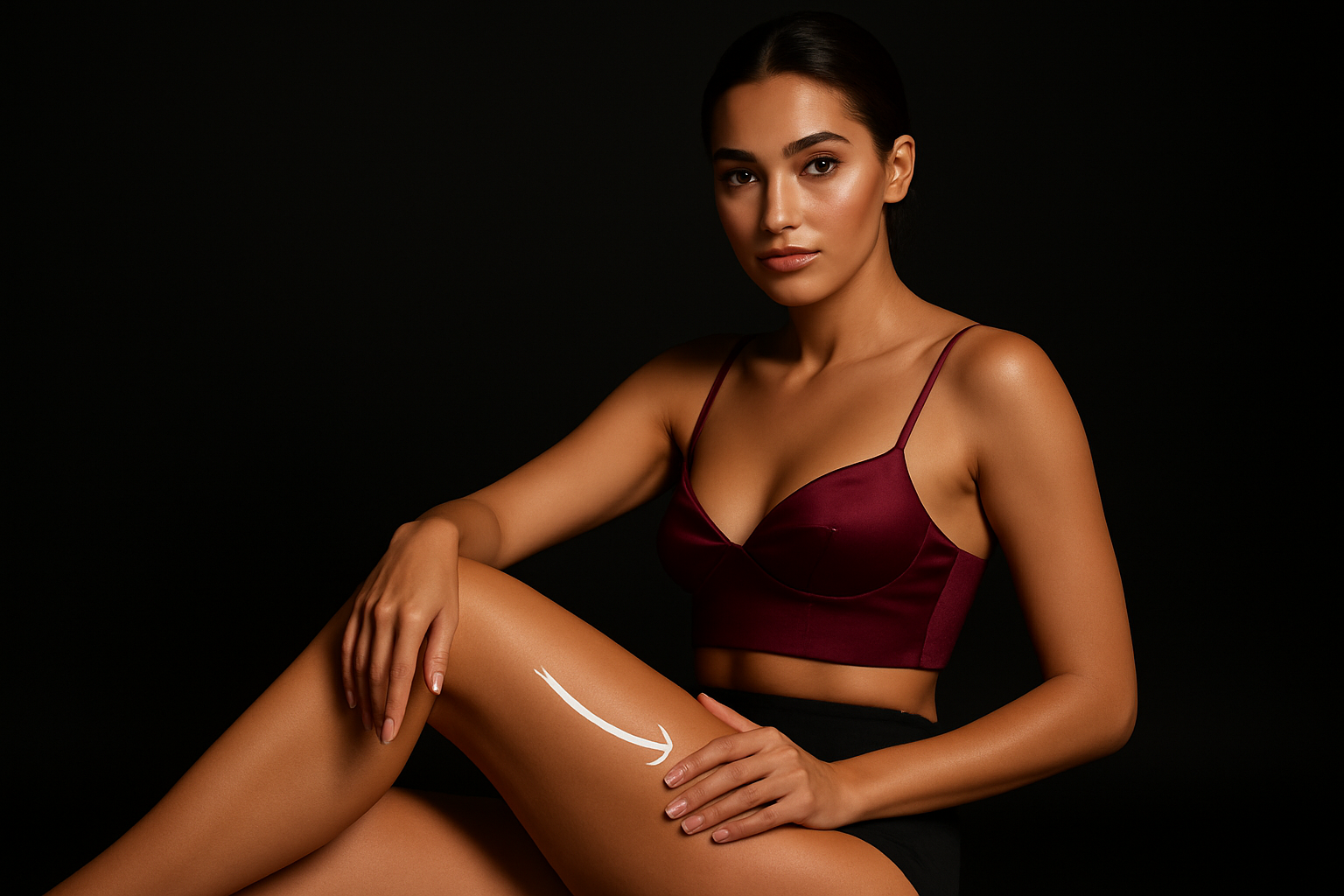
As the body ages, structural proteins such as collagen and elastin gradually diminish, leading to sagging facial tissues, loss of sharp jawline definition, and visible neck banding. For patients seeking substantial facial rejuvenation without the downtime, scars, or general anesthesia associated with traditional plastic surgery, modern minimally invasive solutions offer an ideal pathway. Achieving a refreshed, youthful facial architecture is now safer and more accessible than ever before.
Table of Contents:
- Quick Medical Facts Summary
- Procedure & Treatment Overview
- Ideal Candidates & Medical Assessment
- Modern Surgical Techniques & Technologies
- Step-by-Step Procedure Process
- Recovery Timeline, Aftercare & Expected Results
- Global Cost & Destination Comparison
- 5-Day VIP Patient Journey in Istanbul
- Frequently Asked Questions (FAQ)
- Summary & Next Steps
A modern thread lift in Turkey provides a targeted, dual-action treatment that physically elevates compromised sub-dermal tissues while stimulating long-term neocollagenesis. Performed by board-certified aesthetic dermatologists and plastic surgeons, thread lifting has revolutionized non-surgical facial sculpting. Health Beauty Turkey integrates advanced biocompatible materials with bespoke vector design, allowing international patients to restore structural firmness across the lower face, midface, and neck with minimal interruption to their daily lives.
Quick Medical Facts Summary
- Procedure Duration: 45 to 90 minutes
- Hospital Stay: Outpatient (0 days required)
- Recovery Time: 3 to 7 days for social recovery; final tissue settling in 2 to 3 weeks
- Anesthesia Type: Local infiltration anesthesia with optional mild sedation
- Result Duration: 18 to 24 months, depending on thread polymer type and lifestyle
- Clinical Success Rate: Over 95% patient satisfaction rate
Procedure & Treatment Overview
A thread lift is a specialized non-surgical procedure designed to treat mild-to-moderate facial ptosis (sagging) and neck skin laxity. Unlike surgical rhytidectomy, which removes excess cutaneous tissue, thread lifting reposition existing soft tissues using temporary, bioresorbable sutures fitted with microscopic cogs, barbs, or cones.
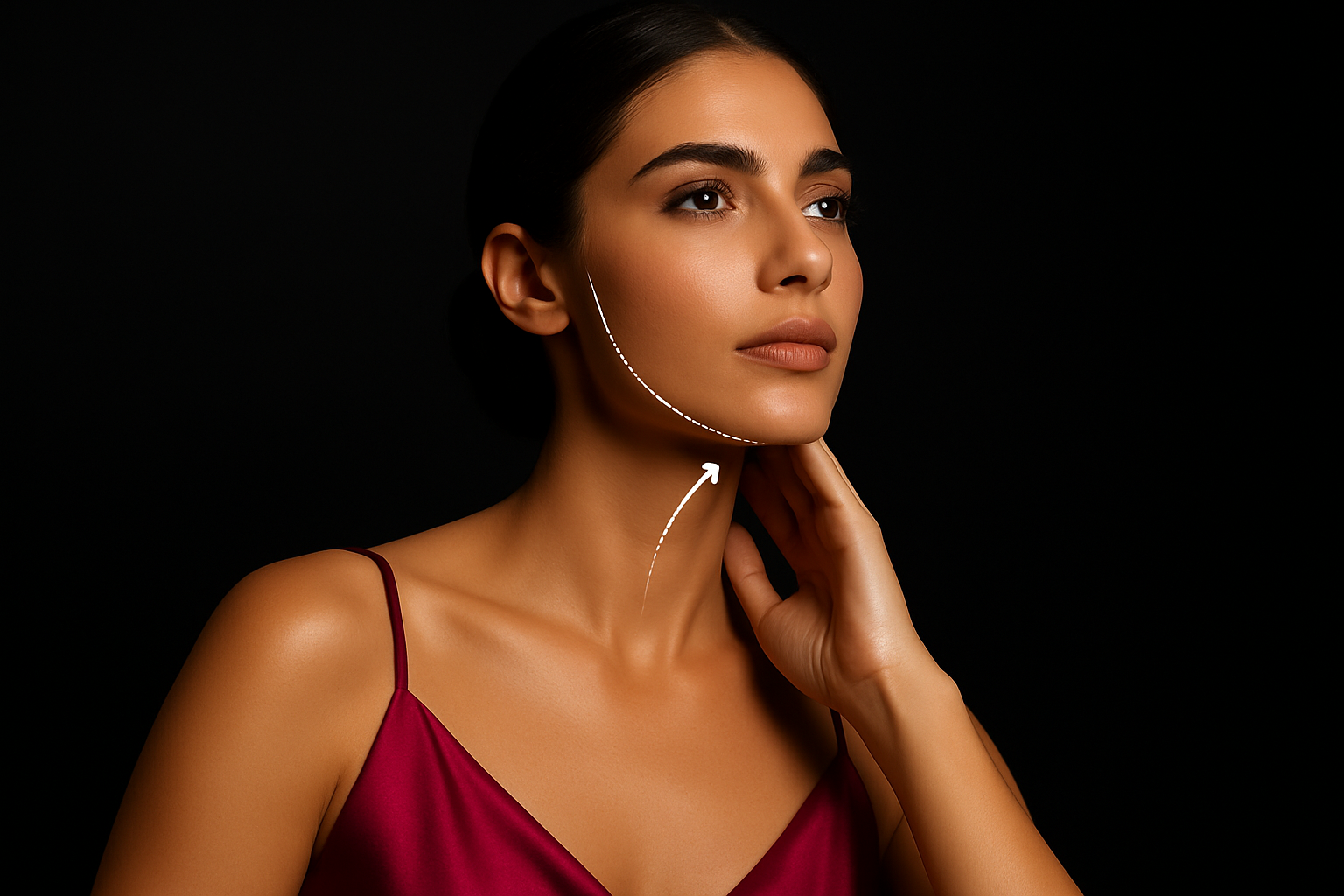
These specialized threads are strategically introduced into the sub-dermal or superficial muscular aponeurotic system (SMAS) layer using ultra-fine micro-cannulas. Once deployed, the structural barbs anchor securely into the tissue matrix. The practitioner then applies precise mechanical tension along pre-calculated vectors to physically lift drooping jowls, smooth nasolabial folds, and elevate sagging neck tissue.
Beyond immediate mechanical elevation, threads act as a powerful biostimulatory scaffold. As the thread material gradually degrades over several months, it triggers a controlled healing cascade, stimulating fibroblasts to deposit new collagen (Type I and Type III) and elastin along the insertion tracks. This dual mechanism ensures immediate mechanical lifting coupled with progressive structural skin density enhancement over time.
Ideal Candidates & Medical Assessment
Determining candidacy for a thread facelift in Turkey requires a comprehensive clinical evaluation. The procedure is optimal for patients who present early signs of facial aging but possess sufficient skin thickness to properly anchor and conceal the thread structures.
Primary Indicators for Thread Lifting
- Mild to moderate skin sag around the midface, jawline, and upper neck.
- Early formation of jowls and softening of the mandibular contour.
- Deepening nasolabial folds and marionette lines.
- Slight sagging of the eyebrow arch or upper cheek area.
- Patients seeking natural rejuvenation who wish to avoid surgical recovery.
Contraindications & Non-Ideal Candidates
Patients with severe skin redundancy, extensive photo-damage, or significantly heavy, thick facial tissues may achieve superior, more durable corrections through comprehensive surgical facelift options. Additional contraindications include active skin infections, autoimmune connective tissue disorders, blood dyscrasias, or known allergies to polydioxanone or polycaprolactone polymers.
Modern Surgical Techniques & Technologies
In contemporary aesthetic medicine, the choice of thread material and dynamic structural design determines the longevity and aesthetic efficacy of the treatment. At Health Beauty Turkey, only medical-grade, CE-marked, and FDA-cleared bioresorbable polymers are utilized.
Biocompatible Thread Polymers
- Polydioxanone (PDO): The most widely utilized medical polymer, PDO threads offer excellent tensile strength and dissolve via hydrolysis within 6 to 8 months. They excel at intense collagen stimulation and precise vector lifting.
- Poly-L-Lactic Acid (PLLA): Dissolving over 12 to 18 months, PLLA threads act as a robust collagen stimulator, providing superior volumization alongside tissue elevation.
- Polycaprolactone (PCL): The latest evolution in thread technology. PCL threads feature a slow degradation profile lasting 18 to 24 months, offering prolonged mechanical support and extended collagen synthesis.
Structural Thread Variants
Practitioners employ a matrix of thread types tailored to specific anatomic zones:
- Cog/Barbed Threads: Feature omni-directional micro-barbs that latch onto deep tissue layers to perform heavy mechanical lifting along the jawline and midface.
- Mono/Smooth Threads: Fine mesh threads placed in grid patterns to thicken thin skin, smooth vertical neck lines, and enhance skin texture.
- Screw/Twisted Threads: Spiral-shaped threads designed to restore focal volume loss in areas like the nasolabial grooves or temporal hollows.
For patients addressing upper-face laxity alongside lower face drooping, combining thread lifting with specialized upper facial procedures such as a forehead reduction and lift ensures harmonious proportions across all three facial thirds.
Step-by-Step Procedure Process
A non-surgical thread lift is performed in a sterile, clinical outpatient setting following a precise step-by-step protocol to maximize safety and aesthetic precision.
1. Pre-Procedure Mapping & Vector Design
While the patient is seated upright, the physician marks specific tension vectors on the skin using surgical markers. These entry points and directional paths are individually calculated based on facial asymmetry, skin elasticity, and structural anatomy.
2. Local Anesthetic Administration
Targeted entry and exit points are sterilized with chlorhexidine solution. Local infiltration anesthesia (lidocaine with epinephrine) is injected along the planned entry tracks, ensuring the patient experiences complete comfort throughout the cannula maneuvers.
3. Cannula Insertion & Thread Deployment
Using a fine pilot needle, small entry micro-punctures are created. Blunt-tipped micro-cannulas pre-loaded with the bioresorbable threads are gently advanced through the subcutaneous tissue layer along the predetermined vector lines, eliminating the risk of nerve or major vessel trauma.
4. Tensioning & Fixing
Once the cannulas reach their target depth and vector termination, the outer cannulas are withdrawn, leaving the barbed threads securely engaged in the sub-dermal matrix. The practitioner manually adjusts tension along each thread to achieve balanced, natural tissue elevation without unnatural skin distortion.
5. Trimming & Antiseptic Closure
The external thread ends are trimmed cleanly below the skin surface. Entry points are dressed with antibiotic ointment and sterile micro-strips. The entire procedure typically takes under one hour.
Recovery Timeline, Aftercare & Expected Results
Recovery following a non-surgical thread lift is swift, allowing most patients to resume normal low-impact daily activities almost immediately.
Recovery Phase Timeline
- Days 1 to 3: Mild localized edema, minor bruising, and a feeling of tightness across the treatment zones are normal. Gentle ice application helps manage swelling.
- Days 4 to 7: Swelling diminishes significantly. Any mild skin dimpling or surface irregularities settled as the soft tissues adapt to the mechanical lift. Social activities can typically be resumed.
- Weeks 2 to 4: Deep collagen synthesis commences. Skin texture begins to improve noticeably, and entry point micro-marks fade completely.
- Months 1 to 18+: Maximum tissue lifting and skin redensification become fully apparent. Results persist even after the polymer matrix degrades due to newly established collagen scaffolds.
Crucial Post-Treatment Aftercare Guidelines
To preserve vector alignment and prevent thread displacement during the initial fixation period, patients must observe strict guidelines:
- Sleep in a supine position (on your back) with the head elevated on two pillows for 7 to 10 days.
- Avoid aggressive facial washing, rubbing, or applying heavy pressure to the face for 2 weeks.
- Refrain from extreme facial expressions, wide yawning, or dental procedures for 3 weeks.
- Avoid strenuous exercise, saunas, steam rooms, and direct sun exposure for at least 14 days.
- Combine with complementary treatments like facial fillers only after clinical clearance from your treating specialist.
Global Cost & Destination Comparison
Turkey has firmly established itself as the leading global destination for advanced cosmetic procedures, offering top-tier clinical quality at significantly reduced prices compared to Western nations.
| Country / Destination | Average Thread Lift Cost | JCI Quality Standards | Travel Convenience | All-Inclusive VIP Care |
|---|---|---|---|---|
| Turkey (Health Beauty Turkey) | $1,200 – $2,200 | World-Class / JCI Accredited | High (International Hub) | Included (Hotel, VIP Transfer) |
| United Kingdom | $3,500 – $6,000 | Standard Regional | Moderate | Not Included (Extra Cost) |
| United States | $4,000 – $7,500 | Standard Regional | Moderate | Not Included (Extra Cost) |
| Germany | $3,200 – $5,500 | High European Standards | Moderate | Not Included (Extra Cost) |
| Thailand | $2,000 – $3,800 | Variable Standards | Long Flight Duration | Rarely Included |
| India | $1,500 – $2,800 | Variable Standards | Long Flight Duration | Rarely Included |
5-Day VIP Patient Journey in Istanbul
Health Beauty Turkey provides an all-inclusive, seamless experience engineered to provide international patients with maximum comfort, privacy, and clinical safety from arrival to departure.
Day 1: VIP Arrival & Luxury Accommodation
Upon landing at Istanbul Airport (IST or SAW), your private VIP driver meets you at the gate. You are escorted via luxury private transport to your 5-star hotel in central Istanbul to relax and settle in.
Day 2: Consultation, Vector Mapping & Procedure
You are transferred to our state-of-the-art facility. You meet your attending aesthetic specialist for an in-depth consultation, facial mapping, and medical clearance. The thread lift procedure is performed under local anesthesia. Following post-procedure monitoring, you return to your hotel comfortably.
Day 3: Rest & Guided Istanbul Experience
A dedicated rest day. While avoiding strenuous exertion, you can enjoy relaxing room service, light walking, or private guided city experiences arranged according to your comfort level.
Day 4: Follow-up Examination & Tissue Assessment
You return to the clinic for a professional evaluation. Your physician checks vector retention, entry point healing, and tissue symmetry, providing tailored post-care recommendations.
Day 5: Final Check & Departure
After a final brief check-up and receiving your complete aftercare package, your private driver transfers you to the airport for your return flight home with a rejuvenated appearance.
Frequently Asked Questions (FAQ)
Is a thread lift painful?
No. The procedure is performed under targeted local infiltration anesthesia, ensuring that you do not feel pain during the insertion or tensioning phase. Mild soreness or tightness after the anesthetic wears off can be easily managed with over-the-counter analgesics.
How long do the results of a thread lift last?
Depending on the type of thread polymer utilized (PDO, PLLA, or PCL) and individual metabolic rates, visible results typically endure between 18 and 24 months. The persistent neocollagenesis created by the body’s natural response ensures structural improvements even after threads dissolve.
Are the threads visible or feelable under the skin?
When performed by an experienced specialist at the correct subcutaneous depth, threads are completely invisible and unnoticeable to the touch. In very thin skin types, mild tactile awareness may occur during the first week, which resolves rapidly as the tissue settles.
How soon can I return to work after a thread lift in Turkey?
Because the procedure is non-surgical and requires no general anesthesia, most patients return to non-strenuous desk work within 2 to 4 days post-procedure. Minor swelling or bruising can easily be concealed with light medical makeup after 48 hours.
Summary & Next Steps
A non-surgical face and neck thread lift offers an outstanding balance between remarkable aesthetic elevation and minimal lifestyle disruption. By choosing Health Beauty Turkey, you gain access to board-certified medical experts, cutting-edge bioresorbable thread materials, and world-class luxury care in the heart of Istanbul.
If you are ready to reverse sagging tissues, restore crisp jawline contours, and rejuvenate your neck naturally, we invite you to take the first step today. Contact our international patient coordination team to receive a personalized online medical evaluation and bespoke treatment plan tailored to your aesthetic goals.
Medical Disclaimer: The information provided in this article is intended solely for educational purposes and should not be used as a substitute for professional medical advice, diagnosis, or treatment. Individual clinical outcomes vary based on anatomical characteristics, skin quality, and overall health status. Always consult a qualified medical professional before undergoing any cosmetic or non-surgical procedure.
Related Articles: thread facelift in Turkey | surgical facelift options | forehead reduction and lift | facial fillers
References & Trusted Sources: National Institutes of Health (NIH) – Clinical Research | World Health Organization (WHO) – Health Guidelines | National Center for Biotechnology Information (NCBI / PubMed)