Nasal aesthetics play a central role in facial symmetry and overall facial harmony. While surgical rhinoplasty remains the definitive solution for structural anatomical reshaping, a growing number of international patients seek non-invasive solutions to address minor dynamic concerns. Nose Botox in Turkey has emerged as an exceptionally popular, highly refined dermatological treatment designed to achieve subtle tip rotation, smooth dynamic dynamic lines, and correct minor asymmetry without surgical downtime or invasive intervention.
Table of Contents:
- Procedure & Treatment Overview
- Ideal Candidates & Medical Assessment
- Modern Techniques & Precise Neuromodulation
- Step-by-Step Procedure Process
- Recovery Timeline, Aftercare & Expected Results
- Global Cost & Destination Comparison
- 5-Day VIP Patient Journey in Istanbul
- Frequently Asked Questions (FAQ)
- Summary & Next Steps
By utilizing micro-injections of Botulinum Toxin Type A into hyperactive facial muscles surrounding the nasal complex, board-certified dermatologists and aesthetic surgeons can strategically relax specific muscular vectors. This subtle adjustment allows for a raised nasal tip, reduction of nasal flare, and smoothing of dynamic facial creases, yielding an refreshed, natural facial aesthetic.
Quick Medical Facts Summary
| Parameter | Clinical Details |
|---|---|
| Procedure Duration | 15 to 30 minutes |
| Hospital Stay | Outpatient (0 Days) |
| Anesthesia Type | Topical Anesthetic Cream |
| Recovery Time | Immediate (Zero Downtime) |
| Onset of Results | 3 to 7 days (Full effect at 14 days) |
| Duration of Results | 3 to 6 months |
| Clinical Success Rate | >98% Patient Satisfaction |
Procedure & Treatment Overview
Nose Botox—frequently referred to as non-surgical nasal tip lifting or dynamic rhinofacial neuromodulation—is a specialized micro-injection technique. Botulinum toxin acts as a neurotoxin that temporarily blocks acetylcholine release at the neuromuscular junction, effectively preventing involuntary or hyperactive muscle contractions around the nose.
Unlike dermal fillers, which add volume to alter the nasal profile, Botox acts exclusively on soft tissue and muscle dynamics. It does not reshape bone, cartilage, or nasal septum structures. Instead, it targets specific muscle structures such as the depressor septi nasi (which pulls the nasal tip downward during speech and smiling), the nasalis muscle (responsible for bunny lines), and the levator labii superioris alaeque nasi (which contributes to dynamic nasal flaring and gummy smiles).
Patients seeking subtle enhancements often combine this treatment with other non-surgical cosmetic procedures to boost self-confidence, achieving overall facial harmony without lengthy post-operative recovery periods.
Ideal Candidates & Medical Assessment
Proper patient selection is paramount to achieving satisfying anatomical results with nose Botox in Turkey. Because neuromodulators target muscle action rather than bone structure, candidates must undergo a thorough facial diagnostic evaluation to ensure their goals align with anatomical realities.
- Nasal Tip Ptosis During Smiling: Individuals whose nasal tip droops dynamically when smiling or talking due to an overactive depressor septi nasi muscle.
- Bunny Lines: Patients presenting deep transverse wrinkles along the bridge and sides of the nose caused by contraction of the upper nasalis muscle.
- Excessive Nasal Flaring: Individuals experiencing involuntary expansion of the nostrils during animated expression or speaking.
- Gummy Smile Co-occurrence: Patients seeking to reduce hyperactive upper lip elevation that exposes excessive gingival tissue alongside nasal tip correction.
- Post-Surgical Refinement: Select candidates who have previously undergone surgical rhinoplasty and require minor dynamic muscle relaxation without revision surgery.
Conversely, candidates seeking substantial reduction of a dorsal hump, narrowing of broad nasal bones, or structural repair of a deviated septum are better suited for traditional rhinoplasty. A clear understanding of the distinction between cosmetic and reconstructive surgery options helps patients choose the safest and most effective medical pathway.
Modern Techniques & Precise Neuromodulation
Executing nose Botox requires master-level anatomical knowledge of facial musculature. Injecting into incorrect muscle planes can lead to temporary asymmetry, upper lip weakness, or unnatural smile dynamics. In top Turkish medical centers, treatments are performed using ultra-fine 30G or 32G micro-needles and high-purity Botulinum Toxin formulations (such as Botox, Dysport, or Xeomin).
Key Anatomical Target Zones:
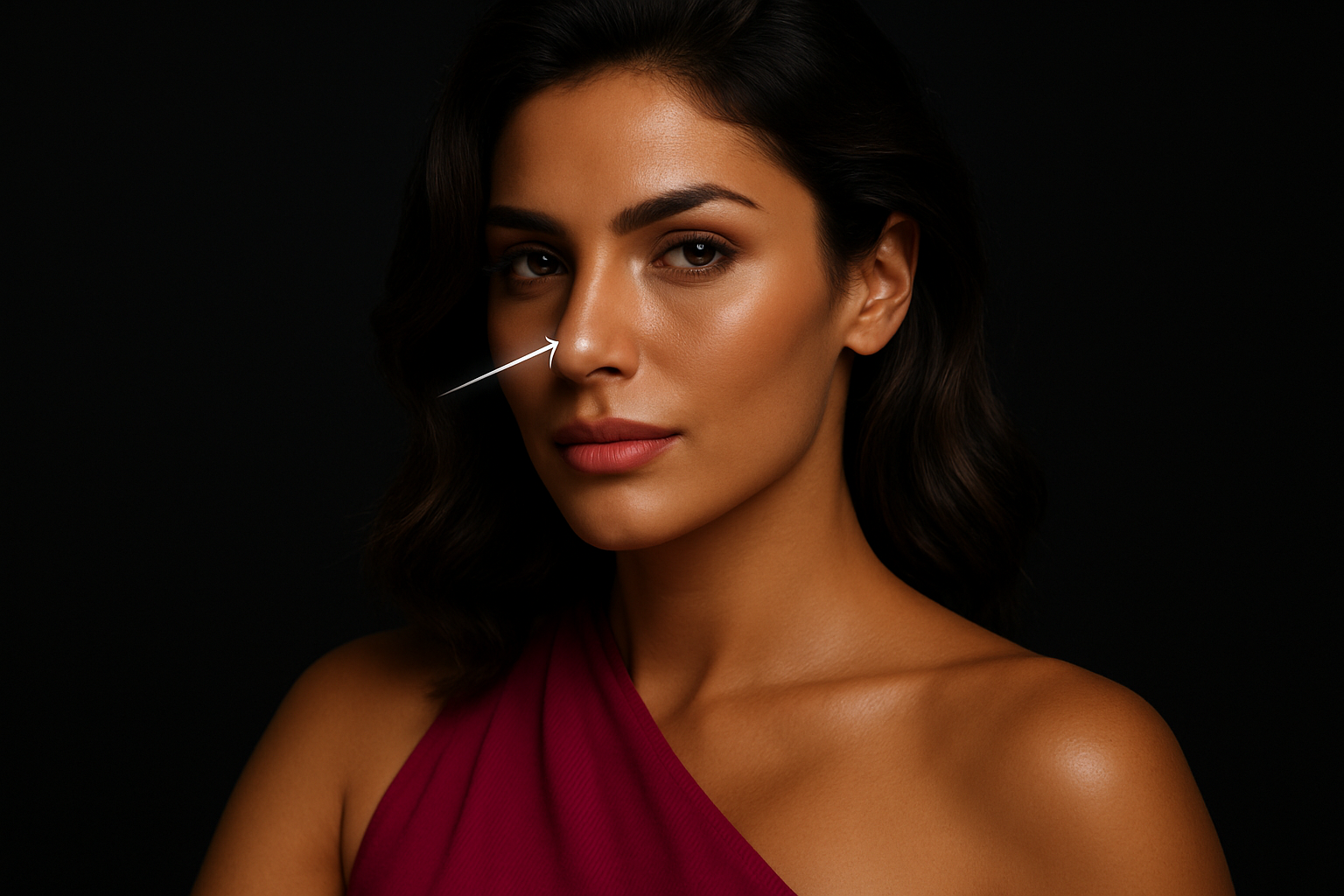
- Depressor Septi Nasi Muscle: Targeted at the base of the columella. Relaxing this muscle prevents the downward pull on the nasal tip, elevating the tip angle by 1 to 3 millimeters naturally.
- Nasalis Muscle (Transverse Part): Injected along the upper dorsum to eliminate fine diagonal creases (bunny lines) formed during laughing or squinting.
- Levator Labii Superioris Alaeque Nasi (LLSAN): Injected near the upper nasal border to limit nostril flaring and soften harsh facial lines around the nasolabial fold.
Step-by-Step Procedure Process
The administration of nose Botox in Turkey is streamlined, safe, and conducted within sterile medical facility conditions following standard clinical protocols:
- Step 1: Clinical Consultation & Muscle Mapping: The specialist evaluates facial expressions, assesses dynamic muscle vectors, and marks exact injection sites.
- Step 2: Topical Anesthesia: A medical-grade topical lidocaine cream is applied to the treatment zone for 15–20 minutes to ensure complete physical comfort.
- Step 3: Antiseptic Preparation: The skin surface is thoroughly sterilized using chlorhexidine or isopropyl alcohol solutions.
- Step 4: Micro-Injection Protocol: Utilizing precise unit dosages (typically 2 to 6 units per site depending on muscle mass), the physician injects the toxin into precise anatomical depths.
- Step 5: Post-Treatment Hemostasis & Care: Gentle pressure is applied to prevent bruising, followed by the application of a soothing anti-inflammatory cream.
Recovery Timeline, Aftercare & Expected Results
One of the primary benefits of non-surgical nasal neuromodulation is the absence of surgical downtime. Patients can resume standard daily activities almost immediately following the procedure.
Expected Timeline:
- Days 1–3: Mild localized redness at the injection sites resolves within 1–2 hours. Toxin begins binding to nerve terminals; subtle changes start becoming visible by day 3.
- Days 7–14: Peak therapeutic effect is achieved. The nasal tip shows natural elevation, bunny lines are smoothed, and dynamic nostril flaring is controlled.
- Months 3–6: Results remain stable. As neuromuscular junction activity gradually recovers, muscle movement slowly returns, indicating the window for elective maintenance sessions.
Essential Aftercare Guidelines:
- Keep head upright for at least 4 to 6 hours post-injection to avoid toxin diffusion.
- Avoid rubbing, massaging, or applying heavy pressure to the nasal area for 24 hours.
- Refrain from strenuous exercise, saunas, hot tubs, and heavy alcohol consumption for 48 hours.
- Avoid wearing heavy eyeglasses resting directly on the columella or lower dorsum for 48 hours if columellar injections were administered.
Global Cost & Destination Comparison
Turkey has firmly established itself as a premier destination for non-surgical facial rejuvenation and specialized medical treatments. International patients choose Turkey due to rigorous clinical governance, experienced medical faculties, and transparent, all-inclusive medical tourism packages that include private transfers and luxury accommodation.
| Destination | Estimated Cost (Nose Botox) | Quality & Accreditation | Travel Convenience | VIP Services |
|---|---|---|---|---|
| Turkey (Health Beauty Turkey) | $250 – $450 | JCI & Ministry of Health Certified | High (Hub for Global Travel) | Included (VIP Transfers, Hotel, Assistance) |
| United Kingdom | $500 – $850 | CQC Accredited | Moderate | Not Included (Excludes Transfers/Hotels) |
| United States | $600 – $1,100 | FDA Approved Facilities | Moderate | Not Included |
| Germany | $450 – $800 | TÜV / ISO Standards | High | Rarely Included |
| Thailand | $300 – $550 | JCI Accredited | Long Travel Distance | Optional Add-ons |
Nose Botox is also increasingly popular among male patients seeking discreet facial harmonization without the recovery associated with surgery; learn more about modern cosmetic procedures for men available at specialized clinics in Istanbul. Additionally, medical travelers frequently explore other specialized treatments, such as stomach Botox procedures in Turkey, within single integrated visits.
5-Day VIP Patient Journey in Istanbul
For patients combining a brief holiday with aesthetic refinement, Health Beauty Turkey offers an integrated, seamless experience designed for optimal comfort and peace of mind:
- Day 1: Arrival & VIP Transport: Private chauffeur pick-up at Istanbul Airport (IST or SAW) and transfer to a 5-star hotel in central Istanbul.
- Day 2: Consultation, Diagnostic Assessment & Treatment: Personal consultation with a board-certified dermatologist, detailed facial analysis, and treatment administration in a JCI-accredited clinic.
- Day 3: Relaxation & Cultural Exploration: Leisure day to explore historical sites, shopping districts, and dining venues in Istanbul with zero physical limitations.
- Day 4: Follow-up Evaluation & Polish: Short clinic visit for a professional progress check and minor touch-up if clinically indicated.
- Day 5: VIP Airport Transfer & Departure: Private transfer back to the airport for your return flight home, refreshed and revitalized.
Frequently Asked Questions (FAQ)
Is nose Botox painful?
Discomfort is minimal. Top clinics apply high-potency topical numbing creams prior to treatment, making the injections feel like minor pinpricks. The entire micro-injection sequence takes less than five minutes.
Can Botox replace a surgical rhinoplasty?
No. Botox acts exclusively on muscles to alter dynamic movements, such as a drooping tip when smiling or dynamic nostril flaring. It cannot reduce a bony hump, narrow nasal cartilage, or straighten a crooked septum. Dermal fillers or surgical rhinoplasty are required for structural volume modifications.
How long do the results of nose Botox last?
Clinical effects typically last between 3 to 6 months. Over time, neuromuscular transmission gradually restores, and muscle movement returns. Periodic maintenance sessions every 4 to 6 months preserve the aesthetic outcome seamlessly.
Are there side effects associated with nose Botox?
Side effects are generally rare and transient when administered by experienced medical specialists. Minor side effects may include temporary pinpoint redness, localized swelling, or slight bruising. Choosing a qualified practitioner prevents complications such as temporary asymmetrical smile movement.
Summary & Next Steps
Nose Botox in Turkey offers a sophisticated, non-surgical alternative for individuals seeking subtle, natural enhancement of their nasal aesthetic. By targeting dynamic muscle vectors around the nose, expert dermatologists can gently lift the nasal tip, smooth bunny lines, and correct nostril flaring with no surgical risk or extended recovery time.
If you are interested in exploring whether non-surgical nose Botox or complementary aesthetic refinements suit your anatomical goals, our senior medical team is here to guide you. Contact Health Beauty Turkey today to request your comprehensive, personalized facial evaluation and begin your journey toward natural facial harmony.
Medical Disclaimer: The clinical information provided in this article is intended strictly for educational and informational purposes. It does not constitute formal medical advice, diagnosis, or treatment plans. A personal consultation with a certified healthcare professional or specialist surgeon is essential prior to undergoing any non-surgical or surgical cosmetic procedure.
Related Articles: cosmetic procedures to boost self-confidence | cosmetic procedures for men | cosmetic and reconstructive surgery options | stomach Botox procedures in Turkey
References & Trusted Sources: National Institutes of Health (NIH) – Clinical Research | World Health Organization (WHO) – Health Guidelines | National Center for Biotechnology Information (NCBI / PubMed)