Over time, daily exposure to ultraviolet radiation, environmental pollutants, natural aging, and hormonal changes can diminish the skin’s original elasticity, clarity, and vitality. Issues such as hyperpigmentation, persistent acne scars, vascular lesions, fine lines, and enlarged pores affect millions of individuals seeking a smoother, more uniform skin surface. Advanced laser skin treatment in Turkey has emerged as a gold standard in non-surgical dermatology, offering state-of-the-art skin rejuvenation, fractional resurfacing, and photothermal remodeling performed by international experts.
Table of Contents:
- Procedure & Treatment Overview
- Ideal Candidates & Medical Assessment
- Modern Non-Surgical Laser Technologies & Techniques
- Step-by-Step Procedure Process
- Recovery Timeline, Aftercare & Expected Results
- Global Cost & Destination Comparison
- 5-Day VIP Patient Journey in Istanbul
- Frequently Asked Questions (FAQ)
- Summary & Next Steps
At Health Beauty Turkey, we integrate cutting-edge dermatological laser platforms with individualized patient protocols. Whether you require selective photothermolysis to erase stubborn dark spots or collagen stimulation to restore dermal density, our board-certified dermatologists design evidence-based treatment plans tailored to your specific Fitzpatrick skin type and aesthetic goals.
Quick Medical Facts Summary
- Treatment Duration: 30 to 90 minutes per session
- Hospital Stay: Outpatient / Day Clinic (No overnight stay required)
- Anesthesia: Topical anesthetic cream or integrated contact cooling
- Recovery Period: 1 to 7 days depending on the thermal depth (Ablative vs Non-Ablative)
- Expected Results: Visible skin tone improvement within 14 days; progressive collagen renewal up to 6 months
- Clinical Success Rate: Exceeds 95% in pigment reduction and texture enhancement
Procedure & Treatment Overview
Laser skin resurfacing operates on the principles of selective photothermolysis and controlled micro-thermal injury. Laser systems deliver specific light wavelengths absorbed by target chromophores—primarily water, melanin, and hemoglobin—within the cutaneous tissue. By precisely heating or vaporizing damaged tissue columns, the laser stimulates the body’s natural wound-healing cascade, inducing neo-collagenesis and elastogenesis.
Different wavelengths target different clinical indications:
- Ablative Lasers (e.g., CO2 and Erbium:YAG): Vaporize outer microscopic layers of damaged skin, providing profound rejuvenation for deep wrinkles, severe acne scarring, and severe photoaging.
- Non-Ablative Lasers (e.g., Fractional Lasers and Nd:YAG): Penetrate beneath the dermis without destroying the outer epidermal layer, encouraging dermal structural repair with minimal downtime.
- BroadBand Light (BBL) / IPL Technology: Delivers intense pulsed light across a broad spectrum to clear microvascular redness, sun damage, and unwanted freckles.
By offering comprehensive advanced laser and RF treatments, our clinical specialists evaluate each patient’s dermal architecture to determine the optimal energy parameters, spot size, and pulse duration for optimal dermal clearance.
Ideal Candidates & Medical Assessment
A successful medical outcome depends on accurate patient selection and careful clinical evaluation prior to light emission. Candidates for laser skin therapy must undergo a thorough dermatological screening to map out dermal thickness, pigmentation distribution, and skin elasticity.
Ideal Candidates Include:
- Individuals with solar lentigines, age spots, post-inflammatory hyperpigmentation, or melasma.
- Patients seeking effective laser treatment for facial pigmentation.
- Patients exhibiting fine periorbital lines, perioral rhytids, or generalized loss of facial tightness.
- Patients with shallow or deep acne scars (atrophic, boxcar, or rolling scars) seeking textural smoothing.
- Individuals affected by rosacea, facial telangiectasias, or persistent erythema.
Contraindications & Non-Ideal Candidates:
- Active cutaneous infections, viral outbreaks (such as HSV-1 without prophylactic cover), or open skin lesions.
- Recent exposure to intense UV light or active sunburn within 4 weeks prior to therapy.
- Current or recent (within 6 to 12 months) use of systemic isotretinoin (Accutane) therapy.
- History of hypertrophic scarring or keloid formation in response to minor trauma.
- Pregnancy or active lactation.
Modern Non-Surgical Laser Technologies & Techniques
Turkey’s aesthetic dermatology centers utilize top-tier, FDA-cleared laser systems designed to treat diverse skin tones and clinical conditions safely and comfortably.
1. BroadBand Light (BBL) High-Energy Phototherapy
BBL utilizes advanced dual-lamp light technology to pass targeted thermal energy through upper skin layers. It systematically alters gene expression in aged human skin cells, restoring a molecular profile closer to youthful cutaneous tissue. BBL is ideal for persistent vascular redness, mild photo-damage, and routine anti-aging upkeep.
2. Fractional Resurfacing (Fraxel & CO2)
Fractional systems project thousands of microscopic thermal treatment zones (MTZs) per square centimeter. Leaving surrounding tissue bridges intact allows rapid cell migration and epithelial regeneration. Choosing Fraxel laser treatment in Turkey ensures significant structural smoothing with reduced recovery times compared to traditional fully ablative resurfacing.
3. Specialized Dark Skin & Pigment Protocols
Treating higher Fitzpatrick skin types (IV through VI) requires specific wavelengths—such as long-pulsed 1064nm Nd:YAG or Pico-second lasers—to bypass epidermal melanin and target deeper structural layers without inducing post-inflammatory hyperpigmentation (PIH). Patients requiring specialized care can safely access tailored options like safe dark skin treatments supervised by expert aesthetic doctors.
Step-by-Step Procedure Process
Understanding the exact sequence of your medical care ensures total transparency and mental peace throughout your journey in Istanbul.
Phase 1: Pre-Treatment Preparation
Upon your arrival at our clinic, a senior consultant performs a VISIA digital skin analysis. The skin is cleansed thoroughly, and topical numbing agent is applied for 30 to 45 minutes to minimize local sensation during light pulsing.
Phase 2: The Laser Session
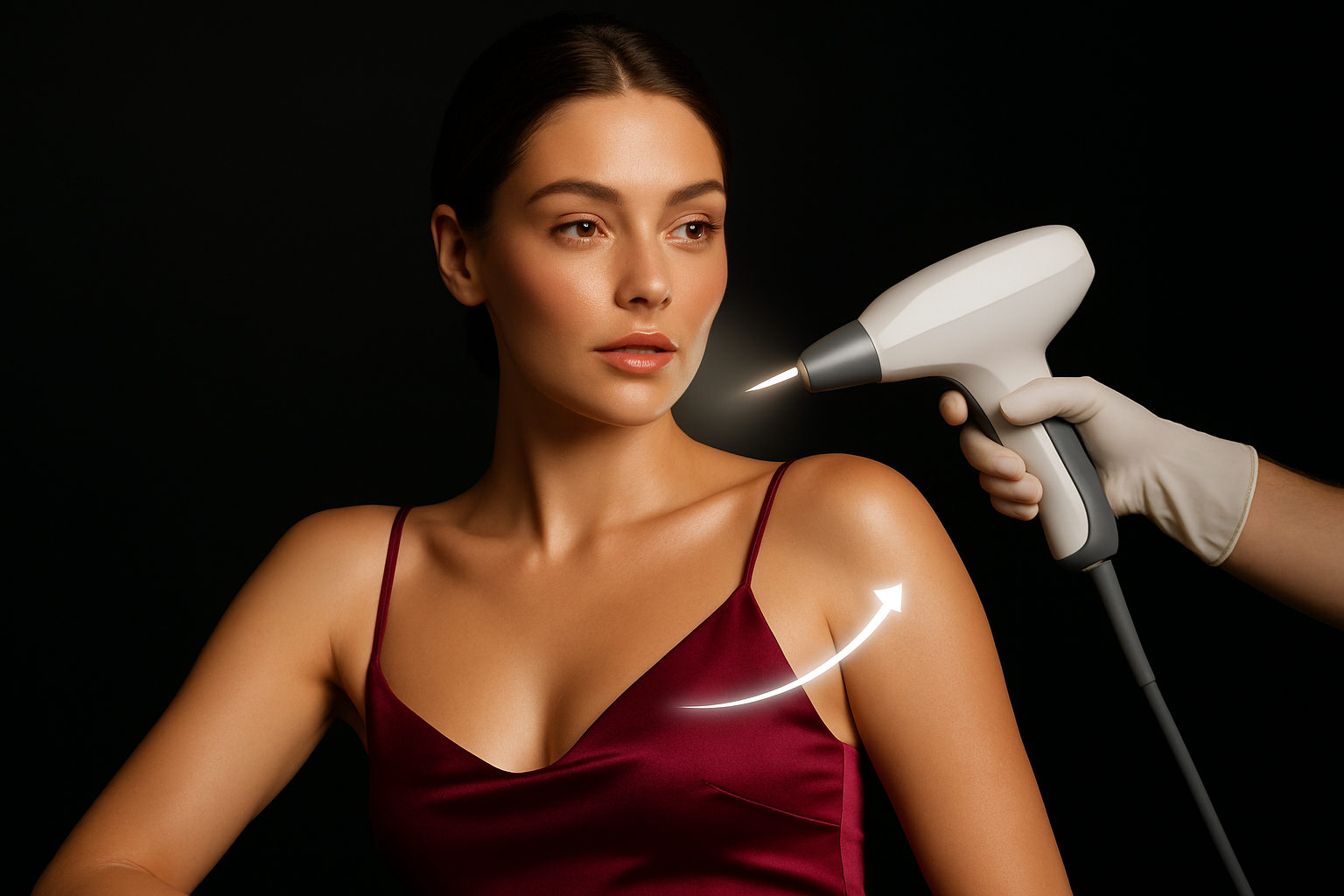
Protective medical eyewear is placed over your eyes. The dermatologist applies cooling gel (if required for the platform) and moves the specialized handpiece systematically across the target zones. Integrated sapphire contact cooling keeps skin surface temperature stable throughout energy delivery. Sensations are often described as mild, quick snaps or gentle warmth.
Phase 3: Post-Treatment Soothing
Immediately after the laser passes, medical thermal spring water, specialized growth factor serums, and soothing epidermal repair gels are applied. A cold compress or LED light therapy session may follow to calm localized heat reactions.
Recovery Timeline, Aftercare & Expected Results
Adhering to dermatological aftercare instructions is crucial to obtaining optimal results and avoiding complications like hyperpigmentation.
- Day 1 to 2: Mild to moderate erythema (redness) and localized edema (swelling) similar to a mild sunburn. Apply prescribed repair balms and avoid hot water.
- Day 3 to 5: Micro-crusting or light peeling begins as damaged epidermal cells slough off naturally. Do not pick or exfoliate prematurely.
- Day 6 to 10: Fresh, pink, regenerated skin emerges. Uniform skin tone and radiant texture become noticeable. Redness fades significantly.
- Weeks 2 to 12: Deep neo-collagenesis continues beneath the surface. Scars continue to level out, fine lines soften, and pore dimensions refine.
Essential Aftercare Rules:
- Apply a broad-spectrum physical sunscreen (SPF 50+ containing zinc oxide or titanium dioxide) daily, even indoors.
- Avoid direct sun exposure, sauna, steam rooms, and strenuous workouts for at least 7 to 10 days post-treatment.
- Use mild, non-comedogenic cleansers and avoid active skincare ingredients (retinoids, AHA/BHAs, vitamin C) until full barrier repair is confirmed.
Global Cost & Destination Comparison
Turkey has become a primary choice for aesthetic medical travel by combining board-certified medical expertise, strict international clinical compliance, and all-inclusive, cost-effective care packages.
| Country | Average Laser Session Cost | JCI Accredited Quality | All-Inclusive VIP Care | Travel & Access Convenience |
|---|---|---|---|---|
| Turkey (Health Beauty Turkey) | $350 – $900 | Yes (High Standard) | Included (VIP Transfer & Hotel) | Excellent (Major Hub) |
| United Kingdom | $1,200 – $2,800 | Variable | Not Included | Local |
| United States | $1,500 – $3,500 | Variable | Not Included | Local |
| Germany | $1,100 – $2,500 | High Standard | Not Included | Moderate |
| Thailand | $600 – $1,400 | Select Clinics | Rarely Included | Long Travel Time |
Many patients seeking effective non-invasive options combine their skin rejuvenation with other fastest non-surgical cosmetic procedures during their stay, maximizing both convenience and aesthetic outcome.
5-Day VIP Patient Journey in Istanbul
We organize every detail of your medical stay to guarantee maximum safety, comfort, and clinical satisfaction.
- Day 1: Arrival & VIP Transport
You are met at Istanbul Airport by your private chauffeur and transported in a luxury vehicle to your 5-star partner hotel for check-in and rest. - Day 2: Clinical Assessment & Laser Procedure
Your dedicated medical host accompanies you to our modern aesthetic center. After digital skin mapping and a consultation with your senior dermatologist, your customized laser skin treatment is performed. - Day 3: Post-Procedure Check & Rest
You rest at your luxury hotel. Our medical coordinator conducts a follow-up assessment to monitor skin recovery and adjust topical aftercare products if necessary. - Day 4: Guided City Relaxation & Dermal Review
Enjoy low-intensity leisure activities in Istanbul while following sun protection guidelines. A short follow-up check ensures rapid barrier recovery and minimal inflammation. - Day 5: Final Evaluation & Return Flight
Your dermatologist performs a final evaluation, supplies comprehensive aftercare products, and outlines post-treatment guidelines. Your private VIP transport takes you back to the airport for your return flight.
Frequently Asked Questions (FAQ)
Is laser skin treatment painful?
Most patients experience minimal discomfort during modern laser treatments. High-grade topical numbing creams and built-in contact cooling handpieces keep treatment sessions comfortable, often feeling like a light warming or mild snapping sensation against the skin.
How many sessions will I need to see optimal results?
While visible improvements in skin radiance and pigment clarity are often seen after a single session, a series of 3 to 5 sessions spaced 4 to 6 weeks apart is generally recommended for deep acne scars, severe sun damage, or significant texture refinement.
Is laser skin resurfacing safe for darker skin tones?
Yes. However, it requires appropriate wavelength technology (such as Nd:YAG or Pico lasers) operated by experienced aesthetic dermatologists. Choosing specialized laser settings prevents thermal damage to epidermal melanin and lowers the risk of post-inflammatory hyperpigmentation.
When can I apply makeup after the session?
For non-ablative treatments like BBL or light fractional sessions, mineral makeup can typically be applied after 24 to 48 hours. For ablative resurfacing, it is best to delay makeup application for 5 to 7 days until the skin barrier fully heals.
Summary & Next Steps
Laser skin treatments offer a safe, clinically proven method to reverse photoaging, erase stubborn hyperpigmentation, refine pore structure, and smooth textural irregularities. Turkey provides world-class dermatological technology combined with comprehensive, all-inclusive patient care at a fraction of Western costs.
If you are ready to rejuvenate your skin with a customized, non-surgical treatment plan, contact our clinical medical team at Health Beauty Turkey today for your personal consultation.
Medical Disclaimer: The contents of this article are intended strictly for educational and informational purposes and do not constitute formal medical advice, diagnosis, or treatment recommendations. Always consult a qualified dermatologist or medical practitioner regarding any cutaneous health concerns or prospective aesthetic treatments.
Related Articles: advanced laser and RF treatments | laser treatment for facial pigmentation | Fraxel laser treatment in Turkey | safe dark skin treatments | fastest non-surgical cosmetic procedures
References & Trusted Sources: National Institutes of Health (NIH) – Clinical Research | World Health Organization (WHO) – Health Guidelines | National Center for Biotechnology Information (NCBI / PubMed)