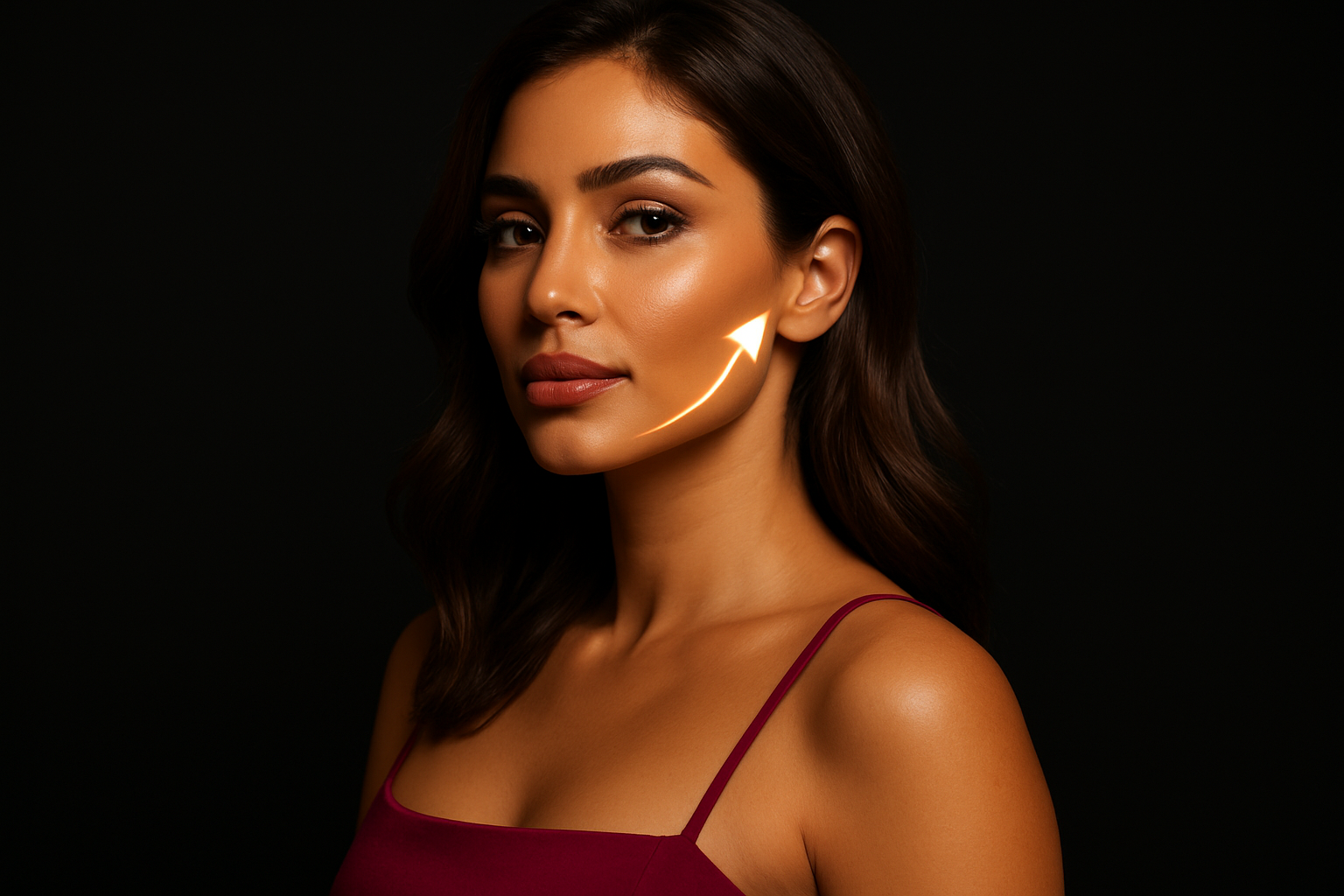
Midfacial contour and cheek bone projection are fundamental pillars of youthful facial aesthetics. Over time, natural bone resorption, soft tissue atrophy, and gravitational descent of facial fat pads can lead to a hollowed midface, pronounced nasolabial folds, and loss of jawline definition. Cheek augmentation in Turkey has emerged as a globally recognized surgical and non-surgical solution designed to restore structural volume, refine cheekbones, and re-establish harmonious facial proportions.
Table of Contents:
- Quick Medical Facts Summary
- Procedure & Treatment Overview
- Ideal Candidates & Medical Assessment
- Modern Surgical Techniques & Technologies
- Step-by-Step Procedure Process
- Recovery Timeline, Aftercare & Expected Results
- Global Cost & Destination Comparison
- 5-Day VIP Patient Journey in Istanbul
- Frequently Asked Questions
- Summary & Next Steps
Whether performed via custom silicone cheek implants, autologous fat grafting, or temporary dermal fillers, modern midface rejuvenation demands precision, anatomical expertise, and an individualized aesthetic strategy. International patients choosing Istanbul for aesthetic procedures benefit from board-certified plastic surgeons, JCI-accredited medical centers, advanced surgical techniques, and all-inclusive care plans tailored to individual anatomical goals.
Quick Medical Facts Summary
| Procedure Duration | 1 to 2 hours (Surgical/Fat Grafting) | 30 minutes (Dermal Fillers) |
|---|---|
| Hospital Stay | Outpatient or 1 Night (for surgical implants under general anesthesia) |
| Recovery Time | 5 to 7 days for initial swelling; full stabilization in 4 to 6 weeks |
| Anesthesia Type | Local anesthesia with sedation or General Anesthesia |
| Success Rate | Over 95% patient satisfaction with high volumetric retention |
Procedure & Treatment Overview
Cheek augmentation, medically referred to as malar or submalar augmentation, aims to enlarge or reshape the midfacial region. The procedure directly targets structural deficiencies in the zygomatic bone and surrounding soft tissue matrix. Depending on the patient’s anatomical needs, surgeons utilize different techniques to elevate the cheek structure, soften deep folds, and re-create a youthful triangular facial aesthetic.
Submalar augmentation addresses soft tissue volume loss in the lower cheek region, whereas malar augmentation enhances the bony prominence of the upper cheekbones. In many comprehensive aesthetic transformations, surgeons combine midface enhancement with broader structural procedures such as facial contouring in Turkey to optimize overall facial symmetry and profile proportion.
Ideal Candidates & Medical Assessment
A successful cosmetic outcome begins with an accurate anatomical evaluation during the pre-operative consultation. Candidates for midfacial enhancement generally present with flat cheekbones, midface volume deflation, or mild to moderate midfacial asymmetry.
- Skeletal Immaturity vs. Structural Loss: Younger candidates often seek malar projection due to genetic bone structure, whereas mature patients typically seek midface restoration due to age-related tissue ptosis.
- Skin Elasticity: Candidates must possess adequate skin elasticity to cover structural implants or fat transfers smoothly without surface irregularities.
- Good General Health: Candidates should be non-smokers (or willing to stop smoking prior to surgery), with no active oral or facial skin infections.
- Realistic Expectations: Understanding the capabilities of each technique ensures optimal satisfaction. For patients seeking broader rejuvenation, combining midface enhancement with complementary options like under-eye light fillers or lip augmentation procedures helps maintain balanced aesthetic proportions across the entire face.
Modern Surgical Techniques & Technologies
Plastic surgeons in Turkey utilize three primary techniques for enhancing midfacial contours, selecting the optimal method based on patient anatomy and longevity preferences.
1. Malar & Submalar Implants
Facial implants made from solid silicone or porous polyethylene (Medpor) offer a permanent structural solution. Placed directly over the zygomatic bone, implants provide definitive, sculptable projection that will not degrade over time. Patients seeking permanent structural enhancement can learn more about permanent cheek augmentation in Turkey and explore specialized options such as permanent silicone facial fillers and implants.
2. Autologous Fat Transfer
Autologous micro-fat grafting involves harvesting fat cells via micro-liposuction from areas such as the abdomen or thighs, purifying the lipoaspirate, and reinjecting precise micro-droplets into the submalar and malar planes. This natural tissue technique provides smooth, permanent integration without foreign material risks. Details regarding biological tissue grafting are detailed in our natural fat transfer surgery guide.
3. Hyaluronic Acid & Biostimulatory Fillers
For non-surgical candidates, high-viscosity hyaluronic acid or poly-L-lactic acid fillers provide targeted volume restoration with zero surgical downtime. While temporary (lasting 12 to 24 months), fillers allow patients to test midfacial enhancement before committing to permanent surgical options.
Step-by-Step Procedure Process
Surgical cheek implant placement and fat transfer are executed under strict sterile surgical protocols:
- Pre-Operative Mapping: The surgeon marks target vectors on the patient’s midface while in an upright position to map out precise implant pockets or fat injection zones.
- Anesthesia Administration: Intravenous sedation or general anesthesia is administered to ensure patient comfort throughout the surgery.
- Incision Placement: For facial implants, incisions are typically created intraorally (inside the upper lip above the gumline), leaving zero external visible scars. Alternatively, incisions can be made inside the lower eyelid if combined with blepharoplasty.
- Pocket Creation & Fixation: A subperiosteal pocket is meticulously created directly on the surface of the zygomatic bone. The selected implant is inserted and secured using micro-screws or anatomical fixation to prevent displacement.
- Incision Closure: Intraoral incisions are closed using dissolvable absorbable sutures, followed by the application of compression tapes to reduce postoperative edema.
Recovery Timeline, Aftercare & Expected Results
Proper post-operative management is crucial to securing stable, symmetric results and minimizing complications.
- Days 1 to 3: Peak swelling and mild bruising occur. Patients should apply cold compresses, keep their head elevated at 45 degrees, and follow a soft or liquid diet to protect intraoral incisions.
- Days 4 to 7: Acute edema begins to subside. Patients can resume non-strenuous daily activities. Medicated oral rinses are required after every meal to maintain intraoral hygiene.
- Weeks 2 to 4: The majority of tissue swelling resolves, revealing enhanced cheekbone architecture. Normal chewing and light exercise can be resumed as cleared by the surgical team.
- Months 3 to 6: Subdermal tissue completely heals around surgical implants or integrated fat grafts, delivering final, natural, and symmetrical facial contours.
Global Cost & Destination Comparison
Turkey has become a primary destination for medical tourists seeking advanced plastic surgery, offering high clinical standards combined with cost-effective packages.
| Destination | Average Cost (Cheek Implants / Fat Transfer) | JCI Quality Standard | Travel & Convenience | All-Inclusive VIP Care |
|---|---|---|---|---|
| Turkey (Health Beauty Turkey) | $2,200 – $3,500 | World-Class Accredited Facilities | High (Direct Flights, Seamless Visa) | Included (VIP Transfer, Hotel, Aftercare) |
| United Kingdom / USA | $6,500 – $12,000 | High Standard | Local / Variable | Rarely Included (Separate Billing) |
| Germany | $5,500 – $9,500 | High Standard | Moderate Distance | Not Standard |
| Thailand | $3,000 – $5,000 | Accredited Facilities | Long Flight Times | Variable Packages |
| India | $2,500 – $4,200 | Selected Accredited Clinics | Long Flight Times | Limited VIP Support |
5-Day VIP Patient Journey in Istanbul
Our structured international patient care pathway ensures absolute comfort, safety, and medical supervision throughout your stay in Istanbul:
- Day 1: VIP Arrival & Hotel Check-in: Private chauffeur transfer from Istanbul Airport to your 5-star hotel accommodation. Rest and prepare for your consultation.
- Day 2: Clinical Consultation & Surgery: In-person anatomical assessment, 3D imaging, blood work, and pre-anesthetic evaluation followed by the cheek augmentation procedure in an accredited hospital.
- Day 3: Hospital Discharge & Hotel Recovery: Post-operative nursing check-up, primary dressing evaluation, pain management protocol, and return to your hotel room with full VIP care support.
- Day 4: Rest & Post-Op Evaluation: Leisurely recovery at the hotel. Dedicated patient coordinators monitor your recovery progress and swelling management.
- Day 5: Final Check-up & Return Flight: In-clinic evaluation with your operating surgeon, removal of compression tapes, receipt of final aftercare instructions, and private transfer to the airport.
Frequently Asked Questions
What is the primary difference between cheek implants and cheek fillers?
Cheek implants provide a permanent, structural modification to the facial skeleton using solid, biocompatible materials, requiring a single surgical procedure. Fillers are temporary gel injections that degrade naturally over 12 to 24 months, requiring recurring treatments to maintain results.
Will there be visible scars after surgical cheek augmentation?
No. When cheek implants are placed via an intraoral approach, the incision is located completely inside the upper mouth fold, leaving no visible external facial scars.
How long do autologous fat transfer results last in the cheeks?
Once injected fat cells establish a healthy blood supply (typically within 3 to 6 months post-surgery), they remain permanently integrated as living tissue. Generally, 60% to 70% of transferred fat survives long-term.
When can I return to work and social activities after cheek implant surgery?
Most patients comfortably return to desk work and social engagements within 7 to 10 days, once initial facial swelling and bruising have significantly reduced.
Summary & Next Steps
Cheek augmentation offers an effective method to rebuild facial volume, define malar contours, and restore structural balance to the midface. By combining advanced surgical techniques with affordable all-inclusive medical travel, Turkey remains a top global choice for reconstructive and aesthetic facial procedures.
If you are considering midface rejuvenation, contact our medical team at Health Beauty Turkey to schedule a comprehensive online consultation and receive a personalized treatment plan from expert plastic surgeons.
Medical Disclaimer: The information provided in this article is for educational and informational purposes only and does not constitute formal medical advice. Individual surgical results, recovery times, and candidacy vary based on patient anatomy and health history. Always consult a qualified, board-certified plastic surgeon prior to undergoing any cosmetic or surgical procedure.
Related Articles: facial contouring in Turkey | under-eye light fillers | lip augmentation procedures | permanent cheek augmentation in Turkey | permanent silicone facial fillers and implants | natural fat transfer surgery guide
References & Trusted Sources: National Institutes of Health (NIH) – Clinical Research | World Health Organization (WHO) – Health Guidelines | National Center for Biotechnology Information (NCBI / PubMed)