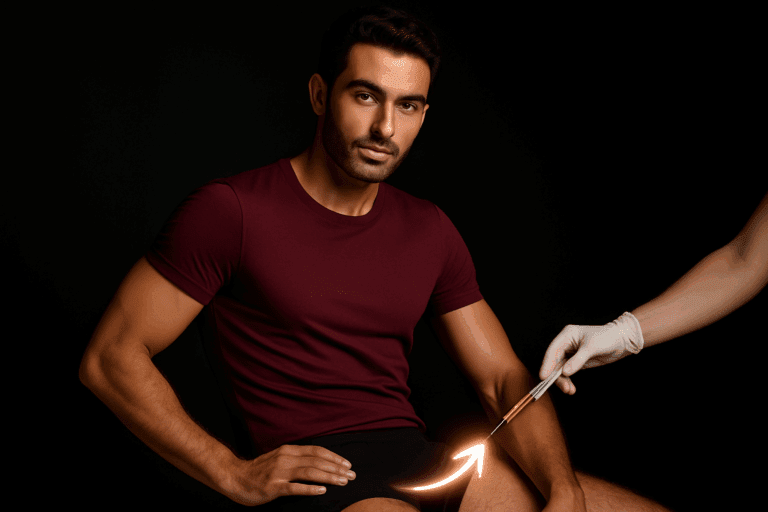
Peyronie’s disease is an acquired connective tissue disorder that affects men worldwide, causing significant anatomical distortion, painful erections, and psychological distress. Characterized by the formation of fibrous scar tissue or plaque beneath the skin of the penis within the tunica albuginea, the condition leads to painful bending, shortening, or indentation during an erection. For many men, managing this condition requires specialized urological care combining advanced diagnostic tools with sophisticated surgical and non-surgical treatments.
Table of Contents:
- Quick Medical Facts Summary
- Procedure & Treatment Overview
- Ideal Candidates & Medical Assessment
- Modern Surgical Techniques & Technologies
- Step-by-Step Procedure Process
- Recovery Timeline, Aftercare & Expected Results
- Global Cost & Destination Comparison (Turkey vs UK, USA, Germany, Thailand, India)
- 5-Day VIP Patient Journey in Istanbul
- Frequently Asked Questions (FAQ)
- Summary & Next Steps
Turkey, particularly Istanbul, has emerged as a premier global hub for specialized reconstructive urology and andrology. Utilizing cutting-edge diagnostic ultrasound, micro-surgical techniques, and tailored rehabilitation protocols, modern Turkish medical centers offer world-class solutions for men seeking effective treatment. This comprehensive guide addresses the essential questions surrounding Peyronie’s disease treatment in Turkey, offering authoritative insight into procedures, technology, recovery, and global comparisons.
Quick Medical Facts Summary
- Procedure Duration: 1 to 3 hours (depending on non-surgical therapy vs. reconstructive surgery or penile prosthesis placement).
- Hospital Stay: Overnight stay (1 night) for surgical intervention; outpatient basis for non-invasive therapies.
- Recovery Period: Initial wound healing in 10 to 14 days; complete abstinence from sexual activity required for 6 to 8 weeks post-surgery.
- Anesthesia: General anesthesia or regional spinal block for surgical repair; local anesthesia for outpatient injections.
- Success Rate: Over 90% curvature correction and high patient satisfaction rates in accredited urological centers.
Procedure & Treatment Overview
Peyronie’s disease typically progresses through two distinct phases: the acute phase and the chronic phase. Understanding the disease phase is critical for determining the appropriate therapeutic protocol.
During the acute phase (lasting 6 to 18 months), active inflammation occurs, plaques form, and curvature may progressively worsen. Treatment during this stage focuses on pain relief, stabilizing curvature progression, and preserving erectile tissue function through non-invasive protocols like low-intensity shockwave therapy, traction therapy, or intralesional injections.
The chronic phase begins when the plaque stabilizes, pain subsides, and curvature remains constant for at least 3 to 6 months. Surgical management is considered the gold standard for patients in this stage who suffer from severe curvature preventing normal intercourse or accompanied by erectile dysfunction. Surgical approaches include plication techniques, plaque excision/incision with tissue grafting, or penile implant insertion.
Ideal Candidates & Medical Assessment
Determining candidacy for treatment involves a meticulous medical evaluation by experienced reconstructive urologists. Candidates for surgical correction generally meet the following criteria:
- A stabilized penile curvature that has remained unchanged for a minimum of 3 to 6 months.
- Curvature greater than 30 degrees that causes functional impairment or pain during intercourse.
- Refractory response to conservative medical management or oral medications.
- Good overall health suitable for elective surgical intervention under anesthesia.
For patients experiencing severe Peyronie’s disease combined with medication-resistant erectile dysfunction, combined surgical reconstruction or a penile implant in Turkey represents the most effective solution, restoring both penile straightness and mechanical rigidity.
Modern Surgical Techniques & Technologies
At leading Turkish urology facilities, surgeons utilize state-of-the-art diagnostic and surgical technologies tailored to the unique anatomy of each patient:
1. Penile Plication Procedures
Ideal for mild to moderate curvature (less than 60 degrees) without significant hourglass deformity or shortening. Sutures are placed on the convex (longer) side of the penis opposite the plaque to straighten the shaft. This technique preserves native erectile tissue and carries a minimal risk of sensation loss.
2. Plaque Excision or Incision and Grafting
Recommended for severe curvature (greater than 60 degrees), complex hourglass deformities, or significant penile shortening. The urologist creates surgical incisions directly into the rigid fibrous plaque on the concave side to release tension. The resulting defect is bridged using advanced biological, tissue-engineered, or synthetic grafts. For broader insights on anatomical restoration, explore our guide on penile curvature treatment in Turkey.
3. Penile Prosthesis Surgery with In-Operative Reconstruction
When Peyronie’s disease is accompanied by moderate-to-severe erectile dysfunction, inserting a malleable or 3-piece inflatable penile implant provides optimal results. The surgeon straightens the penis around the implant cylinders through manual modeling, plication, or plaque incision, offering a comprehensive resolution for curvature and rigidity issues simultaneously.
4. Non-Invasive Regenerative Therapies
For patients in early stages or seeking non-surgical options, advanced protocols such as high-energy Extracorporeal Shockwave Therapy (ESWT) and Platelet-Rich Plasma (PRP) penile injections are utilized to break down early micro-calcifications and promote cellular healing. Learn more about shockwave therapy for erectile dysfunction in Turkey.
Step-by-Step Procedure Process
When undergoing surgical repair for Peyronie’s disease in Istanbul, patients undergo a standardized, safety-focused clinical pathway:
- Pre-Operative Assessment: High-resolution Doppler ultrasound combined with vasoactive drug-induced erection evaluation to precisely map plaque localization, vascular flow, and precise angular degree of curvature.
- Anesthesia Administration: General anesthesia or targeted spinal anesthesia ensures total patient comfort throughout the procedure.
- Surgical Reconstruction: Degloving of the penile shaft skin to expose the fascia and tunica albuginea. Depending on the planned strategy, plication sutures, plaque release with autologous or biomaterial grafting, or implant insertion is performed under microscopic precision.
- Closure and Dressing: Meticulous multi-layer suture closure with absorbable materials followed by a supportive compression dressing to minimize post-operative hematoma formation and edema.
Recovery Timeline, Aftercare & Expected Results
Post-operative care is crucial for achieving optimal anatomical alignment and functional outcomes following Peyronie’s disease surgery:
- Days 1 to 3: Initial post-operative rest in hospital and hotel care. Light walking is encouraged to promote venous return. A temporary urethral catheter may be removed on Day 1 or Day 2.
- Weeks 1 to 2: Mild edema and localized bruising resolve. Dressings are replaced, and initial clinical check-ups take place. Routine daily activities can be resumed gradually.
- Weeks 3 to 4: Dissolvable sutures typically fall out. Light physical exercise may resume, avoiding heavy lifting or strain.
- Weeks 6 to 8: Final evaluation by the surgical team. Provided healing is complete, full sexual activity and high-impact sports can be safely resumed.
Global Cost & Destination Comparison (Turkey vs UK, USA, Germany, Thailand, India)
Turkey offers exceptional financial advantages for reconstructive urology due to favorable exchange rates, operational efficiency, and lower administrative overhead, without compromising JCI-accredited medical quality.
| Destination | Average Cost Range (USD) | JCI Accreditation Quality | Travel Convenience | All-Inclusive VIP Services |
|---|---|---|---|---|
| Turkey (Health Beauty Turkey) | $3,500 – $8,500 | World-Class / Highly Accredited | Excellent (Direct flights globally) | Included (VIP Transfer, 5-Star Hotel, Translation) |
| United Kingdom | $12,000 – $22,000 | National Standards | Good (Regional) | Rarely Included (Out-of-pocket extra) |
| United States | $18,000 – $35,000 | High Standards | Varies | Not Included |
| Germany | $11,000 – $19,000 | Strict EU Standards | Excellent (EU) | Optional at High Cost |
| Thailand | $5,500 – $10,000 | Good Standard | Moderate (Long haul flight) | Selective Packages |
| India | $4,000 – $7,500 | Variable | Moderate | Basic Assistance |
5-Day VIP Patient Journey in Istanbul
Patients visiting Istanbul for Peyronie’s disease treatment experience a seamless, fully supported medical journey:
- Day 1: VIP Arrival & Hotel Transfer: Personalized reception at Istanbul Airport by a dedicated multilingual chauffeur and escort, followed by transfer to a luxury partner hotel.
- Day 2: Clinical Consultation & Surgery: In-depth pre-operative consultation with the senior urological surgeon, comprehensive Doppler diagnostics, blood panel, and completion of the surgical procedure under general anesthesia. Overnight stay in a JCI-accredited private hospital.
- Day 3: Hospital Discharge & Rest: Post-operative evaluation by the medical team, removal of surgical drains/catheter, prescription of post-care medications, and transfer back to the hotel for comfortable rest.
- Day 4: Post-Operative Check & Healing: Routine check-up at the clinic or hotel visit by a dedicated nurse. Guided light walking around Istanbul or relaxing at the hotel.
- Day 5: Final Evaluation & Return Flight: Detailed final examination with the lead urologist, wound dress review, custom home-care instructions, and private VIP transfer to Istanbul Airport for return flight home.
Frequently Asked Questions (FAQ)
What causes Peyronie’s disease?
While the exact etiology remains under study, Peyronie’s disease is primarily triggered by micro-vascular trauma or minor repetitive injuries to the penis during sexual intercourse or athletic activities. In susceptible individuals, abnormal wound healing causes abnormal collagen accumulation, forming hard fibrous plaques rather than normal elastic tissue.
Can Peyronie’s disease resolve on its own without surgery?
Spontaneous resolution occurs in less than 10% of cases and is usually limited to the acute, early inflammatory phase. Once the disease progresses to the chronic stage and plaque calcification forms, active medical intervention, shockwave protocols, or surgical repair are required to correct significant bending.
Will surgery for Peyronie’s disease cause loss of penile length?
Plication procedures work by shortening the longer side of the penis to match the shorter side, which can cause a minor loss of functional length (typically 0.5 to 1.5 cm). Plaque excision and grafting or combined penile implant placement are specific techniques chosen when preserving or restoring maximum length is a primary goal. Patients seeking aesthetic advice may also consult our guide on penis enlargement surgery in Turkey.
How long must I wait to resume sexual activity after Peyronie’s surgery?
Patients are required to refrain from all forms of sexual activity, including masturbation, for a minimum of 6 to 8 weeks post-surgery. This timeframe ensures complete internal tissue integration, suture line tensile strength, and graft healing without mechanical strain.
Summary & Next Steps
Peyronie’s disease is a manageable condition that no longer needs to impact your physical comfort, sexual confidence, or quality of life. Modern urological advances available in Turkey allow for safe, highly successful, and aesthetically precise curvature correction tailored to your unique anatomical profile.
If you or a loved one are experiencing penile curvature, pain, or related erectile concerns, we invite you to reach out directly to our expert medical board at Health Beauty Turkey. Our specialized urological consultants will conduct a confidential review of your case and create a customized treatment plan tailored to your needs.
Medical Disclaimer: The information provided in this article is for educational purposes only and does not constitute formal medical advice. Diagnosis and treatment plans must always be established in direct clinical consultation with a licensed and board-certified urologist.
Related Articles: penile implant in Turkey | penile curvature treatment in Turkey | shockwave therapy for erectile dysfunction in Turkey | penis enlargement surgery in Turkey
References & Trusted Sources: National Institutes of Health (NIH) – Clinical Research | World Health Organization (WHO) – Health Guidelines | National Center for Biotechnology Information (NCBI / PubMed)