Unwanted facial and body hair remains a widespread clinical and aesthetic concern for both women and men globally. While traditional epilation methods such as shaving, waxing, and chemical depilatories offer temporary relief, they frequently result in folliculitis, pseudofolliculitis barbae (ingrown hairs), hyperpigmentation, and skin irritation. Modern dermatological medicine has transformed aesthetic care through advanced laser hair removal in Turkey, offering a clinically proven, safe, and long-lasting solution for follicle destruction.
Table of Contents:
- Procedure & Treatment Overview
- Ideal Candidates & Medical Assessment
- Modern Surgical Techniques & Technologies
- Step-by-Step Procedure Process
- Recovery Timeline, Aftercare & Expected Results
- Global Cost & Destination Comparison (Turkey vs UK, USA, Germany, Thailand, India)
- 5-Day VIP Patient Journey in Istanbul
- Frequently Asked Questions (FAQ)
- Summary & Next Steps
As a global hub for medical excellence, Turkey combines board-certified dermatologists, state-of-the-art laser platforms, and internationally accredited facilities. At Health Beauty Turkey, every laser treatment protocol is supervised by experienced medical consultants who prioritize skin safety, precise energy delivery, and patient comfort. Whether addressing hypertrichosis, hormonal hair growth, or purely aesthetic preferences, understanding the clinical science, modern technologies, and procedural workflow is essential for achieving optimal outcomes.
Quick Medical Facts Summary
- Procedure Duration: 15 to 60 minutes per session (depending on treatment area size)
- Hospital Stay: Outpatient / Ambulatory procedure (No hospital stay required)
- Recommended Sessions: 6 to 8 sessions spaced 4 to 8 weeks apart
- Anesthesia: Topical numbing cream or integrated dynamic skin cooling system
- Recovery Time: Immediate return to routine daily activities; mild redness subsides within 2 to 24 hours
- Clinical Success Rate: 85% to 95% permanent reduction of active hair follicles
Procedure & Treatment Overview
Laser hair removal is a medical aesthetic procedure based on the scientific principle of Selective Photothermolysis. This technique relies on emitting specific light wavelengths that are selectively absorbed by chromophores—specifically melanin—located within the hair shaft and follicular epithelium. The absorbed light energy transforms instantly into thermal energy, raising the temperature of the hair follicle to approximately 70 degrees Celsius. This targeted thermal damage destroys the follicular stem cells and the dermal papilla responsible for regrowing hair, without causing collateral damage to adjacent epidermal or dermal tissue structures.
Because hair growth occurs in continuous biological cycles—consisting of the Anagen (active growth), Catagen (transition), and Telogen (resting) phases—laser treatment is only effective on follicles currently in the Anagen phase. During this active growth phase, the hair shaft contains the highest concentration of melanin and remains structurally attached to the dermal papilla. Consequently, multiple treatment sessions scheduled at specific intervals are required to target follicles as they sequentially enter the Anagen phase.
Beyond standard body epilation, laser systems are frequently integrated alongside other non-invasive skin therapies. For instance, patients interested in full-face or bodily rejuvenation often combine epidermal care with ENDOLIFT laser skin tightening or dermatological blackhead removal procedures to achieve smooth, clear, and rejuvenated skin texture.
Ideal Candidates & Medical Assessment
While laser epilation is highly versatile, an initial dermatological assessment is mandatory to determine candidate suitability, skin phototype, and underlying etiology of hair growth. Ideal candidates and medical evaluation parameters include:
- Fitzpatrick Skin Classification: Modern multi-wavelength lasers allow safe treatment across all Fitzpatrick Skin Types (Types I through VI). Candidates with high contrast between skin tone (light) and hair pigment (dark) respond most rapidly, though specialized Nd:YAG lasers safely accommodate darker skin tones.
- Hormonal Evaluation: Female patients presenting with sudden hirsutism, irregular menstrual cycles, or persistent central facial hair must be evaluated for underlying endocrine disorders, such as Polycystic Ovary Syndrome (PCOS) or adrenal dysfunction. Managing baseline hormonal balance enhances laser efficacy.
- Hair Pigmentation: Follicles must contain sufficient eumelanin (dark brown or black pigment). Naturally white, grey, bright red, or blonde hairs lack sufficient melanin absorption capacity and do not respond effectively to standard laser energy.
- Absence of Active Skin Conditions: Treatment areas must be free from active bacterial or viral infections (e.g., Herpes Simplex outbreaks), open wounds, severe eczema, or recent sunburns.
- Medication Review: Candidates taking photosensitizing medications (such as systemic isotretinoin, tetracyclines, or certain antimalarial drugs) must complete an appropriate wash-out period before undergoing thermal laser treatments.
Modern Surgical Techniques & Technologies
Achieving safe, effective hair reduction across diverse skin tones requires advanced laser platforms equipped with varying wavelengths and integrated contact-cooling systems. At Health Beauty Turkey, medical specialists employ state-of-the-art platforms to tailor treatments precisely to each patient’s physiological profile:
1. Alexandrite Laser (755 nm Wavelength)
The 755 nm Alexandrite laser offers high melanin absorption, making it exceptionally effective for light to medium skin tones (Fitzpatrick Types I–III) with dark, coarse hair. Its deep tissue penetration allows rapid treatment of large anatomical areas such as the legs, back, and chest.
2. Diode Laser (808 nm – 810 nm Wavelength)
The Diode laser provides deeper follicular penetration than the Alexandrite laser, effectively bypassing superficial epidermal melanin. This makes it a highly versatile laser system suitable for Fitzpatrick Skin Types I through V. It features high repetition rates and in-motion application techniques that minimize patient discomfort.
3. Nd:YAG Laser (1064 nm Wavelength)
Operating at a longer wavelength, the 1064 nm Nd:YAG laser exhibits lower absorption in epidermal melanin while penetrating deeply into the subcutaneous fat layer where deep-set follicular roots reside. It represents the safest gold standard for individuals with darker skin tones (Fitzpatrick Types V and VI) and tanned skin, virtually eliminating risks of thermal post-inflammatory hyperpigmentation.
4. Ice Laser & Dynamic Cooling Technology (DCD)
To maximize patient comfort and shield the epidermis from thermal injury, modern platforms incorporate Sapphire contact cooling tips or cryogen spray mechanisms. These systems chill the outer skin surface to as low as -5 degrees Celsius prior to, during, and immediately after each laser pulse, neutralizing pain signals and protecting superficial tissues.
Step-by-Step Procedure Process
Every laser hair removal treatment at our Istanbul clinics follows a rigid medical protocol designed to guarantee optimal aesthetic outcomes and absolute clinical safety:
- Pre-Treatment Consultation & Clinical Assessment: The attending clinical specialist reviews the patient’s medical history, evaluates skin phototype, examines target hair thickness, and conducts a patch test to determine precise fluency (energy density), pulse duration, and spot size.
- Area Preparation: The target area is cleansed of oils, deodorants, or cosmetic products. The hair must be freshly shaved (typically 12 to 24 hours prior) so that energy focuses entirely on the subterranean root rather than singeing surface hair shafts.
- Dermal Protection & Eye Safety: Both the patient and medical practitioner wear specialized laser safety goggles matched to the specific wavelength in use. If sensitive regions are being treated, a topical anesthetic gel may be applied 30 minutes prior to irradiation.
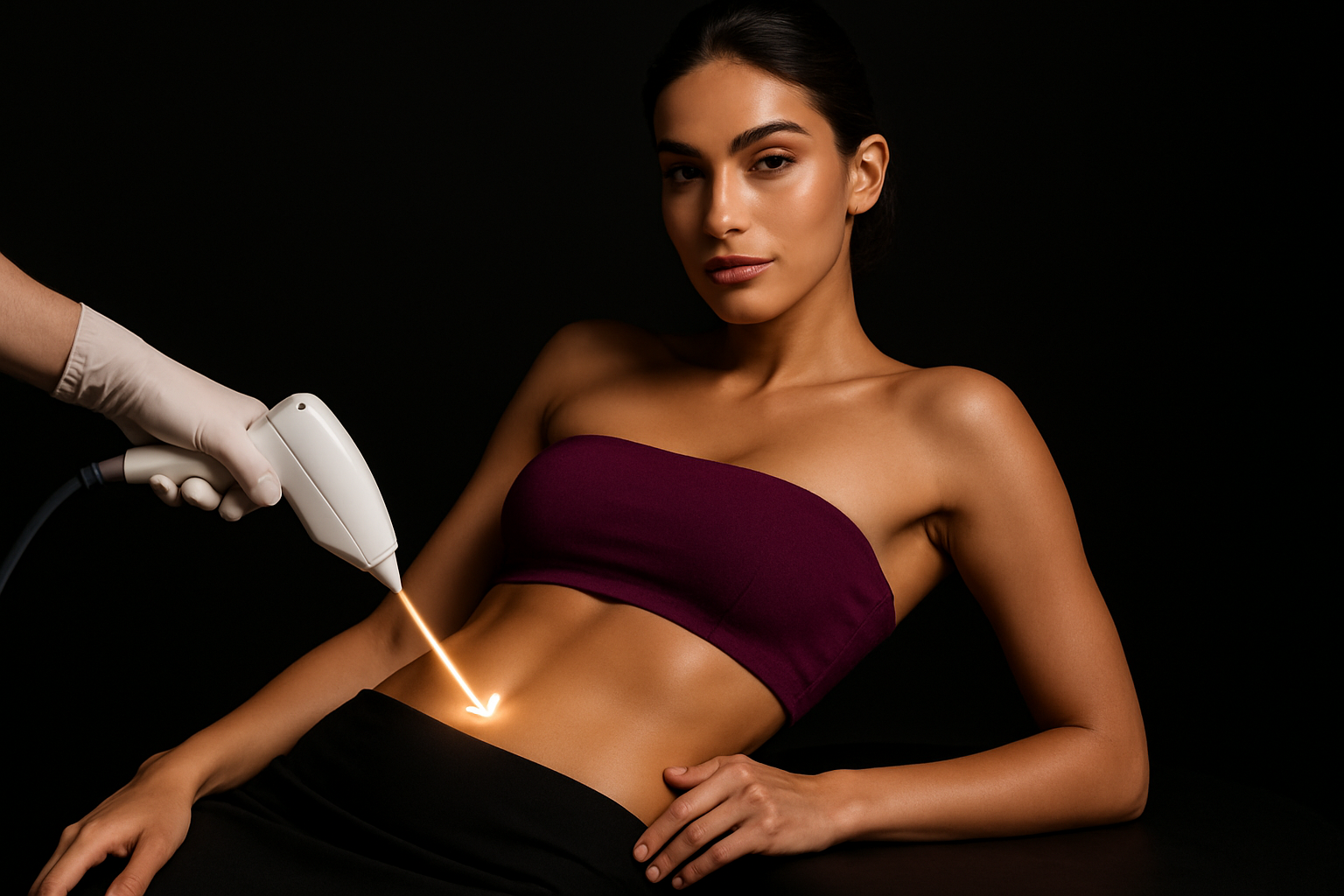
- Laser Energy Application: The practitioner systematically glides or pulses the laser handpiece across the designated treatment zone. Modern contact cooling continuously protects the surrounding tissue while thermal pulses coagulate target hair roots.
- Post-Laser Soothing Application: Upon session completion, soothing topical agents containing panthenol, aloe vera, or mild anti-inflammatory hydrocortisone are applied to cool the treated skin and minimize perifollicular edema.
Recovery Timeline, Aftercare & Expected Results
Because laser epilation is non-invasive, there is zero surgical downtime. However, adhering strictly to post-treatment dermatological instructions ensures prompt epidermal healing and prevents localized complications:
- First 24 Hours: Mild erythema (redness) and perifollicular edema (swelling around hair follicles) are expected biological responses indicating successful thermal targeting. Patients should avoid hot showers, saunas, strenuous exercise, and heavy sweating. Cold compresses may be applied if needed.
- Days 1 to 7: Avoid abrasive scrubs, exfoliation, and chemical peels on the treated zones. Wash skin gently with mild, fragrance-free cleansers. Treated hair shafts will gradually shed from the follicles over a 1 to 3 week period; this shedding process should not be confused with active new hair growth.
- Sun Protection (Crucial): Strict sun avoidance is imperative for a minimum of 2 weeks post-procedure. Apply broad-spectrum sunscreen (SPF 50+) daily to any exposed treatment areas to prevent post-inflammatory hyperpigmentation.
- Long-Term Treatment Schedule: Sessions are typically scheduled every 4 to 6 weeks for facial zones, and every 6 to 8 weeks for body areas (legs, back, arms). As treatment progresses, hair growth slows dramatically, appearing significantly finer, sparser, and lighter until permanent operational reduction is achieved. Patients seeking comprehensive aesthetic transformations often address underlying hair loss or scalp concerns through specialized hair loss treatment during their broader wellness consultations.
Global Cost & Destination Comparison (Turkey vs UK, USA, Germany, Thailand, India)
Turkey has firmly established itself as a premier global destination for aesthetic and dermatological treatments. International patients benefit from world-class medical infrastructure, highly experienced dermatologists, and all-inclusive service packages at significantly lower costs compared to Western Europe and North America.
| Destination | Average Package Price (Full Body Session Series) | JCI Quality Accreditation | Travel & Medical Logistics | All-Inclusive VIP Care |
|---|---|---|---|---|
| Turkey (Health Beauty Turkey) | $800 – $1,500 | World-Class / Internationally Accredited Facilities | Direct flights to Istanbul, full VIP transportation included | VIP Transfers, 5-Star Hotel, Personal Translator, Medical Insurance |
| United Kingdom | $3,500 – $6,000 | Standard NHS / CQC Regulations | Local transit, high clinical costs | Not Included (A la carte medical billing) |
| United States | $4,000 – $7,500 | Standard State / AAAHC Facilities | Local transit, extremely high out-of-pocket costs | Not Included (A la carte medical billing) |
| Germany | $3,000 – $5,500 | High European Standards (TÜV/DIN) | Moderate travel required within Europe | Rarely offered; clinical fees only |
| Thailand | $1,500 – $2,800 | High Regional Standards | Long haul travel required for Western patients | Partial hospitality packages available |
| India | $1,000 – $2,000 | Varies across private hospitals | Long travel duration, complex visa requirements | Basic medical tourism services |
5-Day VIP Patient Journey in Istanbul
For international guests traveling to Istanbul for laser hair removal or combined non-surgical aesthetic programs, Health Beauty Turkey provides a seamless, stress-free medical experience:
- Day 1: VIP Arrival & Luxury Settlement
Upon arrival at Istanbul Airport (IST or SAW), your private driver meets you at the terminal gate and escorts you in a premium VIP vehicle to your 5-star partner hotel. An assigned multilingual patient coordinator confirms your schedule. - Day 2: Dermatological Consultation & Initial Laser Session
You are transferred to our state-of-the-art clinic. A senior dermatologist conducts a comprehensive dermal analysis, establishes laser parameters, and executes the first full session using advanced, chilled-tip equipment. - Day 3: Rest, Excursions & Skin Recovery
Relax at your luxury hotel or explore Istanbul’s rich historic landmarks. Skin soothing treatments and strict SPF protocols are maintained under your care coordinator’s guidance. - Day 4: Optional Combined Aesthetic Sessions & Check-Up
If you opt for complementary non-surgical treatments—such as facial skin tightening, deep pore cleansing, or body contouring—these are completed today alongside a fast check-up of the treated dermal regions. - Day 5: Final Medical Evaluation & Farewell Return
Your medical team conducts a final skin evaluation, provides medical-grade post-care skincare products, outlines your home recovery instructions, and provides your full treatment protocol before your private VIP transfer to the airport.
Frequently Asked Questions (FAQ)
Is laser hair removal permanent?
Laser hair removal achieves long-term, permanent reduction in hair density. The process permanently destroys targeted hair follicles during their active growth phase. While dormant or new follicles may occasionally reactivate years later due to significant hormonal changes (such as pregnancy or menopause), any regrown hair is significantly sparser, finer, and lighter in color, typically requiring only minor annual maintenance sessions.
Is the procedure painful?
With modern cooling technology—such as Sapphire chilled contact tips and integrated dynamic cryogen sprays—discomfort is minimized. Most patients describe the sensation as a light snap of a rubber band against the skin accompanied by a brief cooling sensation. For sensitive regions, topical numbing creams are available to ensure a comfortable experience.
How many laser sessions will I need?
Because hair grows in distinct cycles, a complete course typically ranges from 6 to 8 sessions spaced 4 to 8 weeks apart. The exact number depends on individual factors including anatomical treatment location, hair thickness, hormonal balance, and skin tone.
Is laser hair removal safe for dark skin tones?
Yes. Utilizing long-wavelength technology—specifically the 1064 nm Nd:YAG laser—allows heat energy to bypass superficial epidermal melanin and target the deep follicular bulb directly. This technology makes hair removal safe and highly effective for Fitzpatrick Skin Types IV through VI without risking post-inflammatory hyperpigmentation or thermal skin burns.
Summary & Next Steps
Laser hair removal in Turkey provides a permanent, medically advanced, and safe solution to unwanted hair growth, resolving issues like ingrown hairs and recurring skin irritation. By combining cut-edge laser technologies—such as Alexandrite, Diode, and Nd:YAG platforms—with world-class dermatological expertise, Health Beauty Turkey offers unmatched clinical safety and aesthetic precision in Istanbul.
If you are considering permanent hair reduction or wish to create a personalized non-surgical aesthetic plan, we invite you to connect directly with our medical consultancy team. Reach out to Health Beauty Turkey today to schedule your comprehensive online consultation and step confidently toward smooth, radiant skin.
Medical Disclaimer: The clinical information provided in this guide is for educational and informational purposes only and does not constitute formal medical advice, diagnosis, or treatment. Individual clinical results may vary depending on skin phototype, underlying hormonal conditions, and procedural adherence. Always consult a qualified board-certified dermatologist or qualified healthcare provider prior to undertaking any laser or cosmetic procedure.
Related Articles: advanced laser hair removal in Turkey | ENDOLIFT laser skin tightening | dermatological blackhead removal procedures | specialized hair loss treatment
References & Trusted Sources: National Institutes of Health (NIH) – Clinical Research | World Health Organization (WHO) – Health Guidelines | National Center for Biotechnology Information (NCBI / PubMed)